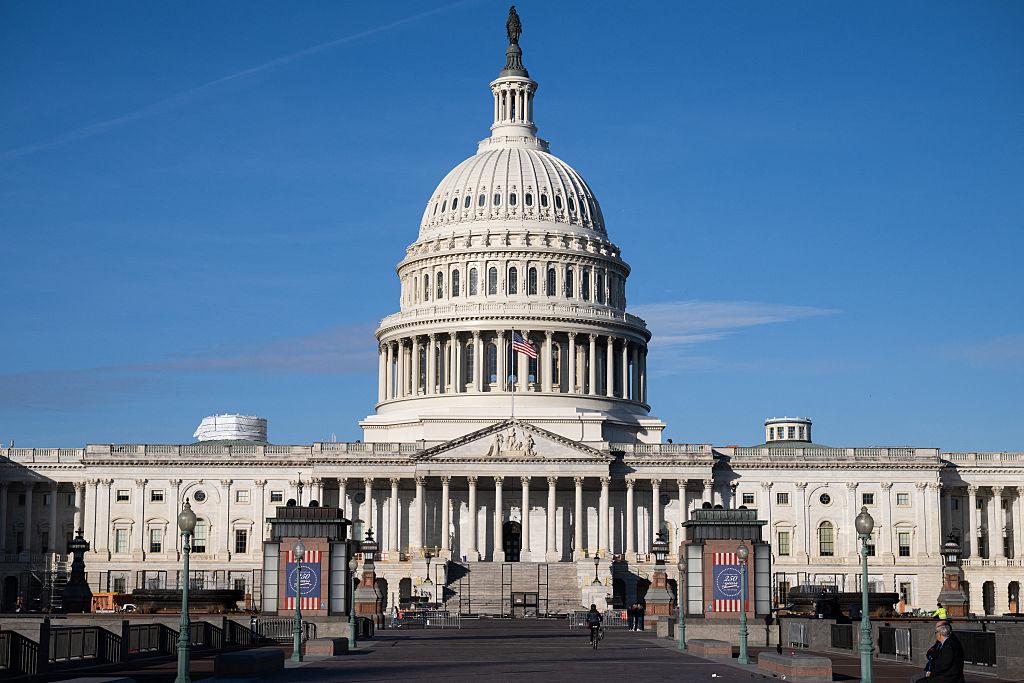
The Democratic Party’s victory in both chambers of the US Congress is expected to significantly constrain President Donald Trump’s foreign policy agenda, potentially reshaping Washington’s approach to Iran, Ukraine, Israel, military spending and Latin America.
Democrats secured control of the House of Representatives and Senate in Tuesday’s midterm elections, ending two years of Republican dominance in Washington and gaining new powers to challenge the administration.
Throughout the election campaign, Democratic lawmakers accused Republicans of allowing Trump to bypass Congress on major decisions involving military operations and federal spending.
When the new Congress convenes in January, Democrats will be able to use their legislative majorities, budgetary authority and oversight powers to challenge the president’s policies.
According to Reuters, five major foreign policy areas could become flashpoints between the White House and the incoming Democratic-controlled Congress.
1. Restricting Trump’s war on Iran
The ongoing US-Israeli war against Iran is expected to become one of the most contentious issues confronting the new Congress.
Trump launched military operations alongside Israel on February 28 without first obtaining congressional authorisation, prompting repeated Democratic attempts to restrict the administration’s ability to continue the conflict.
Although both chambers previously approved a measure demanding congressional approval for further military action, the Trump administration disregarded it.
With majorities in both chambers, Democrats could use defence appropriations, legislative procedures and confirmation hearings to increase pressure on the White House.
Lawmakers could also summon senior administration officials to public hearings and demand greater transparency over military objectives, operational planning and the financial costs of the war.
However, efforts to impose binding restrictions could still face presidential vetoes.
2. Restoring military and financial support for Ukraine
Democratic control of Congress could also lead to renewed American assistance for Ukraine after Trump substantially reduced direct financial and military support for Kyiv.
Despite the administration’s position, Ukraine continues to enjoy considerable backing among lawmakers from both major parties.
Trump recently angered members of Congress, including Republicans, by easing sanctions targeting Russian diesel exports and the country’s energy industry.
Democrats will gain control over the legislative agenda in January, allowing them to introduce and advance new military and financial assistance packages for Ukraine.
Senior Democratic aides have identified renewed support for Kyiv as a priority.
Representative Gregory Meeks of New York, who is expected to lead the House Foreign Affairs Committee, has already introduced bipartisan legislation aimed at preventing Russian diesel from returning to international markets.
Supporters of Ukraine believe sufficient bipartisan backing could allow Congress to override a potential presidential veto, although that would require a two-thirds majority in both chambers.
3. Reconsidering military assistance to Israel
Washington’s longstanding military relationship with Israel could face increased scrutiny as opposition to Israeli military operations grows within the Democratic Party.
Israel’s campaign in Gaza, which has killed tens of thousands of Palestinians, alongside continuing violence in the occupied West Bank, has contributed to declining support for Israel among Democratic lawmakers.
Prime Minister Benjamin Netanyahu’s close political relationship with Trump and the Republican Party has further complicated relations with Democrats.
The United States has traditionally provided Israel with approximately $3.8 billion annually in military assistance, alongside additional billions approved following the Hamas-led attacks of October 7, 2023.
Democratic lawmakers could now seek to reduce, restrict or condition future weapons transfers and military funding.
Nearly half of House Democrats supported legislation this summer seeking to halt assistance to Israel.
Others, including Meeks, have advocated restrictions on specific weapons systems, particularly heavy bombs used in military operations.
Nevertheless, substantial changes to American military assistance would likely face resistance from Republicans and some Democrats, as well as the possibility of a presidential veto.
4. Challenging military spending and restoring foreign aid
The administration’s proposed expansion of the US defence budget is another area where Democrats could exercise considerable influence.
Trump requested a 67% increase in military expenditure this year, seeking to raise the defence budget to $1.5 trillion.
Democrats blocked the proposal in the Senate, citing the administration’s failure to consult Congress over the Iran conflict and its reductions in domestic social programmes.
With control of both chambers, Democratic lawmakers could seek to limit further increases in military spending or attach conditions to defence appropriations.
They are also expected to challenge the administration’s decision to freeze or cancel billions of dollars in foreign assistance previously authorised by Congress.
Democratic lawmakers have criticised those reductions and signalled their intention to restore funding to affected programmes.
Foreign assistance has historically enjoyed bipartisan congressional support, including during Trump’s first presidential term.
5. Increasing scrutiny of US intervention in Latin America
Trump’s increasingly interventionist approach to Latin America is also expected to face greater congressional oversight.
The administration has pursued an aggressive regional strategy that included the US military operation that removed Venezuela’s president, prolonged deadly strikes against vessels operating near the country’s coastline and intensified pressure on Cuba.
Washington has imposed further sanctions on Cuba’s communist government while threatening military measures aimed at bringing about political change.
The Trump administration has also sought to influence political developments and elections in Honduras, Argentina, Colombia and Brazil.
Democratic lawmakers have criticised several of these policies, arguing that military intervention, economic pressure and interference in foreign elections require greater congressional scrutiny.
Some have called for investigations into US operations in Venezuela, while others have demanded an end to sanctions they say have worsened conditions for civilians in Cuba.
Congressional committees under Democratic leadership could launch investigations, summon officials and examine the legal basis for the administration’s actions throughout the region.
A new political confrontation
Although the Democratic takeover will give Congress substantial influence over foreign policy, Trump will retain significant executive authority, including command of the armed forces and the ability to veto legislation.
Democrats will therefore need sufficient bipartisan support to overcome presidential opposition to major legislative initiatives.
Nevertheless, their control of both chambers is expected to produce greater scrutiny of the administration’s decisions and potentially prolonged confrontations over military operations, foreign assistance and Washington’s relationships with international allies.