Florida has formally designated the Muslim Brotherhood, the Council on American-Islamic Relations and Antifa as terrorist organisations under state law, expanding the reach of a new counterterrorism framework targeting public funding and government contracts.
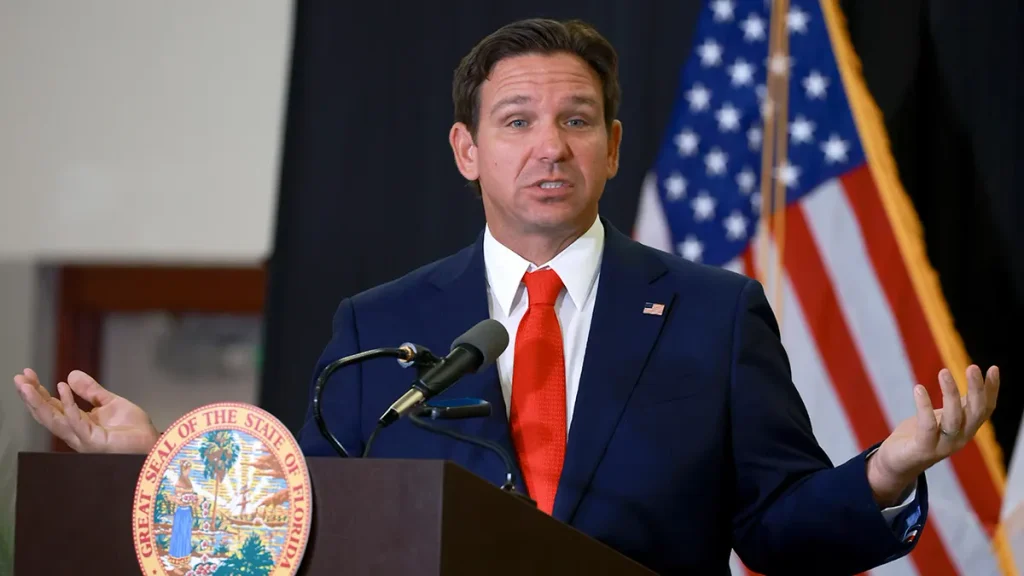
Governor Ron DeSantis and the Florida Cabinet approved the designations on September 29 under legislation adopted earlier this year that allows the state’s chief of domestic security to recommend organisations for designation as domestic or foreign terrorist groups.
The move means Florida state agencies, local authorities and publicly funded institutions can be barred from providing taxpayer money, contracts or other forms of public support to designated organisations.
Public universities, colleges and school districts are also covered by the law, bringing funding for student activities, outside events and contracts with nongovernmental organisations under increased scrutiny.
DeSantis had announced in July that Florida intended to designate CAIR, the Muslim Brotherhood and Antifa under the new legislation, but the designations required approval from the governor and Cabinet before taking full effect.
Funding and contracts under review
Florida authorities are expected to examine existing government contracts, grants and other payments involving organisations covered by the designation.
HB 1471 prohibits state and local government bodies from using public funds to support or contract with a designated organisation. The law also establishes penalties relating to the knowing provision of material support to groups classified under the state system.
The legislation gives Florida’s chief of domestic security authority to recommend a domestic terrorist designation when officials determine that an organisation operates in Florida or elsewhere in the United States, engages in activity meeting the state’s statutory definition of terrorism and poses an ongoing security threat.
The designation system is separate from the federal government’s Foreign Terrorist Organization process.
Universities face new restrictions
The measure could have particular consequences for Florida’s public universities, which must assess whether public money is being provided to student organisations, events or outside groups with connections to entities appearing on the state list.
At the same time, public universities remain bound by federal constitutional protections governing speech and association, setting up potential disputes over how broadly the state can apply the restrictions.
CAIR and CAIR-Florida have challenged Florida’s actions in federal court, arguing that the designation violates their First Amendment rights and the due-process protections of the Fourteenth Amendment. The litigation remains ongoing.
CAIR describes itself as a Muslim civil rights and advocacy organisation and rejects allegations that it supports terrorism. The federal government has not designated CAIR as a terrorist organisation.
Federal action targets Brotherhood branches
Florida’s move comes amid separate federal action targeting individual branches of the Muslim Brotherhood.
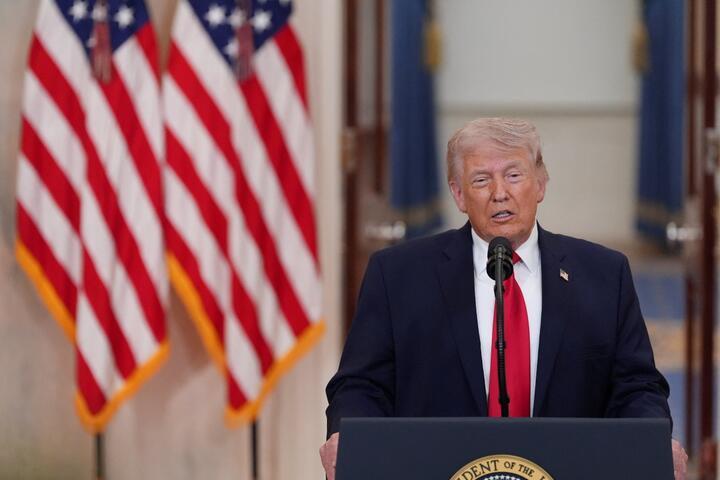
President Donald Trump signed an executive order in November 2025 directing US agencies to consider terrorist designations for specific Brotherhood chapters rather than automatically designating the entire international movement.
In January, the US Treasury designated the Egyptian and Jordanian Muslim Brotherhood branches as Specially Designated Global Terrorists, while the State Department designated the Lebanese branch, also known as Al-Jamaa al-Islamiyah, as both a Foreign Terrorist Organization and a Specially Designated Global Terrorist.
Washington has since expanded action against other Brotherhood-linked organisations, but there remains no single federal designation covering every organisation or institution associated with the broader Muslim Brotherhood movement.