The Ministerial Council of the Gulf Cooperation Council (GCC) convened an emergency virtual meeting on Sunday evening, declaring that member states reserve their legal right to respond to Iranian attacks.
The statement came as the United Arab Emirates announced it had withdrawn its ambassador and diplomatic staff from Iran.
In an official communiqué, the council said GCC states “retain their legal right to respond, in accordance with Article 51 of the United Nations Charter, which guarantees the right of individual and collective self-defense in the event of aggression, and to take all necessary measures to safeguard their sovereignty, security and stability.”
The council stressed “full solidarity among member states and standing united to confront these attacks,” emphasizing that “the security of GCC states is indivisible, and any aggression against one member state constitutes direct aggression against all,” under the bloc’s founding charter and joint defense agreement.
It strongly condemned what it described as “criminal Iranian attacks” targeting GCC countries and the Hashemite Kingdom of Jordan, calling them a grave violation of sovereignty, international law, and the UN Charter. The statement added that targeting civilians and civilian infrastructure constitutes a serious breach of international humanitarian law.
The GCC comprises six states: Saudi Arabia (headquarters), the United Arab Emirates, Bahrain, Kuwait, Qatar, and Oman.
Regional Escalation
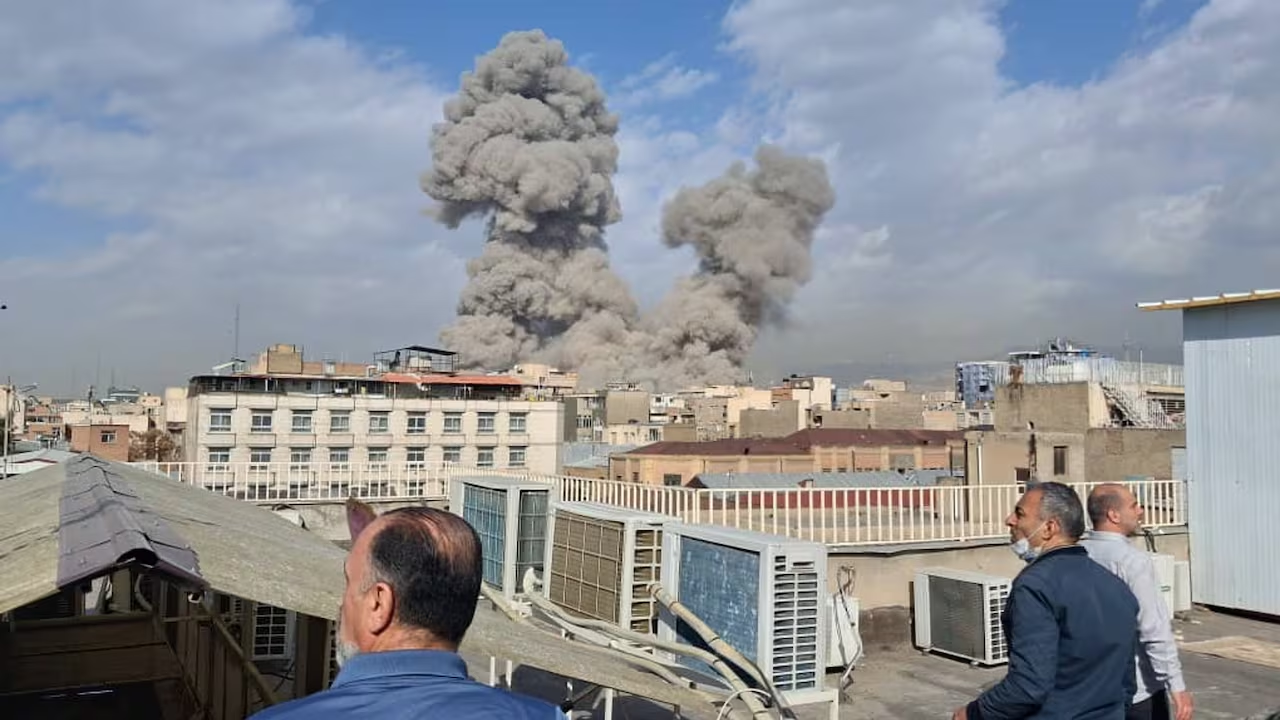
Since Saturday, several Arab states have been targeted by Iranian missiles and drones in what Tehran describes as retaliation for ongoing US-Israeli strikes that began earlier that day.
Iranian retaliatory attacks have resulted in fatalities and dozens of injuries across Gulf states, according to official figures.
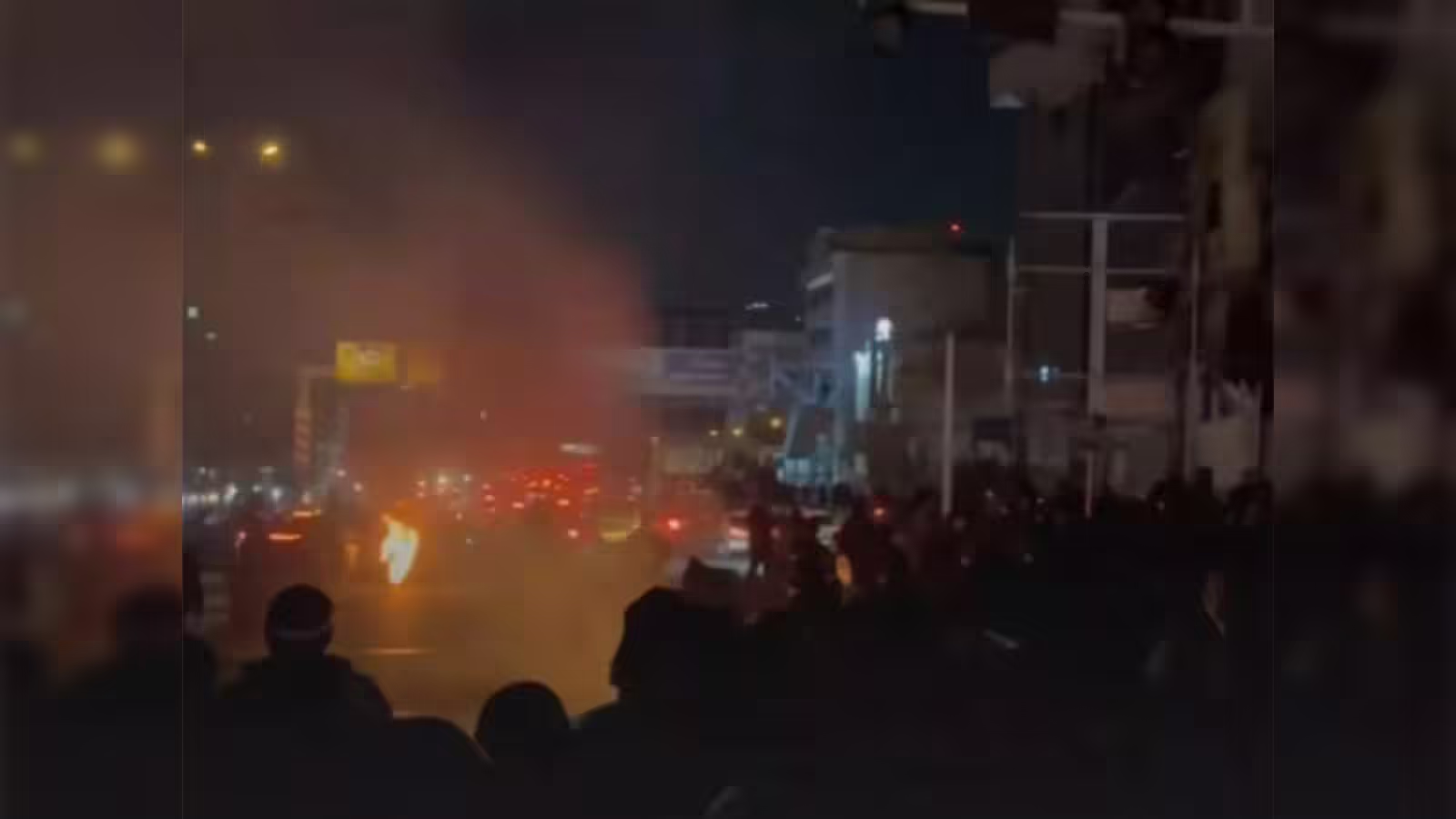
Witnesses reported explosions on Sunday in Dubai, Doha, Manama and Riyadh, marking the second consecutive day of strikes affecting all Gulf countries.
The unprecedented Iranian bombardment campaign has raised fears of a broader regional conflict and shaken stability in a region long viewed as a relative oasis of security in a volatile Middle East.
United Arab Emirates
On Sunday, Iranian strikes appeared to target a complex in Abu Dhabi housing foreign diplomatic missions, including the Israeli embassy. Two people were injured by shrapnel near Etihad Towers.
The UAE Ministry of Defense reported three fatalities — Pakistani, Nepali and Bangladeshi nationals.
According to the ministry, 165 ballistic missiles were launched toward the UAE from Iran, with 152 intercepted and 13 falling into the sea. Authorities also detected 541 Iranian drones, of which 506 were intercepted.
In response to what it called “blatant Iranian missile aggression,” the UAE Foreign Ministry announced the closure of its embassy in Tehran and the withdrawal of its ambassador and diplomatic staff.
The ministry said the attacks targeted civilian sites including residential neighborhoods, airports, ports and service facilities.
Kuwait reported one death and 32 injuries since Saturday due to Iranian strikes.
Oman
In Oman, which has mediated US-Iran talks, the Port of Duqm and an oil tanker off its coast were targeted Sunday.
Oman’s state news agency said two drones struck the commercial port of Duqm. One hit a mobile worker housing unit, injuring an expatriate worker, while debris from the second fell near fuel storage tanks without causing casualties.
Shortly afterward, Omani authorities reported that an oil tanker flying the flag of Palau was targeted offshore, injuring four crew members who were later evacuated.
Omani Foreign Minister Badr al-Busaidi, who has mediated Iranian-US negotiations, later called for an immediate ceasefire during a phone call with Iranian Foreign Minister Abbas Araghchi.
Oman’s Foreign Ministry said al-Busaidi reaffirmed the Sultanate’s call for “a ceasefire and a return to dialogue and negotiations to resolve the conflict diplomatically in a manner that fulfills the legitimate demands of all parties.”
Saudi Arabia
In Saudi Arabia, Iranian attacks targeting King Khalid International Airport in Riyadh and Prince Sultan Air Base — which hosts US personnel — were intercepted Sunday, according to a Gulf source familiar with defense matters.
The source said air defenses successfully intercepted a missile near Riyadh airport and Prince Sultan Air Base Sunday afternoon.
Bahrain and Qatar
Bahraini authorities said drones attacked Manama airport early Sunday, causing minor damage. The US Embassy in Manama advised American citizens to avoid hotels in the capital, warning they could become potential targets following an attack on the Crowne Plaza hotel.
Videos circulating on social media showed smoke rising from high-rise buildings in Manama after intense Iranian strikes Saturday.
Iran’s Defense Ministry said it launched 137 missiles and 209 drones toward targets in the UAE on Saturday. Fires and smoke were seen near major landmarks including Dubai’s Palm Jumeirah and the Burj Al Arab hotel.
Dubai International Airport and Kuwait International Airport were also targeted.
In Qatar, which hosts the US Al Udeid Air Base — the largest American military installation in the region — officials said Iran launched 65 missiles and 12 drones toward the country. Most were intercepted, though eight people were injured, one critically.
Broader Implications
On Saturday, smoke was seen rising from US military installations in Abu Dhabi and Manama, home to the US Navy’s Fifth Fleet, according to witnesses. US bases in Kuwait were also targeted.
The oil- and gas-rich Gulf states, located directly across from Iran, host multiple US military bases and have long-standing alliances with Washington.
Security analyst Anna Jacobs said Gulf states now stand “on the front lines of this brutal war.”
“Gulf countries traditionally support de-escalation and diplomacy,” she said. “But that commitment and those principles are now being tested.”
She added that if Iran continues targeting Gulf states and escalating tensions, “it will be difficult for them to stand idly by.”
Meanwhile, UAE presidential adviser Anwar Gargash criticized Tehran, saying “Iran’s aggression against Gulf states has missed the mark and further isolated Iran at a critical moment.”
“Your war is not with your neighbors,” Gargash wrote on X. “With this escalation, you reinforce the narrative that Iran is the primary source of instability in the region, and that its missile program is a permanent driver of insecurity.”
The continuing exchange of fire has intensified fears that the conflict could widen further, drawing additional regional and international actors into direct confrontation.