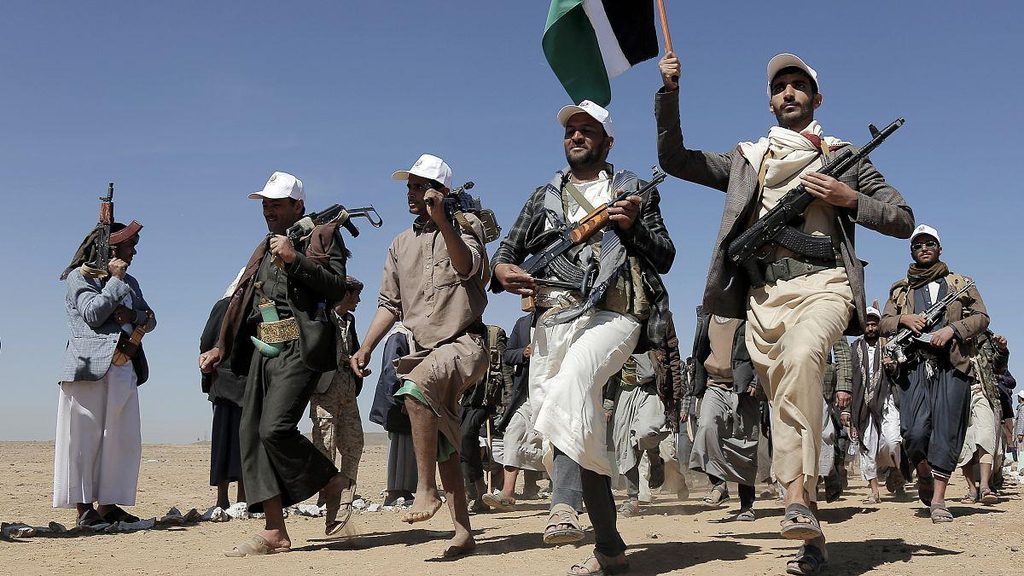
Yemen’s Houthis have swept down the country’s Red Sea coast, driven back government forces and extended their reach towards a vital global shipping passage, unleashing a new displacement crisis while putting Saudi Arabia under mounting military and economic pressure.
The offensive has brought renewed warfare to communities exhausted by years of conflict. More than 100,000 people have been displaced inside Yemen, according to the United Nations refugee agency, while thousands have escaped across the sea to Djibouti.
Its consequences extend far beyond Yemen. With shipping through the Strait of Hormuz already severely disrupted by the Iran war, the Houthi advance threatens the Red Sea route that Saudi Arabia has relied on to keep oil moving to overseas markets.
For Muhammad Aiyash, the upheaval began when shrapnel from a drone strike killed his wife. The man in his 60s fled the port city of Mocha with his three children, reaching a makeshift camp in Aden without belongings.
“By God, we do not possess even a single grain of flour. We have no mattresses and no clothes,” he told Reuters.
His account captures the human cost of an offensive that has rapidly altered Yemen’s military geography.
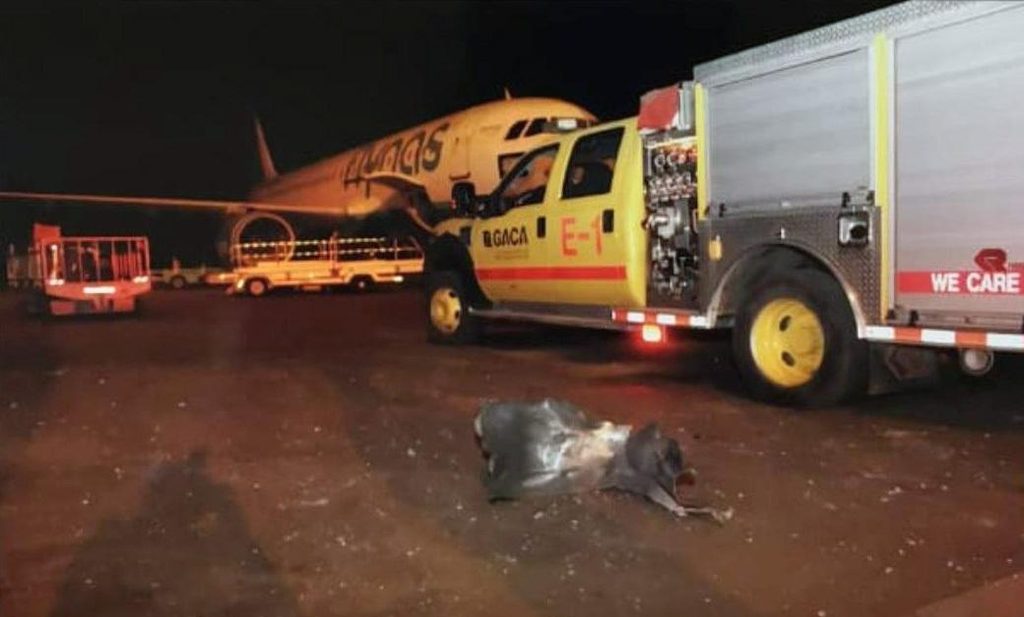
The latest escalation gathered pace last week alongside repeated Houthi attacks inside Saudi Arabia. On September 8 and 9, missiles and drones targeted southern Saudi cities, including Khamis Mushait, Abha and Jazan. Saudi authorities reported 73 people wounded in the first day’s attacks. Government forces in Yemen were also mounting operations against Houthi positions as fighting widened.
By September 10, Yemeni government sources confirmed the fall of Mocha and Houthi movements towards the Hanish islands. The loss of the historic port opened the way for a further push south.
On September 11, government sources said Houthi fighters had reached Perim island, also known as Mayun, inside Bab el-Mandeb. Government forces withdrew from the island, while the Houthis also took the nearby mainland town of Dhubab. Those gains brought the group directly to the approaches of the strait separating Yemen from the Horn of Africa.
The speed of the advance reflected weaknesses in the coastal defences as well as Houthi preparations. Reuters reported, citing Yemeni, Iranian and regional sources, that Iran’s Revolutionary Guards provided guidance for the offensive while Saudi-backed forces concentrated on fighting in northern Yemen. Iranian sources said Tehran had urged greater pressure on Saudi Arabia and promised additional support. Iran publicly denies directing Houthi military operations.
The initial breakthrough has since developed into a struggle to consolidate territory under bombardment.
By Tuesday, September 15, Yemeni government officials said the Houthis retained effective control over almost the entire western Red Sea coastline despite intensified Saudi and Yemeni airstrikes. The Saudi-led coalition also reported 13 civilians wounded in renewed Houthi attacks.
The Institute for the Study of War assessed on September 14 that government-aligned forces appeared to have halted further Houthi advances along parts of the southern coastal front. It also identified fighting inland that could threaten the road connecting Taiz with Aden. The assessment suggests a more contested phase following the initial coastal collapse, with the Houthis seeking to preserve their gains and pressure government supply routes.
Bab el-Mandeb is central to the stakes. It connects the Red Sea with the Gulf of Aden and the Indian Ocean, serving ships travelling between Asian markets and the Suez Canal.
The Houthis say their shipping restrictions target Saudi vessels and that other commercial traffic can continue safely. Their assurances have not removed the uncertainty facing shipowners.
The passage has not been completely closed. Preliminary Kpler data reported on Tuesday showed 21 commodity vessels transited Bab el-Mandeb on Monday, down from 28 on Sunday. At Hormuz, the equivalent count fell to four from 10. The data excludes some vessels potentially travelling with tracking equipment switched off.
The danger is that expanded Houthi positions could make attacks easier and commercial passage less predictable, even without a total blockade.
Saudi Arabia faces an additional problem inland. Its 1,200-kilometre East-West pipeline, which carries oil across the kingdom to the Red Sea, was temporarily shut following a drone attack. Saudi and Iraqi authorities said the attack originated in Iraq, where Iran-backed militias operate. Attribution of that strike therefore needs to be distinguished from the Houthis’ acknowledged attacks on Saudi targets.
Taken together, these developments threaten successive stages of Saudi Arabia’s alternative export route: moving oil across the peninsula and then shipping it from the Red Sea towards customers.
A prolonged pipeline outage could put roughly 2.6 million to 4 million barrels a day at risk, according to figures cited by AP. The duration of the disruption will be critical to its effect on supply and prices.
The crisis has also complicated diplomacy over the wider war. Oman postponed a meeting scheduled for September 14 between Iran and Gulf states aimed at discussing Hormuz. Iran said Saudi Arabia requested the delay because of developments in Yemen; Oman said the postponement served consensus.
Washington, meanwhile, faces pressure to help its Saudi ally without taking on another major military campaign. Three sources told Reuters that President Donald Trump’s administration had declined Saudi requests for direct intervention for now, offering intelligence assistance instead. Trump confirmed discussions with Crown Prince Mohammed bin Salman and said the Houthis had contacted Washington urging it to stay out.
For Yemen, the offensive threatens to unravel the relative calm that followed a U.N.-brokered truce in 2022.
The Houthis seized Sanaa in 2014, prompting Saudi-led intervention the following year. They survived years of bombing and retained the capital and much of the country’s most populous territory. Although the 2022 truce formally expired after six months, it largely restrained major fighting. Negotiations failed to produce a lasting settlement.
That unfinished peace has left civilians exposed to another sudden expansion of the war.
In Aden, displaced families are assembling shelters and searching for food, water and bedding. Some arrived wounded. Others walked for days with children, abandoning possessions they could not carry.
Khadija Kudaf told Reuters she and her children spent three days walking to Aden. They arrived without even the children’s clothes.
In Taiz province, newly established camps are also receiving families escaping shelling and air attacks. Women and children carry water in jerrycans, wash clothes beside tents and wait for assistance.
Aid agencies face insecurity, damaged roads, disrupted telecommunications and movement restrictions, UNHCR said Tuesday. Those obstacles make it harder to reach people precisely when displacement is accelerating.
New civilian casualty claims continued to emerge. A Houthi health official said Saudi airstrikes in Taiz killed three people, including two children, on Tuesday. AP could not independently verify the claim. Human Rights Watch separately said several earlier Houthi attacks on commercial vessels could amount to war crimes.
The coming phase will depend on whether government forces can recover coastal positions, whether Saudi bombardment weakens the Houthi hold, and whether diplomacy can reduce attacks on energy infrastructure and shipping.
For families already displaced, the immediate questions are more basic: where to sleep, how to obtain drinking water and whether relatives left behind can escape.
“We were living peacefully in God’s care, then the war came suddenly,” displaced Yemeni Tawfiq al-Kharij told Reuters, showing a shrapnel wound in his leg. “Some died, and others survived.”