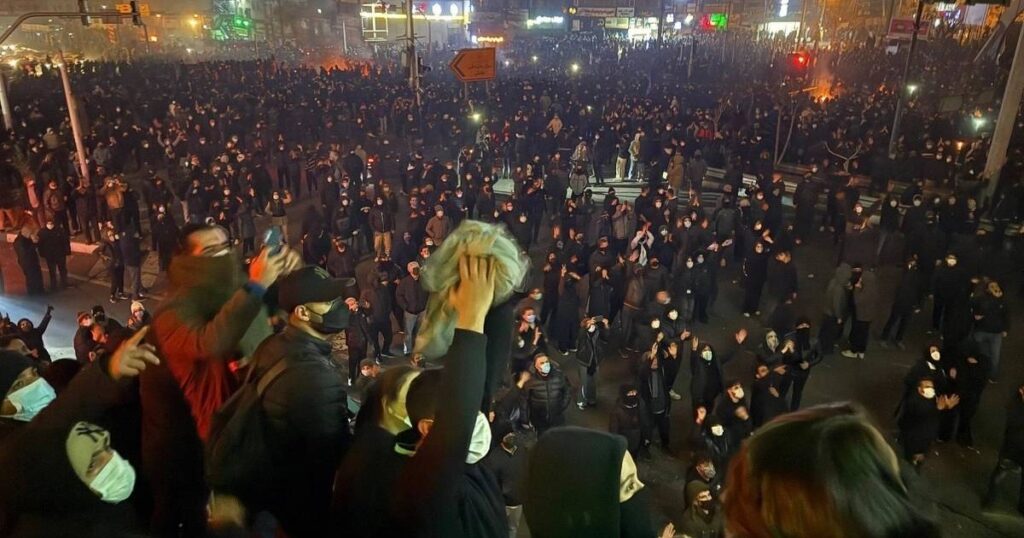
Anti-government demonstrations have entered their third week across Iran, evolving from economic protest into some of the most significant unrest in years as security forces escalate a nationwide crackdown that activists say has left hundreds dead and thousands detained, according to rights groups and medical sources.
Authorities shut down internet and communications networks amid the spiralling unrest that began on 28 December, initially triggered by public anger over a collapsing currency, soaring inflation and deepening economic hardship. The protests have now spread to cities in all 31 provinces, with hundreds of thousands reportedly marching in street demonstrations in Tehran, Shiraz, Tabriz and other major population centres.
Several human rights and medical sources inside Iran say the death toll could be far higher than official tallies, with doctors and hospital staff reporting at least 200 people killed in Tehran alone by live ammunition and activists warning that total fatalities nationwide may number in the hundreds.
Iran’s Revolutionary Guards (IRGC) and regular security forces have been accused of using live fire, tear gas and drones against demonstrators, with eyewitness footage (where available) showing wounded protesters and extensive clashes. Rights monitors say more than 2,600 people have been detained in cities across the country in mass arrests aimed at quelling dissent.
Despite the communications blackout, some estimates — including from activist-linked monitoring groups — put the death toll well above 100, with many more injured or missing; these figures differ between sources due to the severe restrictions on reporting within Iran.
Government officials have framed the unrest as the work of “terrorists” and foreign interference, and the judiciary has signalled tough penalties for participants. Supreme leader Ayatollah Ali Khamenei’s office, while acknowledging security force casualties, has not released comprehensive civilian figures.
International responses include calls for restraint from European capitals and warnings from the United States, while exiled opposition figures have urged citizens to seize key urban centres — a move Iranian authorities have sought to pre-empt with intensified security operations