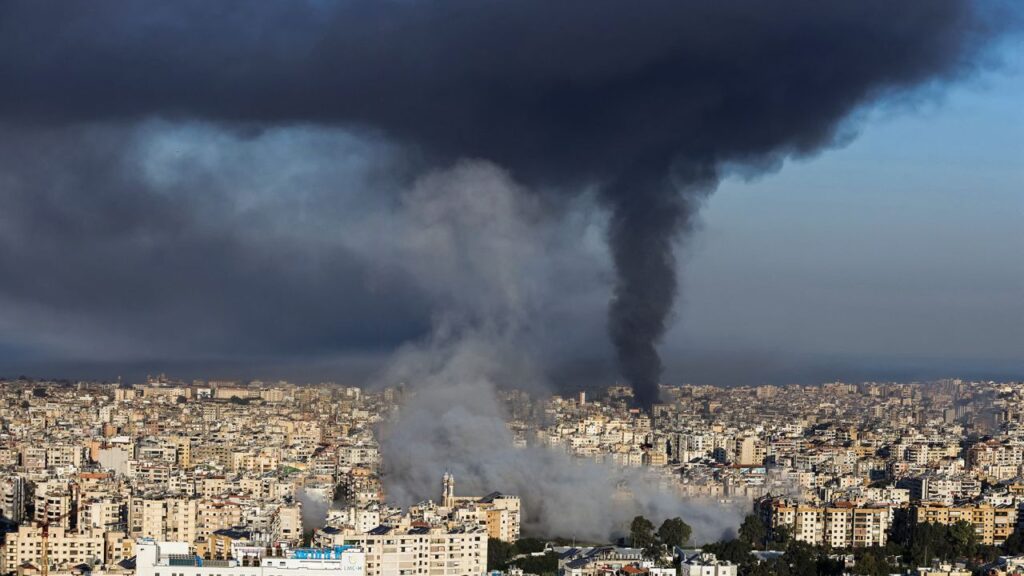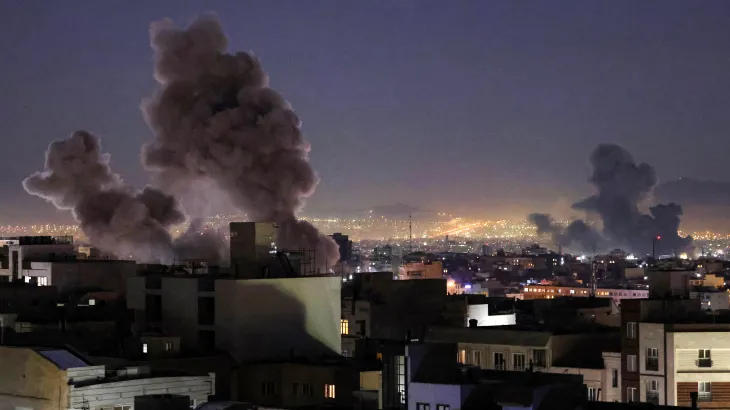
Iran continued launching missiles and drones toward several Gulf states on the sixth day of its war with the United States and Israel, while regional air defenses intercepted many of the incoming attacks, authorities said Thursday.
Saudi Arabia said its air defenses intercepted and destroyed three cruise missiles outside the city of Al-Kharj in central Saudi Arabia, along with three drones east of the same area. Another drone was intercepted near the northern Al-Jouf region close to the Jordanian border, the Saudi Defense Ministry said.
Qatar also reported coming under missile attack. The Qatari Defense Ministry said its air defense systems were responding to the incoming missiles and urged residents and visitors to remain calm and follow official security instructions.
Authorities temporarily evacuated residents living near the U.S. embassy in Doha as a precautionary measure, Qatar’s Interior Ministry said, adding that alternative accommodation had been arranged for those affected.
Since the war erupted on Saturday, Iranian forces have repeatedly launched missiles and drones toward several Gulf states, including Qatar.
Doha later filed formal complaints with the United Nations, sending identical letters to UN Secretary-General Antonio Guterres and the president of the UN Security Council for March, U.S. ambassador Michael Waltz.
Qatar’s UN envoy, Sheikha Alya Al-Thani, described the attacks as a “flagrant violation” of the country’s sovereignty and a dangerous escalation threatening regional security.
According to Qatari defense figures cited in the letter, Iran has launched three cruise missiles, 101 ballistic missiles, 39 drones and two Su-24 fighter jets toward the country since the conflict began.
Qatar said its armed forces intercepted three cruise missiles, 98 ballistic missiles, 24 drones and the two aircraft.
The government said it reserves the right to respond under Article 51 of the UN Charter.
Maritime tensions
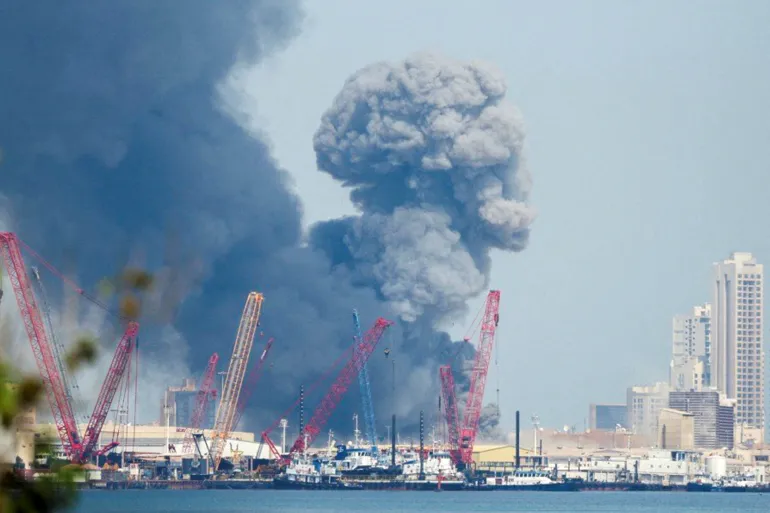
Meanwhile, Kuwait denied reports of an incident near the Mubarak Al-Kabeer port after Iran’s Islamic Revolutionary Guard Corps claimed it had attacked a U.S. oil tanker in the Gulf.
Kuwait’s Interior Ministry said the reported explosion occurred outside the country’s territorial waters, at least 60 kilometers from the port.
The UK Maritime Trade Operations agency earlier reported an incident about 55 nautical miles southeast of Mubarak Al-Kabeer port, where the captain of an oil tanker reported hearing and seeing a large explosion before a small boat left the area.
An oil leak was observed and water reportedly entered the vessel, though all crew members were confirmed safe.
Iran’s Tasnim news agency said a fire had broken out aboard the tanker in the northern Gulf.
The Islamic Revolutionary Guard Corps renewed threats to block the Strait of Hormuz, warning that U.S., Israeli and European vessels and their allies would not be allowed to pass through the key waterway.
Roughly one-fifth of global oil shipments pass through the strategic strait.
UAE and Bahrain targeted
The United Arab Emirates said its air defenses detected seven ballistic missiles on the sixth day of the war, destroying six while one fell inside the country.
Authorities also tracked 131 drones, intercepting 125 while six landed inside the UAE.
The attacks killed three foreign nationals from Pakistan, Nepal and Bangladesh, and left 94 people with minor injuries, officials said.
Explosions were also reported near Zayed International Airport in Abu Dhabi, according to Reuters.
Since the start of the conflict, the UAE says it has intercepted 181 out of 196 ballistic missiles and 1,001 of 1,072 Iranian drones launched toward the country.
Bahrain said it had destroyed 75 missiles and 123 drones since the attacks began. Authorities also reported damage to a facility in the Ma’ameer area and urged residents to remain indoors and avoid filming military operations.
Japan evacuates citizens
Japan’s Foreign Ministry said it would evacuate its citizens from several Gulf states using chartered flights as the conflict continues.
Tokyo raised its travel advisory to the second-highest level for Kuwait, Bahrain, Qatar, the UAE, Saudi Arabia and Oman, urging Japanese nationals to avoid all travel to the region.
Japanese citizens wishing to leave will first be transported by land to Saudi Arabia or Oman before being flown back to Tokyo, officials said.
If you want, I can also quickly produce a shorter “breaking news” version (120–150 words) that hits the key points — useful if you’re pushing this fast to CMS or Telegram.