The confrontation involving Iran is widely framed through familiar narratives: regional escalation, Israeli security, and nuclear deterrence.
But those explanations risk missing a deeper structural reality.
What is unfolding is not simply a geopolitical crisis. It is a confrontation over the future of the global financial system — specifically, the dominance of the US dollar in energy markets.
At its core, this is a battle over the petrodollar.
Not about Israel — about system preservation
A popular narrative, particularly across segments of left-leaning media, portrays US involvement as primarily driven by Israel — whether through strategic alignment, political pressure, or even ideological or “biblical” motivations.
But that framing is not based in any reality where resources and commerce exists.
And it reduces a systemic conflict to a proxy explanation, overlooking the deeper architecture of global power. The United States is not confronting Iran only because of Israel. It is confronting Iran because Tehran sits at the intersection of energy transit, sanctions resistance, and a growing challenge to dollar dominance led by China and a wider bloc of non-aligned and BRICS-aligned states.
The system beneath the system
Since the 1970s, global oil trade has been overwhelmingly conducted in US dollars. This created constant global demand for the currency, embedding American financial dominance into the structure of the global economy.
It also enabled Washington to weaponise finance — using sanctions, access to dollar clearing, and global banking infrastructure as tools of geopolitical power.
That system does not only underpin oil markets.
It underpins the dollar’s broader role as the world’s dominant reserve currency — even as its share of global reserves has gradually declined over the past two decades.
This is the system now being tested.
The first battlefield was Venezuela
The challenge to the petrodollar system did not begin with Iran.
It began in Venezuela.
Caracas increasingly moved toward non-dollar oil trade, deepening ties with China and operating outside US financial channels. That shift demonstrated something critical: oil could move beyond the dollar system, even under sanctions.
Washington’s response escalated.
In early 2026, the United States moved beyond sanctions into direct intervention, removing President Nicolás Maduro and restructuring access to Venezuela’s oil sector through externally controlled licensing and financial mechanisms.
This marked a shift from economic pressure to structural control.
It also sent a message.
When a major oil producer begins to drift outside the dollar framework, the response may escalate beyond financial tools.
From Venezuela to Russia to Iran
Venezuela was not an isolated case.
Russia accelerated de-dollarisation after Western sanctions, shifting portions of its energy trade into alternative currencies, particularly with China.
Iran, long under sanctions, built parallel systems of oil trade outside dollar clearing mechanisms, relying heavily on discounted crude flows and alternative settlement channels.
Together, these cases form a sequence:
- Venezuela tested the limits of non-dollar oil trade
- Russia expanded it under pressure
- Iran is now attempting to weaponise it
At the center of this system sits China.
China’s long game
China’s role is not reactive — it is strategic.
Beijing has spent years building the financial infrastructure needed to support non-dollar energy trade. This includes the launch of yuan-denominated oil futures in Shanghai in 2018 and the gradual expansion of cross-border payment systems outside traditional Western channels.
As the world’s largest energy importer, China provides both demand and settlement capacity.
A large share of Iran’s oil exports now flows to China, often outside traditional dollar systems.
This is not coincidence.
It is design.
Saudi Arabia and the erosion of exclusivity
Saudi Arabia — the original pillar of the petrodollar system — has not abandoned the dollar.
But it has begun to loosen its exclusivity.
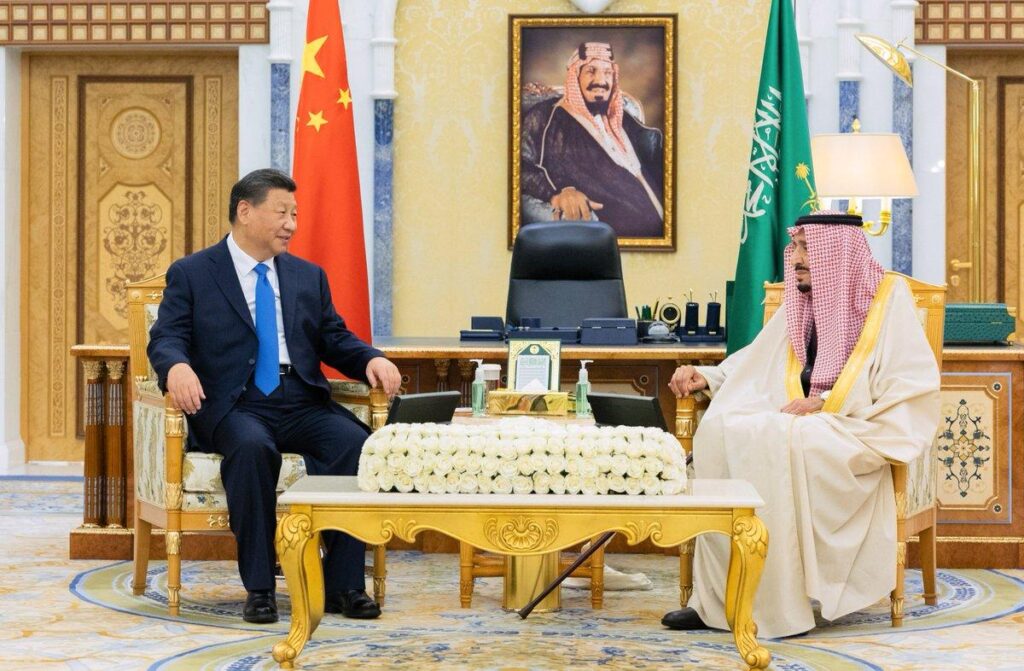
Riyadh has deepened financial cooperation with China, signed currency swap agreements, and participated in emerging non-dollar settlement frameworks. These moves do not replace the dollar, but they reduce its monopoly.
This matters.
Because the petrodollar system was never just about oil being traded in dollars.
It was about the absence of alternatives.
That absence is now eroding.
Enter Iran: from participant to disruptor
Iran’s role in this evolving system is defined by geography.
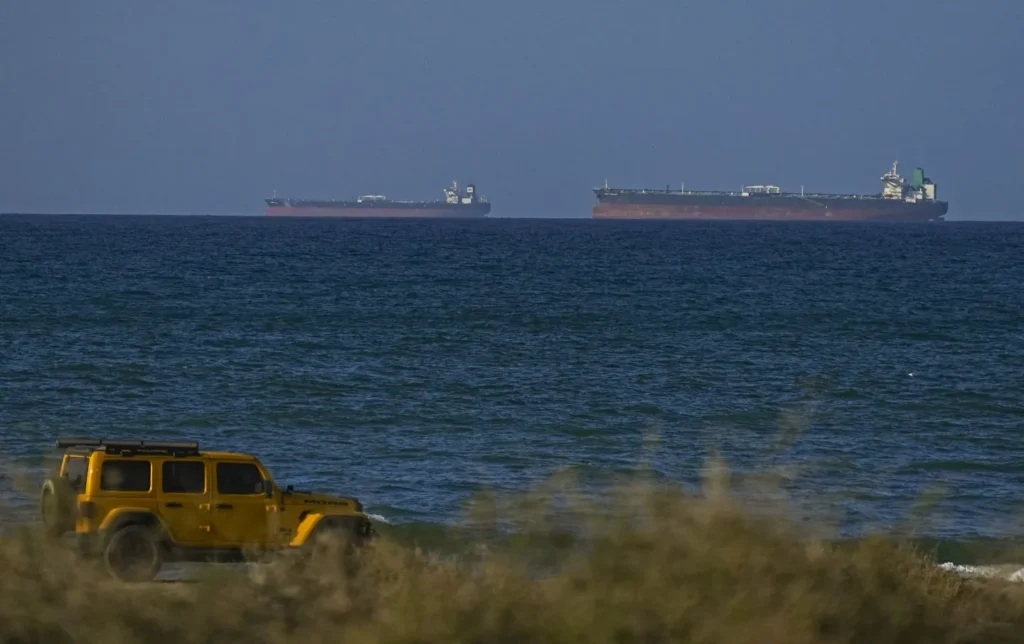
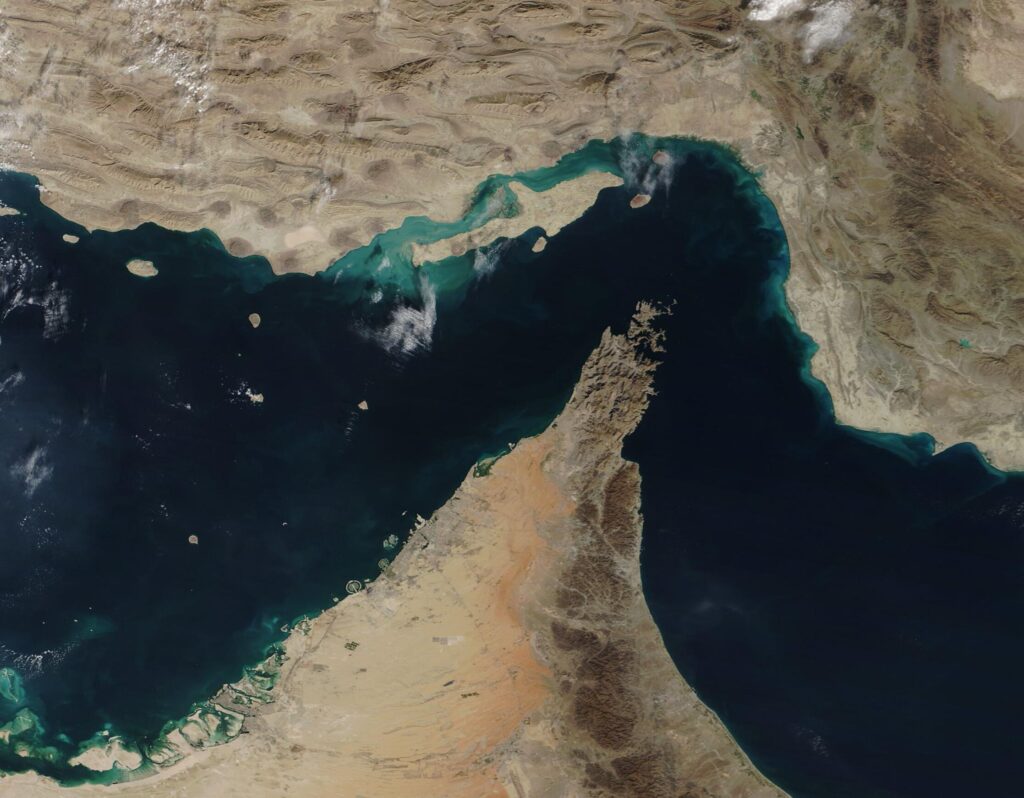
The country sits along the Strait of Hormuz — the most critical energy chokepoint in the world, through which roughly 20% of global oil flows.
For decades, Iran’s leverage over Hormuz was understood in military terms.
Now it is evolving into something more complex.
Rather than fully closing the strait, Tehran is exploring controlled pressure — including the possibility of linking transit, tolls, or access to alternative payment systems.
This is where the confrontation escalates.
The Hormuz stress test
Evidence is beginning to emerge that this shift is no longer theoretical.
Reports indicate that some shipping transactions linked to the Strait of Hormuz have already been conducted using non-dollar currencies, including the Chinese yuan.
Even if limited in scale, this represents a significant development.
It suggests that the transition from petrodollar to parallel systems is not just being discussed — it is being tested in real-world conditions.
Hormuz is becoming more than a physical chokepoint.
It is becoming a financial one.
From petrodollar to petroyuan
The so-called “petroyuan” is not a replacement for the dollar.
It is an alternative.
And it is growing in specific corridors:
- Russia conducts energy trade outside the dollar system
- Iran sells oil through alternative channels, largely to China
- Gulf states are gradually opening space for non-dollar transactions
- BRICS-aligned economies are expanding bilateral trade outside dollar frameworks
The result is a fragmented system — not a collapse, but a dilution.
Limits of disruption
Despite these developments, the dollar remains dominant.
It continues to underpin global trade, financial markets, and central bank reserves.
Alternative systems face structural constraints, including liquidity, convertibility, and trust.
But dominance does not need to collapse to be challenged.
It only needs to weaken.
A financial war in slow motion
What is emerging is a multipolar financial landscape:
- A dollar-based system remains dominant
- A yuan-linked system expands in parallel
- Regional and bilateral alternatives continue to grow
The Iran crisis is accelerating this transition.
Not because Iran alone can reshape the system — but because it sits at the intersection of energy flows, sanctions resistance, and financial experimentation.
Conclusion
The confrontation with Iran is being fought on multiple levels.
On the surface, it is a regional military crisis.
But underneath, it is a struggle over something far more fundamental:
Who controls the currency of energy, and by extension, the architecture of global power itself.
From Venezuela’s early role as a testing ground to Russia’s expansion of alternative trade and Iran’s leverage over the Strait of Hormuz, the trajectory is becoming clearer.
This is not just about oil.
It is about the system that prices it.