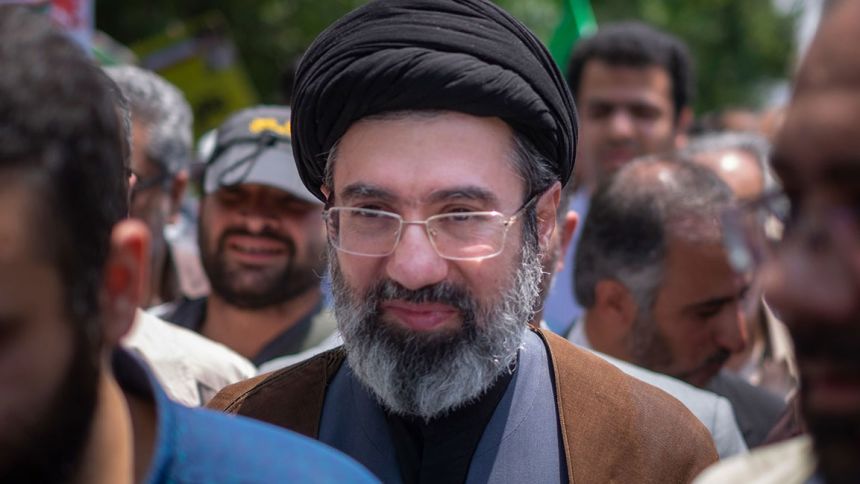
Iran has named Mojtaba Khamenei as the country’s new supreme leader following the killing of his father, Ali Khamenei, in the opening day of the war, a move that signals the dominance of hardliners and reduces prospects for a swift end to the conflict.
The appointment of the 56-year-old cleric on Monday was quickly endorsed by Iran’s political and military establishment, with officials and institutions issuing pledges of loyalty as the country remains locked in a widening confrontation with Israel and the United States.
Analysts say the decision indicates that Iran’s leadership intends to maintain its current course rather than pursue rapid concessions to end the war.
The announcement rattled global markets already strained by disruptions to energy supplies. Oil prices surged sharply while stock markets in Asia and Europe fell, reflecting fears that the conflict could continue to disrupt one of the world’s most critical energy corridors.
Mojtaba Khamenei, long seen as a powerful figure behind the scenes, is believed to have strong ties to Iran’s security forces and the networks linked to the Islamic Revolutionary Guard Corps.
Iranian officials framed the succession as a demonstration of continuity following the death of Ali Khamenei.
“We will obey the commander-in-chief until the last drop of our blood,” Iran’s defence council said in a statement.
Iranians contacted by phone expressed sharply divided views about the appointment. Supporters of the government welcomed the move as a show of resilience during wartime, while critics said it dashed hopes that the leadership change might open the door to political reform.
“I am very happy that he is our new leader. It proves the system did not collapse with the death of his father,” said Zahra Mirbagheri, a university student in Tehran.
Others were less optimistic.
“The Guards and the system are still powerful. They have tens of thousands of forces ready to fight to keep this regime in place. We, the people, have nothing,” said Babak, a businessman from the central city of Arak who declined to give his full name.
Israel has said its military campaign aims to dismantle Iran’s system of clerical rule, while Washington initially said its goal was to eliminate Iran’s missile and nuclear capabilities. U.S. President Donald Trump has since expanded his rhetoric, demanding Iran’s “unconditional surrender” and suggesting the United States should influence the selection of Iran’s future leadership.
Trump said over the weekend that any new Iranian leader would need U.S. approval to remain in power, while Israeli officials warned they could target whoever replaced the elder Khamenei if Iran’s policies did not change.
The conflict has severely disrupted global energy flows, effectively shutting the Strait of Hormuz, through which roughly one-fifth of the world’s oil and liquefied natural gas shipments normally pass.
With tankers unable to transit the route for more than a week, producers have begun halting output as storage facilities fill.
Brent crude prices rose sharply, climbing above $105 per barrel during Monday trading after briefly surging as high as $119. Markets feared the crisis could trigger an energy shock reminiscent of the oil crises of the 1970s.
Military operations continued across the region.
Israeli forces reported strikes in central Iran and said they had targeted positions in Beirut after Hezbollah fired rockets across the border from Lebanon.
Iran’s ambassador to the United Nations said at least 1,332 Iranian civilians have been killed and thousands wounded in U.S. and Israeli strikes.
Lebanon has also reported dozens of deaths, including at least four people killed in an Israeli strike in Beirut on Sunday.
In Israel, authorities said one man died from shrapnel wounds on Monday, bringing the total number of fatalities in Iranian strikes to 11.
Meanwhile, fires and thick smoke were seen rising from energy facilities across the region, including a refinery in Bahrain where state oil company Bapco declared force majeure following an attack.
The widening strikes on energy infrastructure have intensified fears that the conflict could develop into a prolonged regional war with significant consequences for global markets.