The small Iranian island of Kharg in the northern Gulf is emerging as one of the most strategically significant locations in the escalating conflict between Iran and the United States and its allies.
Though little known outside energy and military circles, Kharg Island functions as the backbone of Iran’s oil economy. An estimated 90% of the country’s crude oil exports pass through its sprawling loading terminals, where pipelines from Iran’s interior converge before tankers depart for global markets.
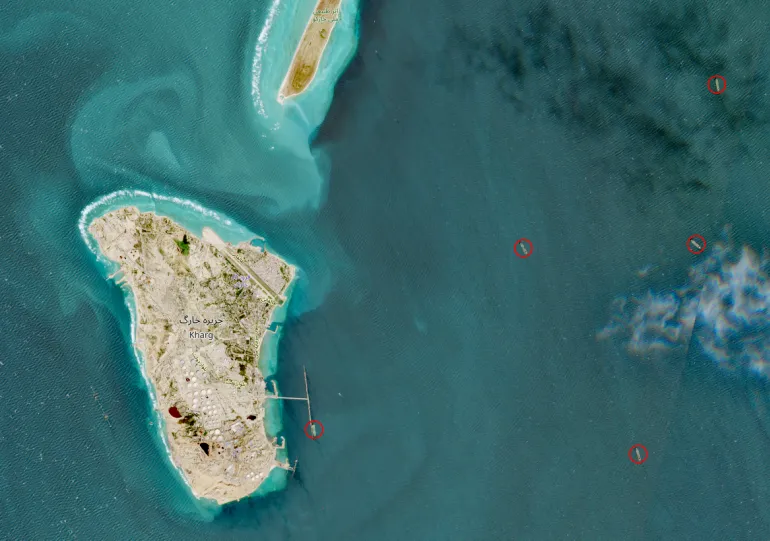
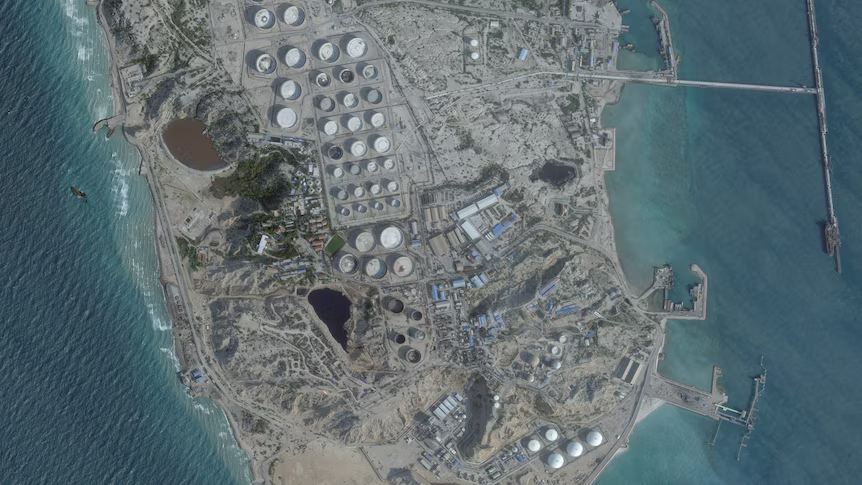
Satellite imagery shows the island’s coastline dominated by massive storage tanks, loading jetties and tanker berths designed to handle some of the world’s largest crude carriers. For decades, the facility has been Iran’s economic lifeline, funneling billions of dollars in energy exports to buyers across Asia and beyond.
Now, as war intensifies, Kharg is increasingly being viewed as a potential military objective.
The United States has begun deploying a Marine Expeditionary Unit to the Middle East, part of an Amphibious Ready Group centered on the amphibious assault ship USS Tripoli. A Marine Expeditionary Unit typically consists of roughly 2,200 Marines supported by attack helicopters, MV-22 Osprey tilt-rotor aircraft, artillery, armored vehicles and F-35B fighter jets capable of launching directly from amphibious assault ships.
Designed for rapid coastal warfare, such units specialize in seizing strategic islands, ports and energy infrastructure.
The deployment signals that Washington is preparing for possible amphibious operations in the Gulf — a type of mission for which Marine expeditionary forces are specifically trained.
But the Marines would not be operating alone.
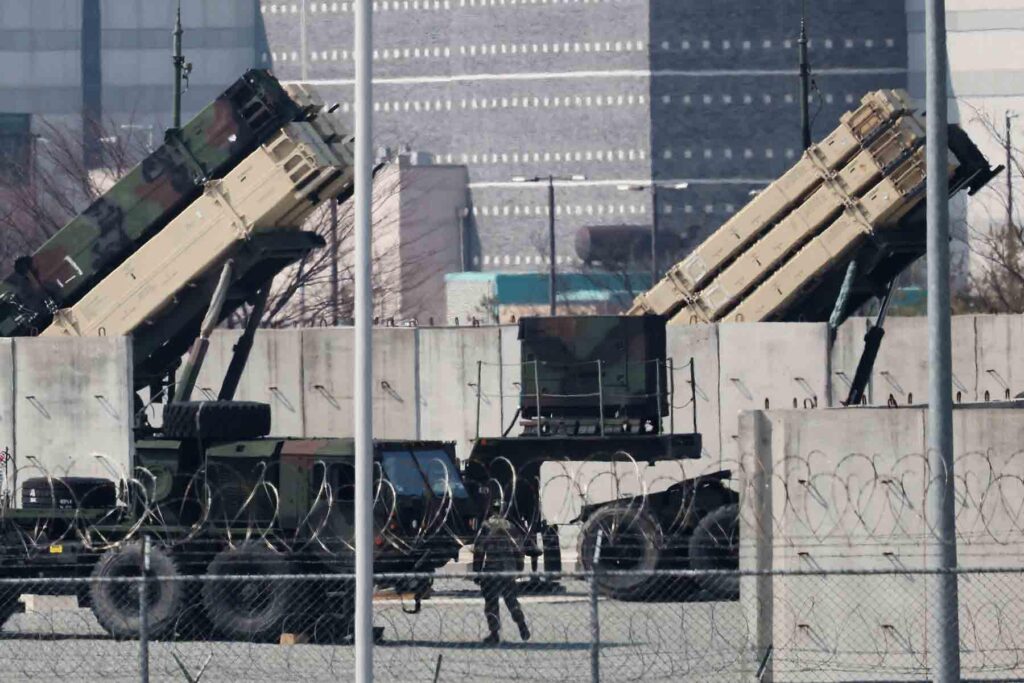
The United States has assembled a formidable concentration of firepower across the region to support any potential operation.
Two U.S. aircraft carrier strike groups are operating within range of the Gulf, each capable of launching dozens of strike aircraft and cruise missiles. These carrier groups are supported by guided-missile destroyers and cruisers equipped with Tomahawk land-attack missiles and advanced air-defense systems.
Additional U.S. Navy warships and submarines are believed to be positioned across the Arabian Sea and eastern Mediterranean, providing long-range strike capability against coastal targets.
American air power across the region also adds significant weight to any potential operation. U.S. bases in Qatar, Bahrain, Kuwait and the United Arab Emirates host fighter aircraft, surveillance platforms and refueling tankers capable of sustaining continuous strike operations.
Taken together, the naval and air assets surrounding the Gulf provide overwhelming support for amphibious forces operating near Iran’s coastline.
Military planners view Kharg as a critical node in Iran’s ability to finance its war effort. Disrupting operations on the island — or placing it under allied control — would effectively shut down the majority of Iran’s oil exports overnight.
That would deliver a devastating economic blow to Tehran while dramatically reshaping the strategic balance of the conflict.
Kharg’s geography makes it both valuable and vulnerable. Located roughly 25 kilometers off Iran’s coast in the Gulf, the island sits directly along major tanker routes and within range of naval and air forces operating in the region. While Iran maintains defensive positions on the island and nearby coastlines, its infrastructure is highly concentrated and exposed.
Energy analysts say that even limited damage to the island’s loading terminals could severely disrupt global oil flows.
For military strategists, however, the objective may go beyond simple destruction.
A seizure of Kharg Island would represent one of the most dramatic moves of the war, placing Iran’s primary oil export hub under direct pressure and potentially allowing allied forces to control the flow of crude leaving the country.
Such a move would also carry enormous global implications. Oil markets have already been shaken by attacks on tankers and infrastructure across the region, and any battle around Kharg Island could send energy prices surging worldwide.
For now, Kharg remains under Iranian control.
But as U.S. naval forces gather in the Gulf and Marine expeditionary troops move closer to the region, the island that ships most of Iran’s oil to the world is increasingly being viewed as the conflict’s most decisive prize.