U.S. President Donald Trump has threatened sweeping economic consequences against any country that provides what he described as a “lifeline” to Iran, escalating pressure on Tehran and its international partners nearly six months into the U.S.-Israeli war with the Islamic Republic.
Trump said in a social media post that Washington was prepared to impose “economic warfare and isolation on an unprecedented scale” against governments, companies, financial institutions and other entities that continue doing business with Iran.
“ANY country that allows its financial institutions, businesses, airports, or government entities to provide any type of lifeline to Iran will itself face TREMENDOUS Economic Consequences,” Trump wrote.
He did not specify what measures the United States would impose or identify individual countries that could be targeted.
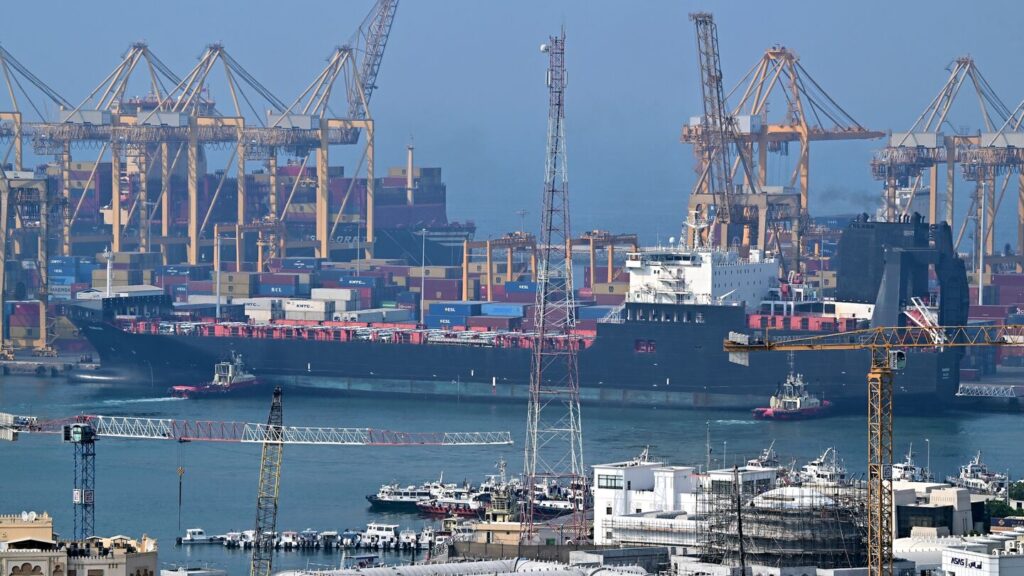
The warning comes as Washington struggles to bring an end to a conflict that has killed thousands, disrupted energy markets and severely restricted commercial shipping through the Strait of Hormuz, one of the world’s most important oil transit routes.
Two ceasefire agreements announced by the United States and Iran, in April and June, collapsed shortly after taking effect. Israel has since largely withdrawn from direct fighting, but tensions remain high across the Gulf.
Iranian Foreign Minister Abbas Araqchi dismissed Trump’s latest threat as an attempt to distract from economic problems inside the United States, including record public debt and elevated borrowing costs.
Araqchi accused Washington of pursuing policies that had repeatedly failed and said economic pressure on Iran threatened both the global economy and the sovereignty of other countries.
China rejects sanctions pressure
China, by far the largest buyer of Iranian crude transported by sea, could be among the countries most exposed to any expansion of U.S. secondary sanctions.
Data from analytics firm Kpler shows China purchased more than 80% of Iran’s shipped oil in 2025.
Beijing rejected the use of economic pressure and urged all sides to pursue diplomacy.
“Sanctions and pressure will not solve the problem,” Chinese Foreign Ministry spokesperson Lin Jian said, calling for a political and diplomatic resolution.
Any attempt by Washington to impose additional penalties on China could also trigger retaliation at a time when the United States remains dependent on Chinese exports of strategically important materials, including rare earth minerals.
Oman caught between Washington and Tehran
Trump’s warning may also complicate efforts by Oman, a longstanding U.S. security partner that has frequently mediated between Washington and Tehran.
Iran and Oman have been negotiating arrangements aimed at managing security and shipping through the Strait of Hormuz, with Iranian officials saying in recent weeks that an agreement was close.
Trump warned earlier this week that the United States could strike Oman if Muscat “gets in the way,” sharpening pressure on one of the region’s most established diplomatic intermediaries.
Omani Foreign Minister Badr Albusaidi said on Thursday that lasting security in the strait could only be achieved through a permanent regional peace and rejected further military escalation.
The United Arab Emirates, another major U.S. partner in the Gulf, meanwhile announced on Tuesday that it was suspending trade, commercial exchanges and financial transactions with Iran until further notice.
The decision followed a UAE Defence Ministry statement saying two Iranian missiles had been detected before falling into the sea. Tehran rejected the allegation as baseless.
Iranian economy under mounting strain
Iran entered the war already weakened by years of sanctions, high inflation, a depreciating currency, power shortages and long-standing structural economic problems.
The conflict has added damaged infrastructure, reduced production, disrupted trade and reconstruction costs to those pressures.
President Masoud Pezeshkian acknowledged the growing economic strain last week, blaming inflation partly on U.S. restrictions on Iranian ports and oil exports.
Trump has yet to achieve several of the objectives Washington set at the beginning of the war, including dismantling Iran’s nuclear programme, reducing Tehran’s ability to strike regional rivals and creating conditions for political change inside Iran.
The Trump administration is also seeking control of Iran’s stockpile of highly enriched uranium and a new agreement placing tighter restrictions on Tehran’s nuclear energy and research programmes.
Iran, a signatory to the Nuclear Non-Proliferation Treaty, maintains that its nuclear activities are intended for peaceful purposes.
Trump said on Tuesday that no negotiations were currently taking place with Tehran. However, a day earlier, his son-in-law and special envoy Jared Kushner said discussions were continuing and were “probably more robust” than ever.