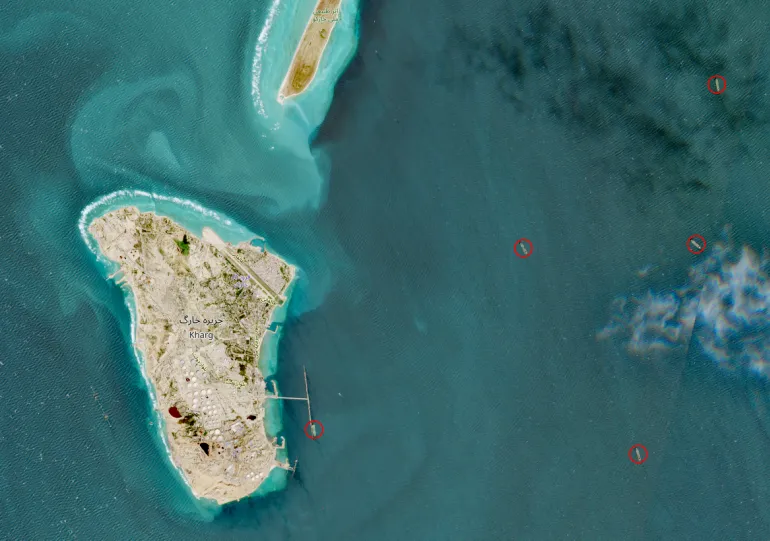
US President Donald Trump has warned that American forces could carry out additional strikes on Iran’s Kharg Island oil export terminal while urging allied nations to deploy naval forces to help secure the Strait of Hormuz, one of the world’s most critical energy shipping routes.
Speaking as the US-Israel war with Iran entered its third week, Trump said US attacks had already inflicted major damage on the island, which handles the majority of Iran’s crude exports. He indicated that more strikes could follow, telling NBC News that Washington may target the facility again.
“We may hit it a few more times,” Trump said.
The remarks marked a shift from earlier statements that US operations were focused strictly on military targets, raising concerns among regional diplomats who have been attempting to open channels for negotiations.
Despite those diplomatic efforts, US officials told Reuters that Washington has rejected proposals from several Middle Eastern partners to begin talks aimed at ending the conflict.
Energy crisis deepens as fighting spreads
The conflict shows little sign of easing as missile and drone exchanges continued across the region on Sunday.
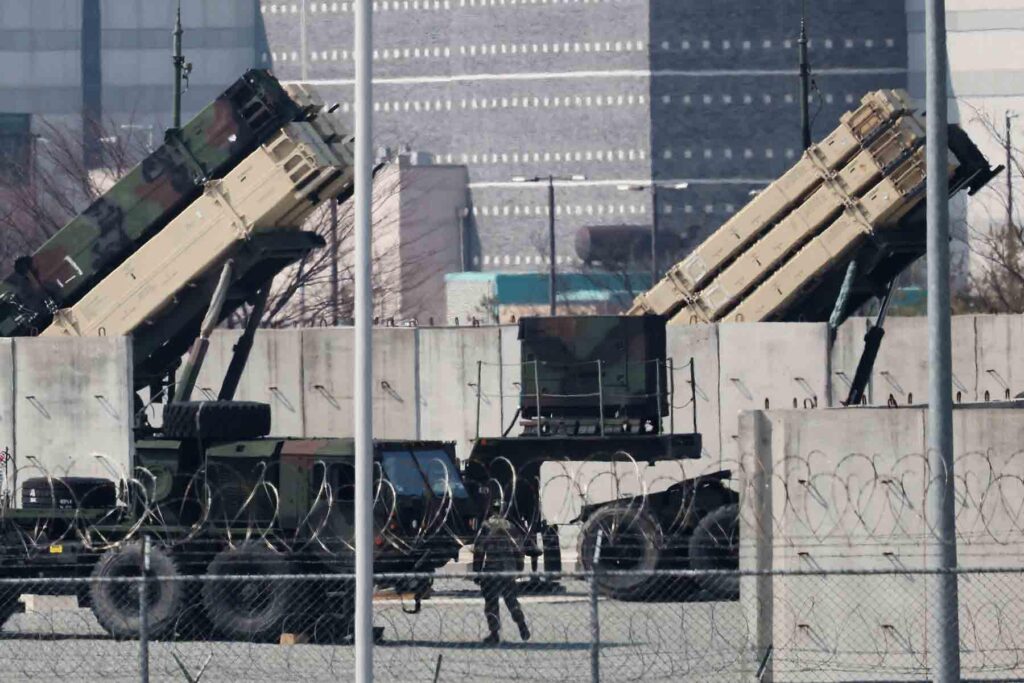
Iran’s Revolutionary Guards said they launched missiles and drones targeting Israeli positions and three US bases in the Middle East, describing the attacks as the first phase of retaliation for workers killed in strikes on Iranian industrial facilities.
The Israeli military said its air defenses were intercepting incoming projectiles.
Saudi Arabia’s defense ministry also reported intercepting and destroying ten drones aimed at Riyadh and eastern parts of the kingdom. Iranian officials denied involvement in that attack, according to Iran’s semi-official Fars news agency.
Elsewhere, a drone strike disrupted operations at a major energy hub in the United Arab Emirates, while the United States issued an advisory urging American citizens to leave Iraq due to rising security risks.
The war, which began on February 28 after joint US-Israeli attacks on Iranian targets, has already killed more than 2,000 people, the majority in Iran, according to figures reported by governments and state media.
Among the latest casualties were at least 15 people killed when an airstrike hit a factory producing refrigerators and heaters in the central Iranian city of Isfahan, Iranian media said.
Global oil markets under pressure
The fighting has triggered what analysts describe as the largest disruption to global oil supplies in modern history.
The Strait of Hormuz, through which roughly one-fifth of the world’s oil shipments pass, remains at the center of the crisis. Iran has repeatedly warned it could shut the waterway entirely in response to attacks on its territory and energy infrastructure.
Trump has urged major energy-importing nations to take a more active role in protecting the shipping route.
“The countries of the world that receive oil through the Hormuz Strait must take care of that passage, and we will help — a lot,” Trump wrote on social media.
He specifically called on China, France, Japan, South Korea and Britain to send naval vessels to patrol the waterway, though none of those governments immediately committed to deploying ships.
Japan’s ruling party policy chief Takayuki Kobayashi said the possibility could not be ruled out but stressed that legal restrictions under Japan’s pacifist constitution make such deployments difficult unless the nation’s survival is directly threatened.
France has meanwhile floated the idea of forming an international naval coalition to secure the shipping lanes once the immediate security situation stabilizes, while Britain said it is discussing possible options with allies to safeguard maritime traffic.
Regional escalation risks
Iran’s Supreme Leader Mojtaba Khamenei, who took power after the killing of his father earlier in the conflict, has vowed that the Strait of Hormuz should remain closed in response to US and Israeli attacks.
Ukrainian President Volodymyr Zelenskiy also claimed that Russia has been supplying Iran with Shahed drones used in attacks against Israeli and American targets.
With continued strikes on energy infrastructure and shipping hubs, analysts warn that the oil market shock triggered by the war may persist for weeks or even months.