U.S. President Donald Trump warned Iran on Thursday that it must reach a nuclear agreement with Washington or face unspecified consequences, suggesting a deadline of no more than 10 to 15 days as tensions rise amid a major U.S. military buildup in the Middle East.
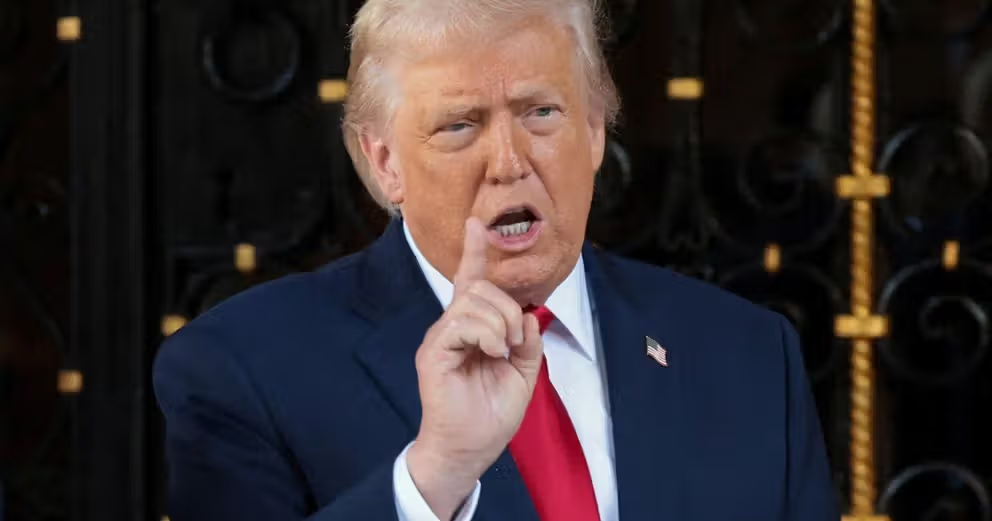
Speaking in Washington, Trump said negotiations with Iran were ongoing but insisted that Tehran must agree to what he described as a “meaningful” deal or risk escalation.
“Otherwise, bad things happen,” Trump said, repeating previous threats to use military force. He referenced U.S. airstrikes carried out last June, claiming Iran’s nuclear capabilities had been “decimated,” while adding that further action remained possible.
“You’ll be finding out over the next probably 10 days,” Trump said. Later, aboard Air Force One, he clarified that “10, 15 days, pretty much maximum” would be enough time for Iran to respond.
Despite the warnings, Trump declined to specify what action the United States might take, reiterating only that Iran would have to make a deal “one way or another.”
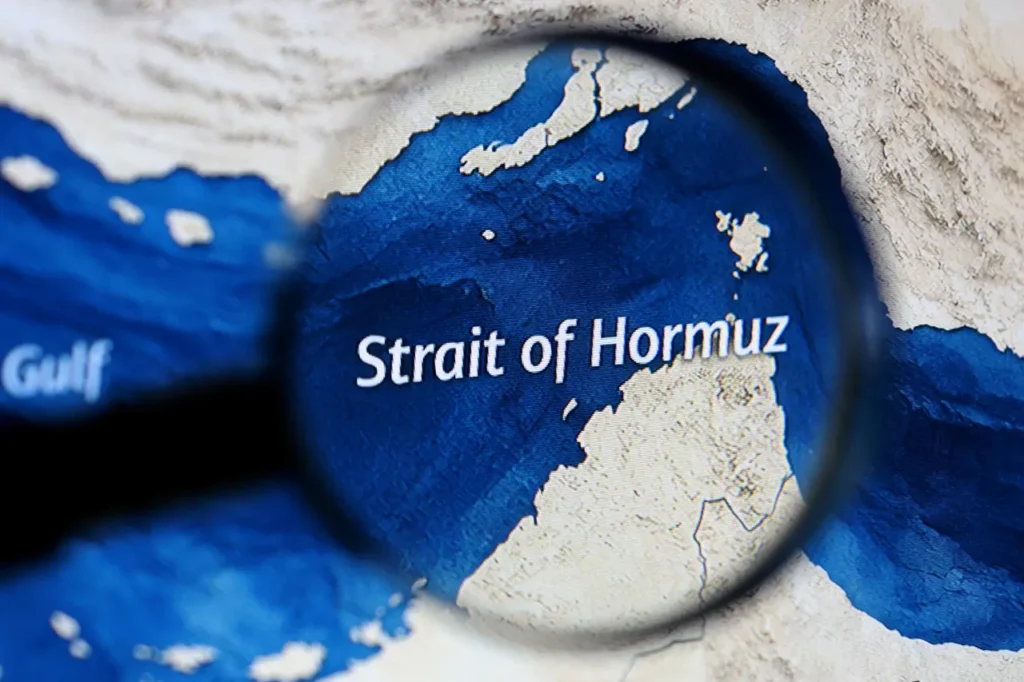
Rising tensions have pushed oil prices higher and raised fears of a wider conflict. On Thursday, a Russian corvette joined planned Iranian naval drills in the Gulf of Oman, a key global energy shipping route.
U.S. and Iranian negotiators met earlier this week, with Iranian Foreign Minister Abbas Araqchi saying the talks had produced agreement on “guiding principles.” The White House said, however, that significant differences remain, though a senior U.S. official confirmed Iran is expected to submit a written proposal addressing American concerns.
Trump said negotiations were progressing well and urged Tehran to choose what he called “the path to peace.”
“They can’t have a nuclear weapon,” he said. “You can’t have peace in the Middle East if they have a nuclear weapon.”
Iran maintains that its nuclear program is solely for peaceful purposes, a claim disputed by the United States and Israel, both of which accuse Tehran of seeking nuclear weapons capability.
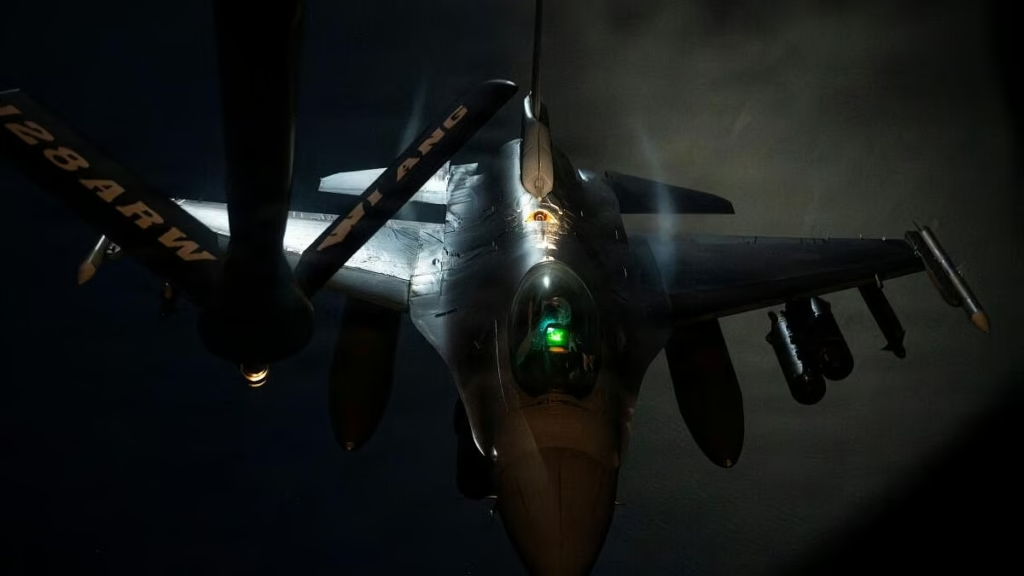
The renewed threats come as Washington continues to deploy aircraft carriers, warships, and fighter jets to the region. A senior U.S. official said the military buildup should be completed by mid-March.
Russia on Thursday warned against what it described as an “unprecedented escalation of tension” and urged all sides to show restraint.
The United States and Israel carried out joint strikes on Iranian nuclear and military sites last June. U.S. Secretary of State Marco Rubio is scheduled to meet Israeli Prime Minister Benjamin Netanyahu on February 28 to discuss Iran, according to U.S. officials.
Washington is demanding that Iran fully abandon uranium enrichment, dismantle its long-range ballistic missile program, and halt support for armed groups across the Middle East. Iran has rejected any discussion beyond its nuclear file, calling limits on its missile program a red line.
Satellite imagery in recent months has shown Iran repairing and reinforcing nuclear and missile facilities damaged in earlier strikes, while also tracking increased activity at U.S. military bases across the region.
Iran’s naval drills with Russia are part of a broader series of exercises in the Gulf of Oman, with state media broadcasting footage of special forces deployments by sea and air.
Several European countries have expressed growing concern. Poland on Thursday urged its citizens to leave Iran, with Prime Minister Donald Tusk warning that evacuation windows could close rapidly.
Trump resumed public threats against Iran in January, following a deadly crackdown on widespread protests inside the country that reportedly left thousands dead.