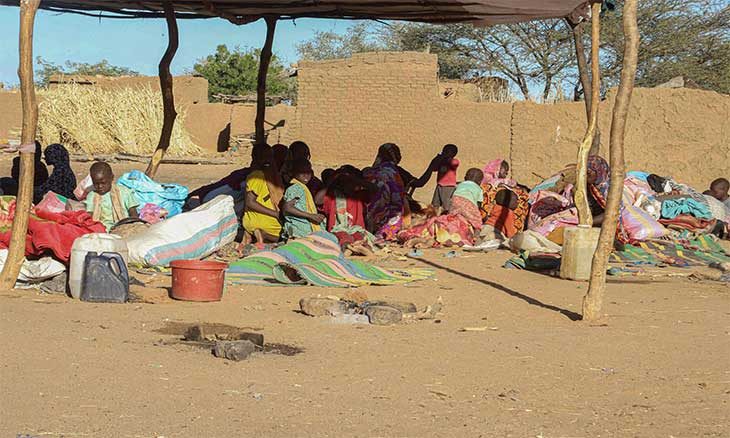
Sudan’s war has pushed the country’s education system to the brink of collapse, with an estimated 11 million students still out of school since fighting erupted in April 2023, according to Sudanese educators and civil society groups.
The scale of disruption underscores one of the most severe humanitarian consequences of the conflict, as large parts of the country remain without functioning schools, particularly in Darfur, Kordofan, and other frontline regions.
Millions left behind as system collapses
Before the war, Sudan’s education system served around 14 million students. Today, roughly 11 million have yet to return to classrooms, said Sami al-Baqir, a representative of the Sudanese Teachers Committee.
He cautioned that current figures remain estimates due to the lack of reliable data from conflict zones, where monitoring systems have effectively collapsed.
“The numbers are based largely on pre-war records,” he said, noting that the process of registering students for national exams has been severely disrupted across Darfur and Kordofan.
Exam participation drops sharply
The impact is most visible in Sudan’s national secondary school exams.
In the year before the war, around 570,000 students sat for the Sudanese certificate exams. By 2024, that number had dropped to just 200,000 — leaving approximately 370,000 students unable to take the exams.
In Darfur alone, between 150,000 and 200,000 students — most of them girls — have missed their chance to sit for final exams for up to three consecutive years.
In other conflict-affected regions, including West Kordofan, parts of North and South Kordofan, and Blue Nile state, an estimated 80,000 additional students have also been blocked from completing their education.
Educators warn that the losses are not only educational but represent a long-term national crisis.
National initiative seeks urgent solutions
In response, a broad coalition of academics, teachers, civil society leaders, and parents launched a national initiative in February aimed at securing students’ right to sit for exams.
The initiative proposes the formation of an emergency committee focused on addressing the crisis through a humanitarian, non-political framework.
Among its key recommendations:
- delaying exams by one to two months to allow preparations
- ensuring at least 200,000 students can sit for exams in 2026
- coordinating across areas controlled by both Genera al-Burhan’s army (SAF) and the Rapid Support Forces (RSF)
The committee is expected to engage authorities in Port Sudan and Darfur to facilitate nationwide exam arrangements.
Call for international intervention
The initiative has also appealed to UNICEF and UN humanitarian officials to intervene urgently.
It called for:
- neutral humanitarian coordination between all parties
- potential international technical and logistical supervision of exams
- safe and flexible registration systems for displaced students
- secure access routes or alternative exam arrangements in high-risk areas
Organizers stressed that education is a fundamental human right that must not be politicized or used as leverage in conflict.
Pressure on authorities to act
Former Sudanese Health Minister Akram Ali al-Tom urged immediate, practical action rather than further debate.
He proposed forming a small, independent working group acceptable to all sides — including education experts, community leaders, and representatives from different areas of control — to coordinate directly with authorities on both sides of the conflict.
The group would work to:
- set a new national exam date
- establish a joint technical mechanism across conflict lines
- ensure standardized procedures for exams, grading, and certification
A generation at risk
With millions of children still cut off from education, Sudan faces the prospect of a lost generation shaped by war, displacement, and systemic collapse.
Observers warn that without urgent intervention, the country’s education crisis could have lasting consequences far beyond the battlefield.