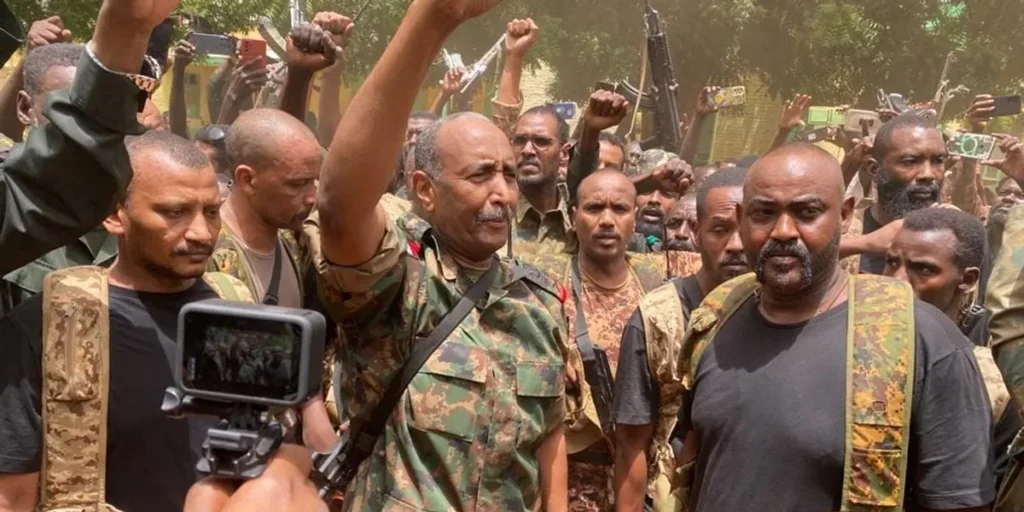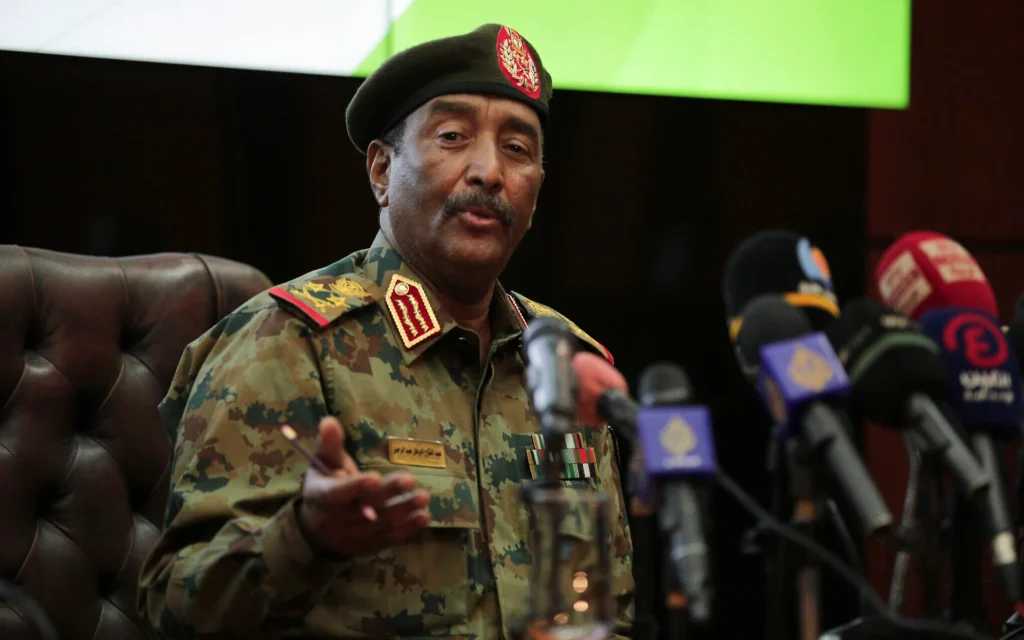
When General Abdel Fattah al Burhan, head of the Sovereignty Council and commander of the SAF, speaks about peace and sets conditions such as withdrawing from civilian properties and centralising weapons, the message may appear reasonable on the surface. These are, in theory, demands any state seeking stability would make. The problem, however, lies not in the slogans, but in who is delivering them, and in the reality that this same authority helped create.
Any discussion of peace in Sudan cannot be separated from the fact that the military leadership, with al Burhan at its centre, was a key partner in producing the current armed landscape. The proliferation of multiple armies did not emerge outside the state, but from within it, through political and security arrangements that enabled, legitimised, and protected armed formations at different stages. Against this backdrop, it is difficult for Sudanese citizens to accept that those who helped manufacture the crisis can now present themselves as the sole guardians of the state.
Al Burhan’s insistence on evacuating civilian sites is, in principle, legitimate. Yet it raises an unavoidable question, who allowed the authority of the state to collapse, and who permitted weapons to spread beyond control until civilian infrastructure became battlefields? Treating consequences while ignoring causes does not lead to peace, it merely recycles the crisis in new forms.
The call for centralising weapons runs into an even deeper structural contradiction within the SAF itself. The army in its current form is not a neutral national institution. It is politically and ideologically penetrated, with clear centres of influence linked to Islamist networks. In this context, demanding that the Rapid Support Forces alone disarm appears selective and self serving, particularly while armed Islamist battalions and allied militias operating alongside the SAF are excluded from any serious discussion.
This leads to the central question, if al Burhan is genuinely committed to ending the phenomenon of multiple armies, why does he not, as commander in chief, initiate a comprehensive process to disarm all armed movements and Islamist battalions fighting alongside the SAF? Why does he not take a clear step to dismantle Islamist decision making centres within the military and return the army to a professional national path? If the goal is truly a state that monopolises violence, this would be the most logical starting point.
No political initiative, regardless of how many are proposed, can succeed without seriously addressing military reform and disarmament in a balanced manner that includes all parties without exception. Sudan’s recent experience, particularly after the 2020 peace agreement, has shown that bypassing this file produces fragile governments and failed transitions that inevitably end in coups and renewed wars.
Sustainable peace is not built by assigning blame to one side, nor through selective rhetoric about the state. It begins with acknowledging that Sudan’s crisis is fundamentally a crisis of weapons and power. Resolving it requires dismantling all armies, rebuilding the military on professional foundations, and fully separating it from political and ideological organisations.
Ultimately, al Burhan’s demands, presented under the banner of peace, do little more than reproduce the same crisis. They fail to address the real requirements of peace, avoid confronting the structural dysfunction inside the military, and treat the issue of arms in a selective way that serves the existing balance of power. In this sense, these proposals are not a path out of war, but a mechanism for avoiding reform and preserving a state of controlled chaos that allows rule by force to continue.
The persistent refusal to address Islamist battalions, armed movements allied with the SAF, and ideological decision making centres within the military reveals that the problem is not a lack of vision, but a lack of political will. Chaos, however costly, remains the least threatening option for a military authority aligned with Islamists. It delays the emergence of a genuine civilian state, postpones accountability, and keeps weapons as a substitute for politics.
After every speech about peace, the same questions remain unanswered.
If al Burhan truly wants a state that monopolises weapons, why does he not begin by dismantling the multiple armies and Islamist battalions inside and outside the SAF?
Why are ideological and political decision making centres within the military left untouched, despite being a central cause of the war?
How can peace be discussed when the RSF alone is asked to disarm, while other armed formations remain beyond serious scrutiny?
Can any agreement be sustainable if it fails to address the root of the crisis, weapons and power, rather than its symptoms?
What credibility does any peace discourse retain if its practical outcome is simply the recycling of chaos?
And how can a force that controls entire regions of Sudan be expected to surrender its weapons to an authority it knows will not offer justice or a state, but revenge and elimination?
These are not rhetorical questions. They are a call to Sudanese society and the international community to think critically, to hold power to account, and to open an honest debate about Sudan’s future, beyond selective narratives and partial conditions.