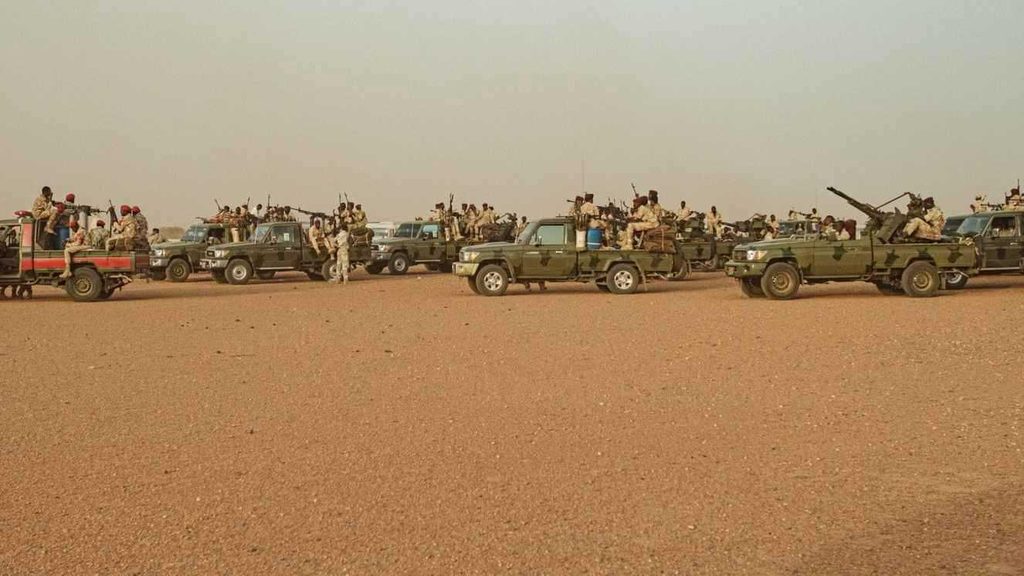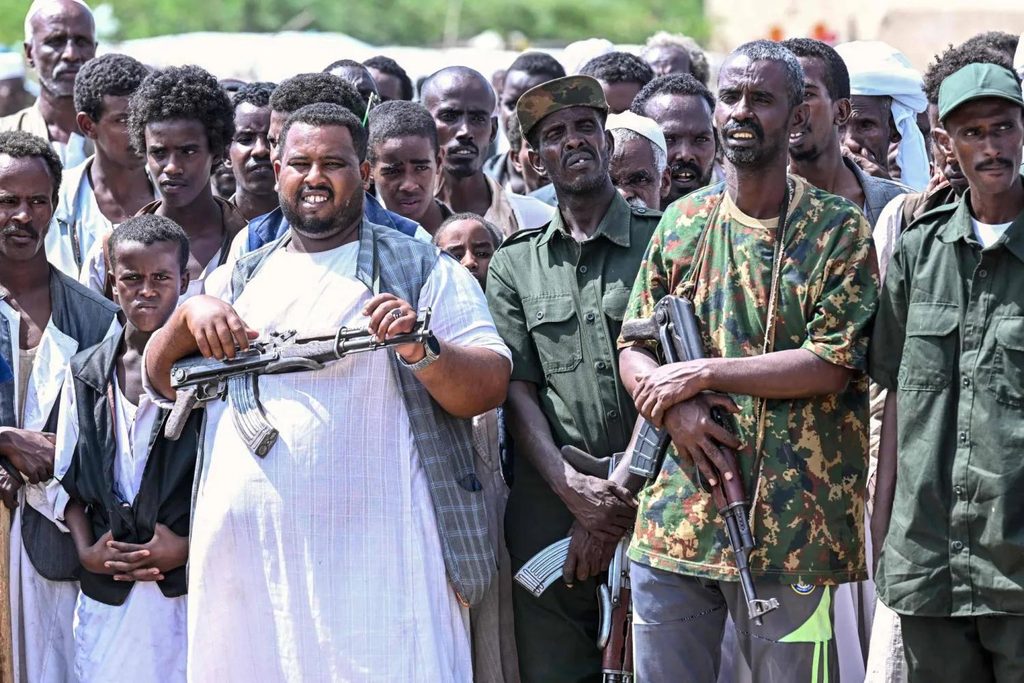
Tribal-based recruitment is accelerating the militarisation of Sudanese society, with a rights activist estimating that around 200 armed groups and militias are now fighting alongside army-aligned Port Sudan forces.
Legal experts and activists warn that the mobilisation of young people — and allegations of child recruitment — is creating parallel armed structures that could prove extremely difficult to dismantle even after the war ends.
The expansion comes amid worsening economic conditions, the closure of schools in many areas and increasingly divisive mobilisation campaigns, particularly across northern and eastern Sudan.
Legal expert Noun Kashkoush said the recruitment of civilians into militias had grown against the backdrop of economic hardship, tribal tensions and hate speech that had helped create conditions for further militarisation.
She said the enlistment of civilians, including children, had become part of the broader disorder created by the war, adding that meaningful investigations into recruitment practices would likely require a ceasefire.
Kashkoush said any eventual political process would need to address the proliferation of armed formations and work toward integrating military forces under a unified national structure.
Legal expert Kamal Mohamed Amin said forces aligned with the Port Sudan authorities had increasingly relied on mass mobilisation and the arming of civilians.
He argued that figures linked to the former regime were seeking to rebuild political influence through recruitment networks, while the continued distribution of weapons among civilians risked widening the conflict.
Amin warned that such mobilisation blurs the distinction between civilians and combatants and creates parallel armed groups that may later resist disarmament and integration.
It could also expose entire communities to retaliatory attacks by opposing forces, he said, further intensifying ethnic, regional and tribal polarisation.
International law provides specific protections against the recruitment and use of children in armed conflict. The Convention on the Rights of the Child prohibits recruiting children under 15 into armed forces or using them directly in hostilities, while its Optional Protocol prohibits compulsory recruitment below the age of 18 and bars non-state armed groups from recruiting or using children under 18.
Sudan ratified the Optional Protocol in 2005 and declared 18 as the minimum age for recruitment into its armed forces.
Amin said any general mobilisation campaign must have a clear legal basis and be authorised by a competent authority, stressing that people under 18 should not be recruited.
Rights activist Moaz Hadra meanwhile estimated that around 200 militias and armed formations are currently fighting alongside army-aligned Port Sudan forces.
The figure could not be independently verified.
Hadra said continued recruitment outside formal military institutions risked transforming Sudan into a country dominated by competing militias.
He compared the current mobilisation drive with policies pursued under former president Omar al-Bashir, whose government created and armed numerous auxiliary forces during its three decades in power.
“The recruitment of civilians is a time bomb,” Hadra said, arguing that much of the mobilisation was taking place along tribal lines.
He also alleged that looting and control over civilian property had become an economic incentive for some armed groups to prolong the conflict.
Residents in several areas have increasingly complained about abuses attributed to militias and joint armed formations, including looting and seizures of civilian property, according to Hadra.
He warned that further recruitment would produce more armed factions, complicate any future security settlement and make post-war disarmament considerably more difficult.
The growing number of armed formations has raised broader concerns over what Sudan’s security landscape could look like after the fighting ends, with experts warning that a ceasefire alone may not be enough unless it is accompanied by disarmament, security-sector reform and measures to dismantle parallel military structures.