A leaked phone call has revealed what appears to be an imminent reshuffle within Sudan’s SAF leadership and the Port Sudan–based authority, highlighting deep internal power struggles at the heart of the ruling structure.
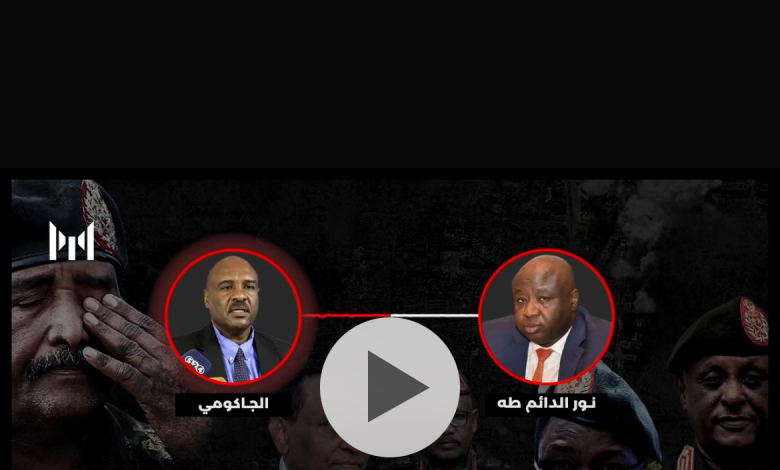
The leak was shared by activist Mujahid Bushra on Facebook and features a conversation between Mohamed Sayed Ahmed al-Jakoumi and Nour al-Daem, a leader in the Sudan Liberation Movement and the minerals minister in the Port Sudan authority.
According to the recording, al-Jakoumi speaks of expected changes within the SAF’s top command and the Sovereignty Council. These reportedly include the removal of Lt. Gen. Yasser al-Atta from the Sovereignty Council and his appointment as chief of staff, a move said to have been discussed with him and approved. The leak also points to the removal of Lt. Gen. Ibrahim Jaber from the council, and raises the possibility—estimated at around 80%—that Deputy SAF Commander Shams al-Din Kabbashi could also be sidelined, though this decision is not yet final.
The conversation further suggests the confirmed dismissal of Kamel Idris as prime minister of the Port Sudan government.
The significance of the leak lies not only in the names mentioned, but in what it reveals about the internal dynamics of power. Shifting figures from sovereign political roles to strictly military posts, or pushing others out of decision-making circles, points to an attempt to redistribute influence rather than pursue institutional reform or political stability.
If carried out, appointing Yasser al-Atta as chief of staff would effectively remove him from the political spotlight while keeping him within the military in a controlled role. By contrast, removing Ibrahim Jaber would directly affect economic files, influence networks, and resource management—steps unlikely to be taken without strong internal or external pressure.
The unresolved fate of Shams al-Din Kabbashi underscores how fragile the balance of power remains within the leadership, and suggests decisions are contested rather than dictated from a single, uncontested center. This alone points to a lack of cohesion within the Port Sudan authority.
The potential dismissal of Kamel Idris would mark the end of what critics describe as a purely symbolic civilian façade, indicating a shift toward more overt military rule after efforts to secure legitimacy through a civilian cover failed.
Overall, the leak reflects a state of internal disarray and an attempt to manage a deepening crisis by reshuffling faces and positions. What is unfolding is neither a political transition nor the start of reform, but a tactical repositioning aimed at delaying a broader rupture.