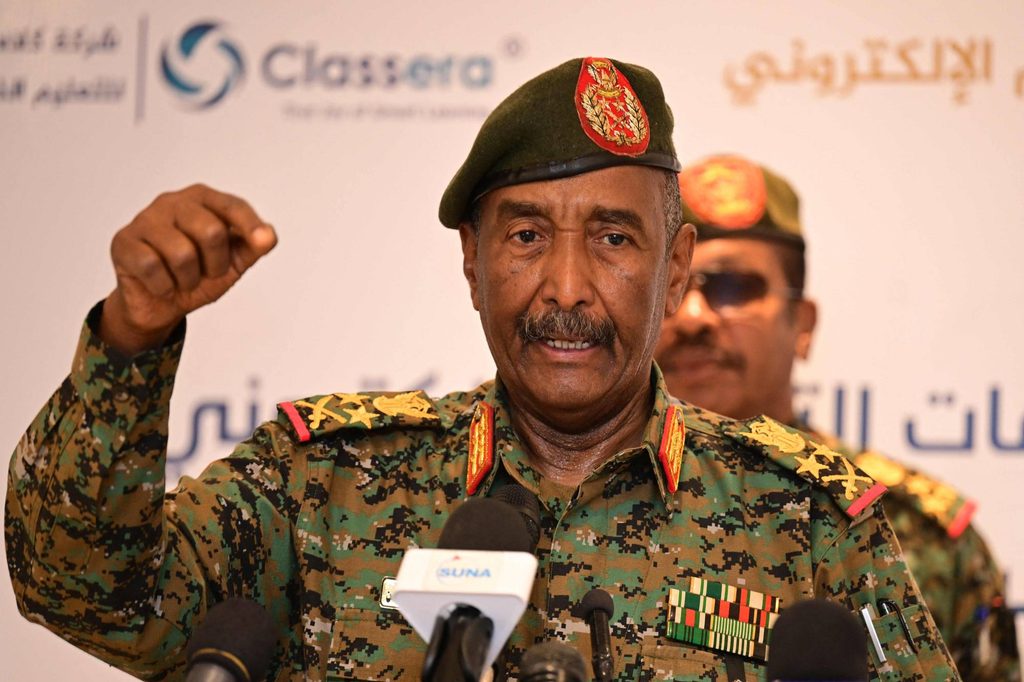
European Union Special Representative for the Horn of Africa Annette Weber has warned Sudanese army chief Abdel Fattah al-Burhan against continuing to pursue a military solution to the country’s war, amid growing concern over its regional consequences.
Senior diplomatic sources told Sudan Tribune that Weber expressed the EU’s concern over the army leadership’s reliance on force during a private meeting with Burhan on Thursday.
The talks followed Burhan’s meeting with representatives of the Quintet mechanism. Weber reportedly stressed that a military victory was unlikely to produce a lasting settlement and warned about the growing influence of Iran and Russia along Sudan’s Red Sea coast in return for military support.
In remarks carried by the Port Sudan-based Sovereignty Council, Weber said the discussions covered the political process and efforts to restore an orderly transition in Sudan.
Diplomatic sources said the meeting focused on ending the fighting and returning Sudan to a civilian democratic transition led by an independent government.
Weber also raised concerns that the conflict’s repercussions could spread across the Horn of Africa, undermine Red Sea security and intensify displacement and migration as Sudan’s humanitarian crisis worsens.
Burhan, meanwhile, defended the legitimacy of the institutions operating under the Port Sudan authorities and urged the EU to take tougher action against the Rapid Support Forces and regional countries accused by his administration of supporting them.
He also argued that progress toward a political settlement should be tied to a ceasefire, the lifting of sieges and the delivery of financial and humanitarian assistance through official state institutions.
Weber warned that a prolonged war would further weaken Sudanese institutions and create additional space for extremist groups. She called for an inclusive political process involving Sudan’s various civilian forces without excluding any civilian party.
The EU envoy also pressed Burhan to comply with international humanitarian law, open crossings for aid deliveries and cooperate with fact-finding and investigative bodies, according to the diplomatic sources.
Failure to meet those demands could pave the way for further European sanctions, the sources said.
The talks reflect mounting international pressure on Sudan’s warring parties to abandon the military option as fears grow that the conflict could destabilise the Horn of Africa and threaten security along the Red Sea.