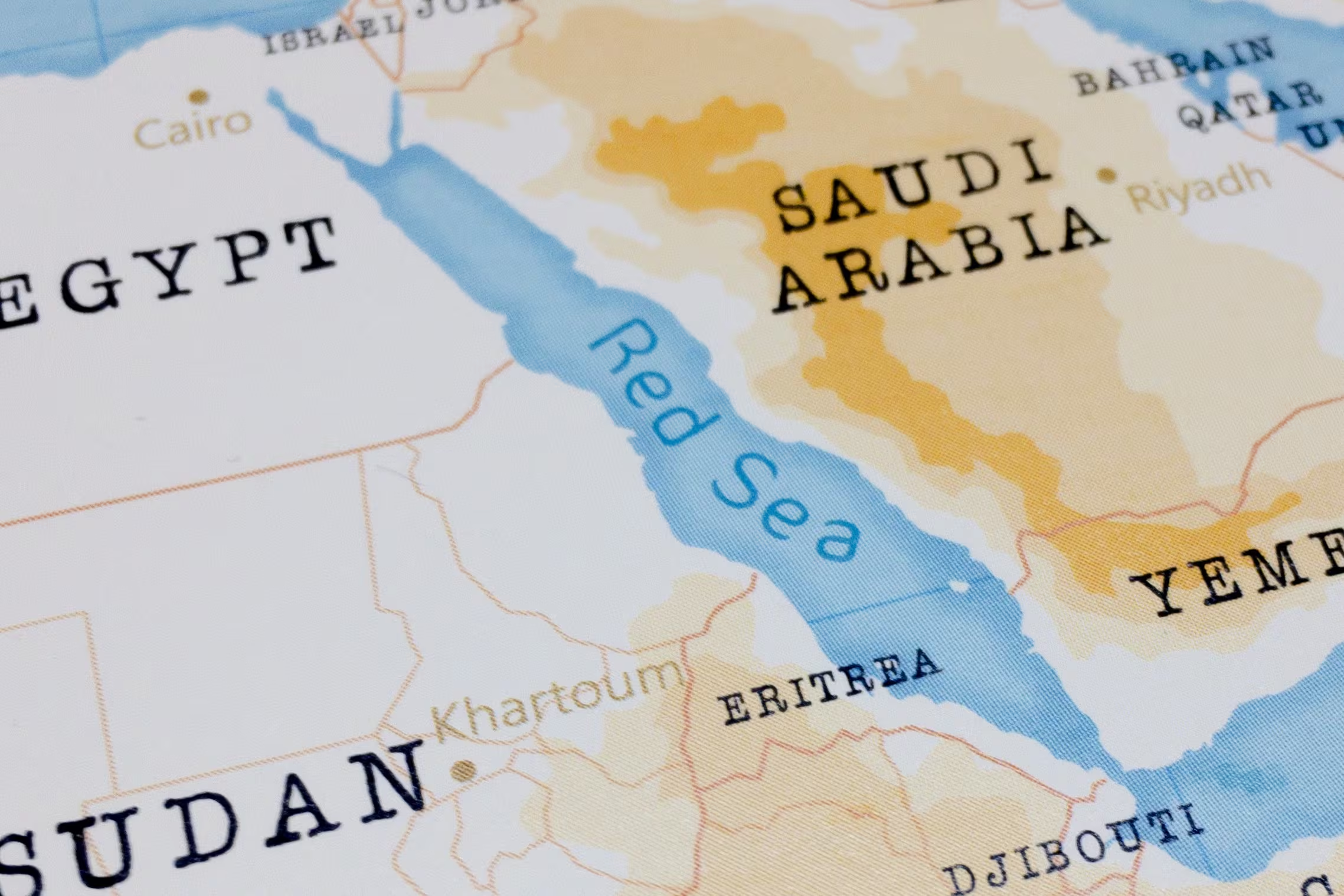
Escalating conflict involving Iran, the United States and Israel is reshaping global shipping routes, prompting carriers to avoid the Red Sea and Suez Canal corridor.
Major liner operators, including Maersk, Hapag‑Lloyd and CMA CGM, have suspended sailings through the Strait of Hormuz and Suez Canal, rerouting vessels around Africa’s Cape of Good Hope.
The disruptions reflect heightened maritime risk, with carriers citing safety concerns and rising war‑risk surcharges on routes passing through the Middle East theatre of conflict.
Sudan’s Red Sea ports have drawn renewed attention as potential alternatives for trade flows in a fractured global maritime system.
With ongoing instability threatening the Red Sea corridor, global supply chains face longer transit times, higher freight and insurance costs, and unpredictable scheduling delays.
Sudan’s strategic location on the Red Sea gives it a rare chance to strengthen its role in international trade, even as regional geopolitics threaten established routes.
However, analysts note that significant investment is needed to modernise Sudanese port infrastructure to handle deep‑sea traffic displaced by the crisis.
Sudan’s coastal facilities lack the capacity and equipment to serve the world’s largest container vessels without rapid upgrades.
If maritime disruption persists, carriers may seek diversified corridors, placing strategic value on ports that offer security, connectivity and competitive handling.
Sudan’s bid to cultivate maritime relevance represents both economic opportunity and a gamble in a trading environment reshaped by war and uncertainty.