A reported long-term copper agreement between Sudan’s Ministry of Minerals and a Chinese mining company has reopened a larger question facing resource-rich African states: when does “win-win cooperation” become resource capture?
For years, Beijing has presented itself across Africa as the alternative to Western imperialism. Its official language stresses equality, sovereignty, non-interference, mutual benefit and South-South cooperation. China’s own Africa policy papers describe the relationship as a “partnership of equals” built on mutual respect and common development, while Belt and Road messaging repeatedly frames Chinese overseas projects as “win-win” cooperation.
But the alleged copper deal in Sudan shows how that language can collide with reality.
According to details circulated by Sudanese media and cited in an investigative report, Sudan’s Ministry of Minerals allegedly reached an agreement with a Chinese company to exploit copper and associated minerals in Red Sea state for 30 years. The reported deal is said to involve $300 million in investment, while Sudan would receive 30 percent of the project’s net profits. The full contract has not been published, and the Port Sudan junta has not publicly explained the legal approvals, ownership structure, cost-recovery mechanism or revenue formula behind the agreement.
The issue is not only whether the deal exists in the precise form described by leaked details. It is whether a country at war, without normal legislative oversight and with weakened institutions, should be signing decades-long concessions over strategic minerals behind closed doors.
China’s pitch to Africa has long been simple: unlike the West, Beijing says it does not lecture, interfere or impose political conditions. For governments facing isolation, war, debt or institutional collapse, that offer can be attractive. But for citizens, “non-interference” can also mean something else: no pressure for transparency, no demand for public accountability, and no insistence that local communities or future generations are protected before strategic resources are signed away.
That is the contradiction at the centre of the Sudan copper controversy.
The alleged agreement, as described by the report, is not a colonial occupation in the old sense. There are no foreign flags, governors or armies. Instead, control is exercised through concession terms: long duration, cost recovery, offtake rights, tax exemptions, legislative stability clauses, international arbitration and restrictions on the state’s ability to terminate the contract without compensation.
In other words, the colonial flag may be gone, but the concession contract can still transfer enormous power over a country’s future wealth.
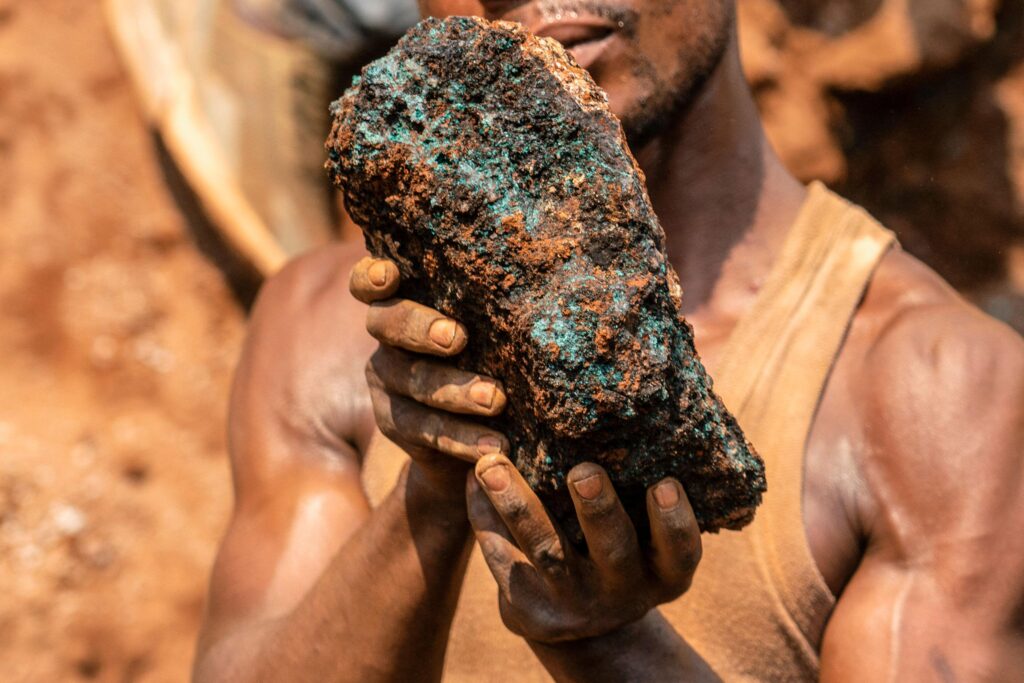
Copper has become one of the world’s most strategic minerals, driven by demand from renewable energy, electric vehicles, data centres, artificial intelligence infrastructure and modern power grids. That makes any long-term copper concession far more than a routine mining deal. It is a question of sovereignty, industrial policy and national survival.
The reported terms raise particular concern because Sudan’s alleged 30 percent share would be calculated from net profits, according to the investigation, not gross production or total revenue. If the company is allowed to recover investment and operating costs before profits are distributed, Sudan’s actual returns could be delayed for years.
The alleged contract also reportedly gives the company the right to market or purchase the full copper output through an offtake arrangement, either for the duration of the contract or until financing is repaid. Such provisions can be especially sensitive in critical minerals projects, because they may give the investor not only a financial stake but also practical control over where the resource goes and how its value is realised.
This is where Sudan’s case fits a wider African pattern.
Across the continent, opaque resource-backed financing and long-term mineral arrangements have come under growing scrutiny. African Development Bank President Akinwumi Adesina has warned that non-transparent loans tied to natural resources can undermine African economies because long-term oil and mineral assets are difficult to price fairly and can leave countries exposed to exploitative terms. The African Development Bank has also warned that opaque resource-backed loans hinder Africa’s economic potential.
Although the alleged Sudan copper agreement is described as a mining concession rather than a classic resource-backed loan, the concern is similar: a weakened state may trade future strategic wealth for short-term financing, while the public is denied the information needed to judge whether the deal serves the national interest.
The timing makes the issue even more serious. Sudan is in the middle of a devastating war that has shattered institutions, drained public finances, displaced millions and weakened normal checks on executive power. In such conditions, natural resources become one of the few remaining assets capable of attracting foreign capital. They also become easier to bargain away.
The investigative report said it sought an official copy of the contract and a response from Sudan’s Ministry of Minerals but received no reply before publication. It also said Zijin Mining Group, the Chinese company named in the alleged agreement, did not respond to requests for comment.
According to a senior source in Port Sudan’s mining sector cited by the report, the alleged agreement is structured as a mining concession between the Sudan, represented by the Ministry of Minerals, and Zijin Mining Group Co., Ltd. The source claimed it grants exclusive rights to explore, develop, extract, process and market copper and associated minerals in Red Sea state for 30 years, with possible renewal for another 15 or 20 years.
The same source said the company would invest $300 million in the early years of the project for development, infrastructure and processing facilities. Sudan would receive 30 percent of net profits, while the company would retain 70 percent. The alleged terms also include royalties under Sudanese law, corporate profit tax, five years of tax exemptions, international arbitration under the International Chamber of Commerce, and protections against fiscal or legislative changes that harm the project.
Such clauses are not unusual in major mining deals. But in Sudan’s current context, they carry a different weight. A regime operating during war, without an elected legislature, may be binding future governments and future generations to terms that cannot easily be reviewed, amended or cancelled.
The report said the Port Sudan junta has not disclosed whether the alleged deal was approved by the cabinet, the Sovereign Council, any legislative or regulatory authority, or the Red Sea state government. That omission is significant because the concession concerns resources located inside Red Sea state and may affect local communities, land use and environmental conditions.
Sudan’s 2015 Mineral Wealth and Mining Development Law provides for a Higher Mining Council with responsibility for mining policy, coordination between levels of government, and consideration of projects with national, regional and international importance. Yet the report said there has been no public confirmation that the council reviewed or approved the alleged agreement.
The controversy also draws attention to the Ariab region in Red Sea state, one of Sudan’s richest mineral zones. In 2017, Ariab Mining Company announced major copper and associated mineral reserves in the Qutb area, including around five million tonnes of copper, alongside zinc, gold and silver. At the time, the company estimated the total value of those resources at about $17 billion.
That history helps explain why the alleged $300 million figure has drawn scrutiny. Without the full contract, it remains unclear whether the amount represents an investment commitment, a concession valuation, financing to be recovered from future production, or some other structure. That distinction matters. If the money is recoverable by the investor before profit-sharing begins, then Sudan’s headline share may look far larger on paper than it proves to be in practice.
The report also compared the alleged Sudan arrangement with Zijin’s investment in the Kamoa-Kakula copper project in the Democratic Republic of Congo. In the Congolese case, Zijin entered as a partner in a joint venture, while the Congolese state retained a direct stake and benefited from royalties, taxes and concession fees. By contrast, the Sudanese arrangement, as described in the leaked details, remains unpublished and lacks public disclosure of its ownership and revenue structure.
Zijin Mining Group is one of China’s largest multinational mining companies and a major global producer of gold, copper and other strategic minerals. It is listed in Hong Kong and Shanghai and has mining interests across several continents, including major copper operations in Africa and beyond.
The report also noted that Zijin was added in January 2025 to the United States’ Uyghur Forced Labor Prevention Act Entity List over supply chain-related allegations connected to Xinjiang. The company has denied the allegations and said it complies with laws and international standards.
Another unanswered question is whether a Hong Kong-linked company could appear as the implementing entity. The source cited by the investigation said negotiations were mainly conducted with Zijin but suggested another Chinese company could appear during execution. The exact legal or commercial relationship between the companies was not clarified.
In eastern Sudan, the alleged deal has already faced objections from political and community actors, including the Eastern Sudan Advisory Council and the Beja Congress. They have called for the signing process to be halted and for the agreement to undergo independent legal and technical review. Their concerns include the failure to publish the contract, uncertainty over the contracting party, the reported 30-year duration, the perceived low return compared with the value of Sudan’s copper reserves, and the lack of consultation with Red Sea state authorities and local communities.
For Sudan, the question is not whether foreign investment is needed. It is. The country’s mining sector requires capital, technology, infrastructure and access to markets. But investment is not the same as surrendering strategic leverage. A fair mining agreement should be transparent, legally approved, locally consulted, economically justified and open to public scrutiny.
That is especially true when the investor comes from a country that presents itself as Africa’s anti-imperial partner.
China’s official language promises equality. The alleged Sudan copper deal raises the opposite fear: that “non-interference” may simply mean Beijing is willing to sign with whoever holds the pen, regardless of whether citizens, local communities or future governments have a voice.
Until Sudan’s authorities publish the full contract and explain the legal basis for the agreement, the copper deal will remain more than a mining controversy. It will stand as a test of whether Sudan’s wartime rulers are protecting national wealth — or quietly mortgaging it.
For critics, the issue is not China alone, nor one company alone. It is the model: weakened African states, strategic minerals, opaque contracts, and foreign investors speaking the language of partnership while securing terms that may shape a country’s economy for decades.
In Sudan’s case, the question is brutally simple: if this is truly “win-win,” why is the public not allowed to see the deal?