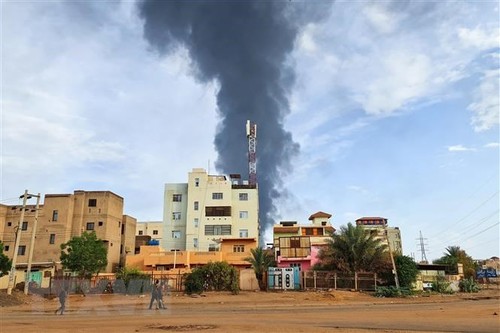
Several markets across Sudanese states — including Khartoum, Al-Jazira, Sennar, Gedaref, and White Nile — have witnessed widespread protests and partial commercial strikes after local authorities imposed sharp increases in taxes and municipal fees on traders.
The new charges include market levies, commercial licensing fees, and waste collection fees, adding further pressure on businesses already struggling under the impact of war and severe economic hardship.
Partial closures and strikes have spread across multiple cities, with traders warning that the measures are unsustainable and disconnected from the current economic reality.
Wad Madani Market Strike
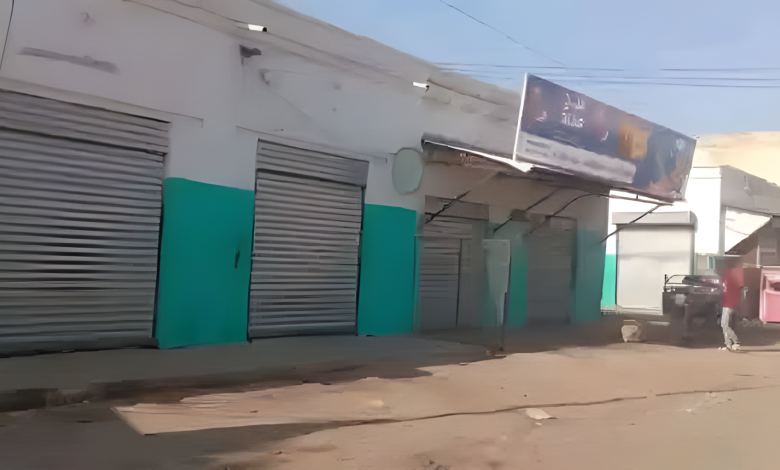
In Al-Jazira state, the central market of Wad Madani saw a large-scale closure of shops, effectively bringing commercial activity to a halt in protest against the increased fees.
Images circulating on social media showed near-empty streets inside the market, with only limited numbers of traders and customers present — a stark contrast to normal trading conditions.
The strike reflects growing public anger over fiscal policies imposed without consideration for traders’ ability to recover after prolonged war-related disruptions.
Market Conditions Nationwide
The fee hikes have not been limited to major markets, but have also affected small and medium-sized commercial activities, placing additional strain on traders attempting to restart businesses that were shut down during the conflict.
In Khartoum, traders reported what they described as arbitrary measures by some local authorities, including the imposition of high fees on shops and companies. These policies have discouraged many from returning to work or investing, while forcing some shop owners to close altogether.
In White Nile and North Kordofan states, authorities imposed fees of up to 40,000 Sudanese pounds on each tuk-tuk or rickshaw, along with fines reaching 500,000 pounds for non-payment and vehicle confiscation. Similar measures were introduced in parts of Sennar and Gedaref, prompting protests that led some local authorities to partially reduce the fees.
Sennar State Fee Structure
In Sennar state, fees vary depending on the type and size of the business. Large cafeterias are charged up to 750,000 Sudanese pounds, while falafel shops face fees of around 500,000 pounds. Traditional food restaurants are charged approximately 350,000 pounds, and juice shops about 250,000 pounds.
Street vending tables also face new fees, with large mobile stalls selling items such as shoes, sweets, and clothing charged 150,000 pounds, while medium and small stalls are charged around 50,000 pounds.
Smaller informal activities — including fixed carts, vegetable stands, and bread tables — are subject to fees ranging between 20,000 and 50,000 Sudanese pounds, depending on size and activity.
The escalating fees have deepened tensions between traders and local authorities, as Sudan continues to grapple with economic collapse and the ongoing effects of war.