The Rapid Support Forces, RSF, announced on Monday that they had taken full control of the strategic Heglig oilfield in South Kordofan, a move government sources described as a major shift in the military landscape. According to those sources, oilfield workers and SAF units withdrew to prevent damage to vital energy infrastructure. The development comes amid intensifying clashes between the SAF and the RSF across several parts of Kordofan.
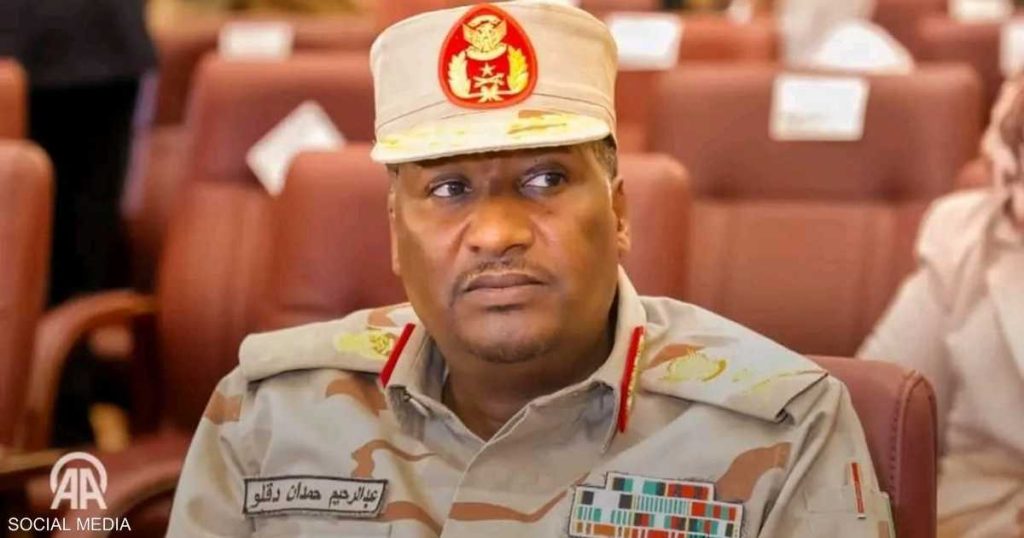
The announcement came less than two days after RSF deputy commander Abdelrahim Dagalo met tribal leaders west of Babanusa in West Kordofan. Local and military sources said RSF commanders gave vehicles to tribal chiefs and promised additional support. One community source said Dagalo pledged not to return to Nyala until Heglig in West Kordofan, El Obeid in North Kordofan, and Dilling and Kadugli in South Kordofan were under RSF control, reflecting clear operational objectives.
Importance of Heglig
Heglig lies near Sudan’s southern border and hosts the main processing facility for South Sudan’s crude oil, the cornerstone of Juba’s revenue. The oil exports move through the Greater Nile pipeline to Port Sudan, making Heglig critical for foreign currency earnings for both Sudan and South Sudan, which relies almost entirely on Sudanese pipelines due to its lack of a coastline.
Recent fighting between the SAF and the RSF centred on Babanusa, which is controlled by the RSF. Field assessments suggest that with Babanusa under RSF control, the SAF’s 90th Brigade in Heglig was the last major force facing the RSF in the region, making the fall of the oilfield a decisive shift.
Military movements
The RSF has also begun large scale mobilisation around Abu Zabad, with convoys of combat vehicles seen heading north toward Dubeibat. A military source confirmed that RSF units in Al Sunut and Abu Zabad had redeployed toward Dubeibat in an attempt to tighten the noose on South Kordofan. Dilling lies roughly 57 kilometres from Dubeibat, raising the prospect of renewed battles.
Growing escalation across Kordofan
Kordofan has witnessed rapidly escalating fighting in recent days between the SAF, the RSF, and allied groups known locally as “Tasis”. North Kordofan remains a core SAF stronghold, with firm control over El Obeid, its main operational base, as well as Rahad, Um Rawaba, and surrounding villages. Bara remains the key exception, along with several nearby towns still outside full SAF authority.
Areas south and west of El Obeid, particularly Umm Samima and Abu Qoud, have seen intermittent clashes and rising tension as both sides deploy more forces. The SAF is attempting to retake Bara to secure approaches to El Obeid amid ongoing troop movements.
West Kordofan
The RSF maintains dominance across most of West Kordofan, including En Nahud, El Khuwai, Al Fula, and Al Muglad. Current fighting is concentrated in Babanusa, and field reports suggest that controlling the town, then the neighbouring Heglig oil region, enables the RSF to consolidate its grip on the entire state.
South Kordofan
In South Kordofan, the SAF controls Kadugli, Dilling, Abu Jubeiha, Kalogi, and Talodi. The RSF and its ally, the SPLM Agar faction, hold Kauda, Habila, and nearby towns. Skirmishes continue around Kadugli and Dilling. Further east, the fiercest clashes occur between the SAF and the SPLM North under Abdelaziz al Hilu, aligned with the RSF. The SAF recently took control of Mabsoota and the Six Mountains and is advancing toward Al Mureib, one of al Hilu’s main strongholds, amid shifting frontlines.