The killing of a prominent Sudanese hardliner on Thursday has cast renewed light on the depth of extremist influence within SAF and the country’s security institutions, media reported.
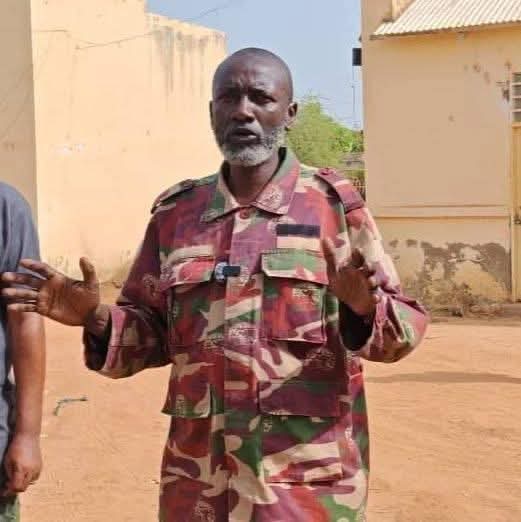
Ali Dedein was killed during clashes with the Rapid Support Forces in the Habila area of South Kordofan. He held the title of “amir of the mujahideen” and commanded the Eastern Mountains forces in Kordofan, making him one of the most influential field leaders who combined extremist ideology with political clout.
His background is closely tied to the former ruling system. Dedein previously served as local governor of Talodi during the previous regime, before emerging as a central organiser of extremist armed battalions now fighting alongside SAF.
Political and military sources said Dedein was not merely a battlefield commander but one of the early founders of several extremist units, including the Al Baraa bin Malik battalion and the Lightning Strike battalion. He was also described as the key figure overseeing drone operations across Kordofan, effectively acting as the operational head of aerial attacks. His killing is therefore seen as a significant blow to the hardliners’ military structure.
Blurring lines between extremists and SAF
Condolence statements issued after his death quickly revealed the extent of overlap between SAF and extremist currents. The Sudanese Islamic Movement mourned Dedein in a statement issued by senior figure and former ruling party leader Ahmed Haroun, using openly hardline rhetoric that underscored the absence of any real separation between partisan activity and military command.
Meanwhile, the Lightning Strike battalion released a statement headed under the name of SAF itself, a move observers interpreted as an implicit admission that these extremist battalions are not operating on the margins, but from within SAF and under its cover.
Alongside the Al Baraa bin Malik battalion, the Al Furqan battalion, the Strategic Battalion and the Special Operations Forces, the Lightning Strike unit forms the backbone of Islamist armed formations fighting shoulder to shoulder with SAF, not as auxiliary forces, but as an integral part of its combat structure.
The Special Operations Forces also mourned Dedein, referring to him as the “amir of the mujahideen” within the General Intelligence Service, further deepening concerns about the scale of extremist penetration of Sudan’s security agencies.
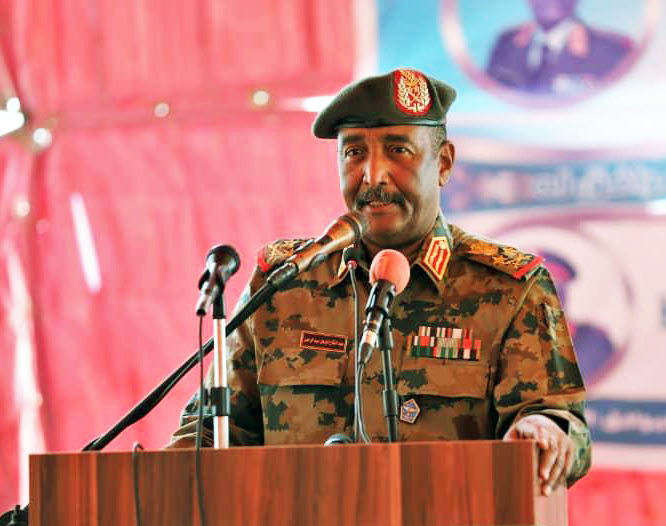
Analysts say Dedein’s death has not only exposed the combat role of extremist groups, but also the true nature of the war itself, describing it as a struggle for influence waged by Islamist networks through state institutions. This directly contradicts repeated denials by SAF leader Abdel Fattah al Burhan that hardliners exert control over the army.
In this context, political activist Mohamed Hussein al Nour said that the relationship between extremists, SAF, intelligence and police institutions is one of dominance rather than partnership. “This is their war, and this army is their army,” he said, adding that hardliners hold decisive authority within military and security bodies. “This reality has long been known, but the killing of a figure of this weight has made it far more blatant and impossible to deny.”