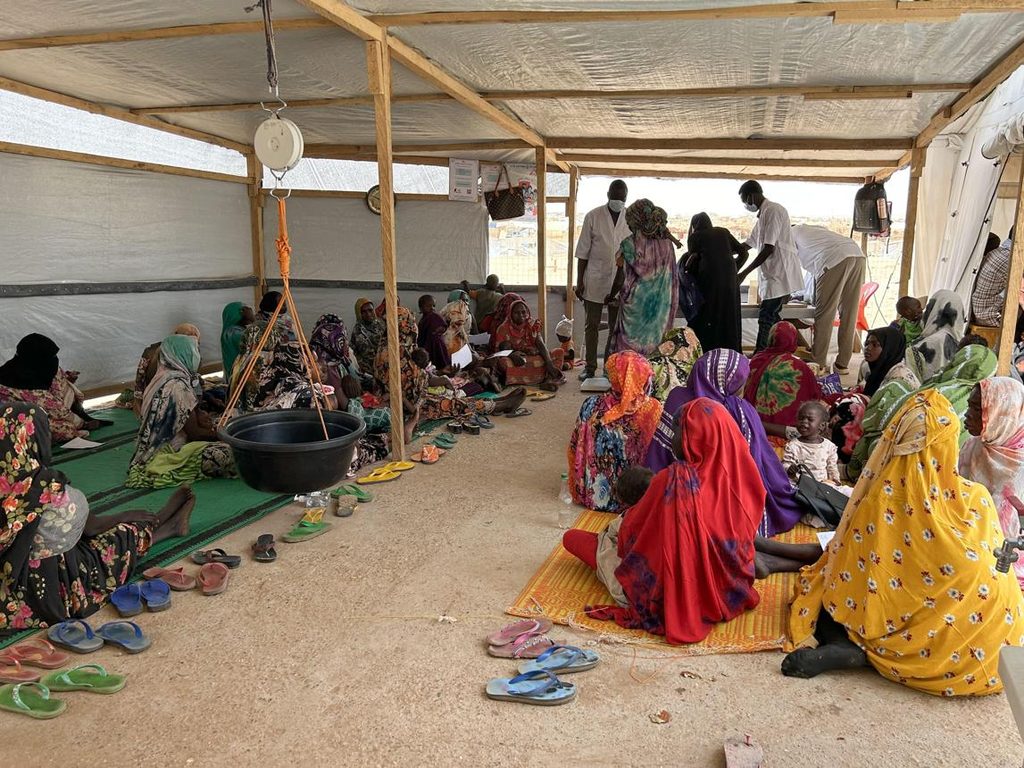
Dengue fever and malaria are spreading rapidly across Sudanese refugee camps in eastern Chad, prompting urgent appeals for medical assistance as refugees face worsening humanitarian conditions and disruptions to food aid.
Dr. Sumaya Abdel Rahman told Radio Dabanga that widespread cases of dengue fever, malaria and sexually transmitted infections, including syphilis and chlamydia, had been recorded in the Milé refugee camp in eastern Chad.
She urged humanitarian organisations to intervene immediately and provide urgently needed medicines to contain the spread of diseases.
Chad’s parliament held a session earlier this month to address dengue fever outbreaks across three eastern provinces and the capital, N’Djamena, which have killed dozens of people and infected thousands.
Food assistance concerns
Meanwhile, Sudanese refugees in eastern Chad reported that humanitarian organisations had decided on Wednesday to withhold food rations or equivalent assistance from newly arrived refugees at the Farchana camp following their rejection of a new classification system.
A refugee told Radio Dabanga that the decision was announced during a meeting attended by representatives of both newly arrived and established refugee communities, alongside UN agencies and local organisations.
Several refugee camps in eastern Chad have witnessed protests over the classification system, which divides refugees into four categories determining their eligibility for humanitarian assistance.
Under the system, the first category receives monthly assistance, while the second receives aid every three months. The third category receives material support, while arrangements for the fourth remain undecided.
Shelter construction and relocation
Refugees also reported ongoing construction of more than 1,200 shelters at the Maji camp to accommodate newly arrived Sudanese refugees being relocated from the overcrowded Adré camp.
Around 800 of the shelters are being built using more durable materials.
Relocation operations involving the newly established Maji and Dougui camps are taking place approximately once a week.
However, refugees transferred to Maji have protested over the lack of food assistance, saying they have received no food rations since arriving nearly two months ago.
The disease outbreaks and disruptions to humanitarian assistance are compounding the suffering of Sudanese families who fled the war in their homeland, placing further pressure on already overstretched relief services in eastern Chad.