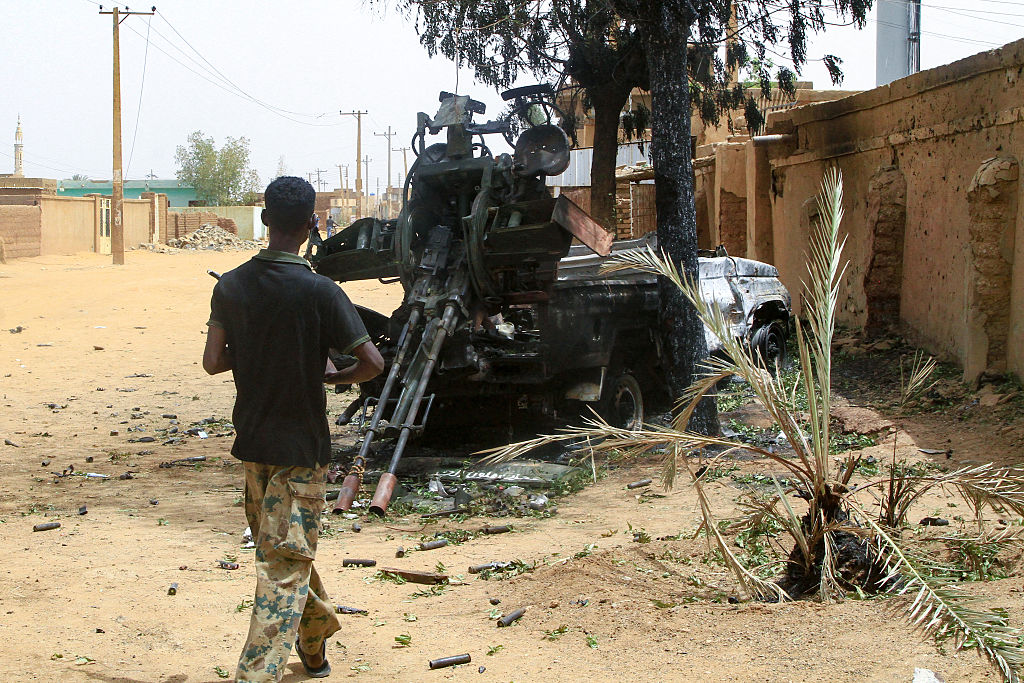
As Sudan’s brutal war grinds on amid deep political and military deadlock, European capitals are increasingly reassessing how they view the conflict, shifting their focus beyond the humanitarian catastrophe to the broader security and ideological risks surrounding it.
The war is no longer seen as a confrontation between armed actors alone. It has evolved into an open arena for the expansion of political Islamist forces, led by the Muslim Brotherhood, which many European policymakers now regard as a key factor in prolonging the crisis and obstructing viable paths to resolution.
In this context, a recent media report highlighted advanced discussions within European institutions, particularly the European Parliament, around adopting a dual track approach to Sudan. This strategy combines continued humanitarian assistance with a parallel effort to contain the influence of Islamist networks operating within the country.
According to the report, European officials increasingly believe that no political settlement can succeed without limiting the reach of groups that maintain deep links inside state institutions, as well as civilian and financial networks that thrive on fragmentation and instability.
European concerns extend beyond Sudan’s internal dynamics to the wider regional and international fallout of the war. Brussels fears Sudan could become a new hub for transnational political Islam, offering space for Islamist actors who have lost ground in other countries to regroup and re establish themselves.
Observers note that the Muslim Brotherhood is seeking to exploit institutional collapse to rebrand itself as a civilian political force, while in practice working to penetrate peace processes and influence key decision making channels behind the scenes.
Security considerations are also central to Europe’s recalibrated approach. Growing anxiety surrounds the prospect of increased irregular migration flows from Sudan towards North Africa and onward to Europe, a risk some European circles see as a direct consequence of state failure and the dominance of organised ideological networks on the ground.
Analysts warn that allowing Islamist actors to operate without accountability will only recycle the crisis rather than contain it, reinforcing the conditions that fuel prolonged conflict.
Against this backdrop, Europe is moving towards a firmer stance on political Islam, with rising calls to abandon the separation between humanitarian engagement and the political realities of the war. There is increasing emphasis on preventing ideologically driven groups from using humanitarian aid as a cover for expanding influence.
Many observers conclude that Sudan’s war has once again demonstrated that the Muslim Brotherhood is not part of the solution, but a central component of the crisis blocking any genuine transition towards stability and peace.