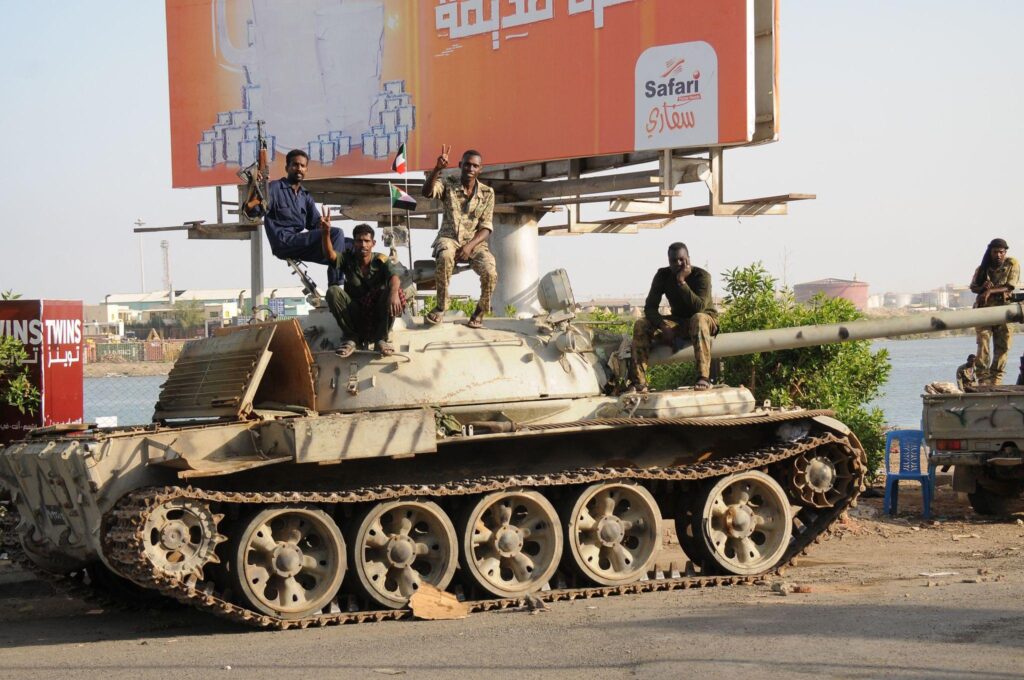
Sudan’s civil war, which erupted in April 2023, has pushed the country into one of its most turbulent periods in decades, deepening a humanitarian catastrophe and accelerating the collapse of economic and public services.
As regional and international efforts to secure a ceasefire continue to stall, attention is increasingly turning to the forces seen as benefiting from the continuation of the conflict and working to obstruct any viable political settlement.
Experts and observers say Sudan’s Muslim Brotherhood remains among the main beneficiaries of the war, as the chaos of the battlefield provides a favorable environment for the group to rebuild the political and security influence it lost after the fall of the former regime.
For three decades, the organization entrenched itself deeply within state institutions, particularly the army, security services, judiciary and bureaucracy. That legacy continues to shape Sudan’s political and military landscape today.
Observers argue that the continuation of the war not only allows the group to obstruct a civilian transition, but also gives it room to maneuver and reposition itself inside centers of power, taking advantage of the sharp divisions between the warring parties.
Experts on extremist movements, speaking to Al-Ittihad, warned of what they described as the destructive role played by the Muslim Brotherhood in Sudan, saying the group remains one of the biggest obstacles to any serious peace initiative.
Researcher Tarek Abu al-Saad said the Brotherhood would not allow any genuine peace initiative in Sudan to move forward because it understands that ending the war would reshape the political scene in a way that could lead to its final exclusion.
Abu al-Saad said the continuation of the conflict reinforces the military character of Sudan’s political landscape at the expense of a civilian path, a reality that serves the group due to its networks of influence and active structures inside institutions aligned with Port Sudan.
He added that the war also gives the organization space to recast its political message by exploiting social exhaustion and promoting misleading narratives.
Researcher Mounir Adib also said the Muslim Brotherhood represents the main obstacle to initiatives aimed at ending the conflict, arguing that the group knows any comprehensive political or security settlement would mean its permanent removal from the political equation.
Adib said widespread public rejection of the group’s return, along with security considerations, has made its exclusion a necessary condition for any viable settlement.
He added that effectively isolating the organization is essential to reaching a comprehensive peace initiative that enjoys broad public support, ends the fighting and opens the way for restoring stability and rebuilding the Sudanese state on national foundations, away from the influence of ideological groups.