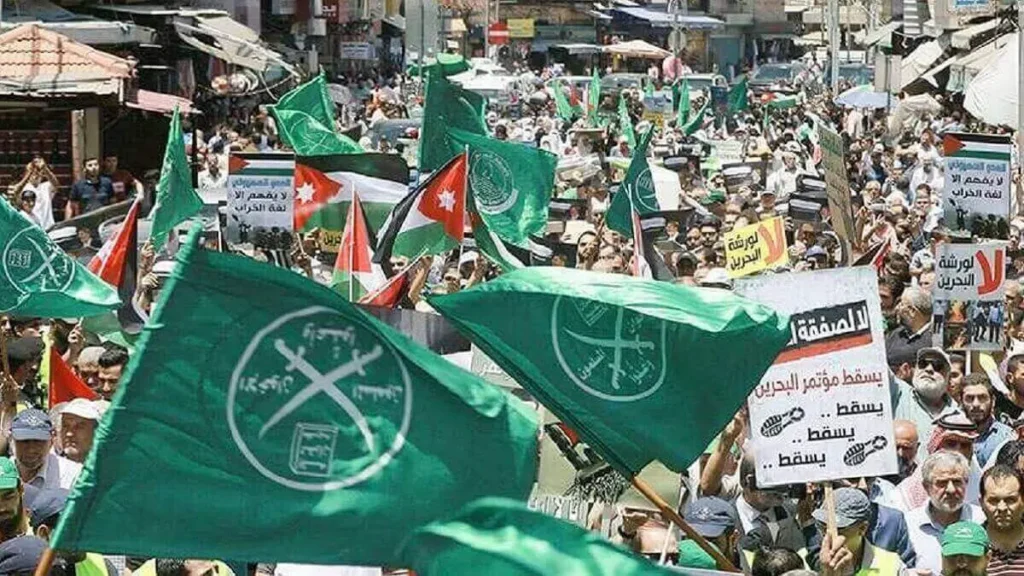
Sudanese civil forces are increasingly calling for a ban on the Muslim Brotherhood, amid widespread accusations that the group has played a direct and indirect role in fuelling the military conflict, complicating the security situation and prolonging the war.
Experts and analysts quoted by media said dismantling the Brotherhood’s organisational structure is a key condition for restoring stability and ending the civil war in Sudan. They argued that no lasting political settlement is possible without curbing the group’s influence, adding that designating the Brotherhood as a terrorist organisation could provide a realistic entry point to ending the armed conflict.
Researcher on extremist movements Munir Adeeb said the Muslim Brotherhood in Sudan is an integral branch of the international Brotherhood organisation, which he noted has been designated by the US as a terrorist entity under an executive order issued by President Donald Trump on 25 November. He said the same criteria applied to the group’s branches in Jordan, Egypt and Lebanon should also apply to its Sudanese branch.
Adeeb said the Brotherhood in Sudan was responsible for igniting what he described as the “first shot” of the current war, a conflict that has lasted more than two years, with political and security repercussions expected to extend for over a decade. He added that the group continues to act as a key driver of the conflict through incitement, mobilisation and behind the scenes management.
According to Adeeb, placing the Brotherhood on terrorism lists could help create space for a genuine humanitarian calm and may pave the way towards ending the ongoing military confrontation. He said cutting off the group’s sources of influence would weaken its ability to inflame violence and prolong the war.
He added that calls by Sudanese civil forces to designate the Brotherhood as a terrorist organisation are in line with the goals of the Sudanese revolution, which held the group responsible for many of the country’s long standing crises. He said these demands also reflect growing awareness of the destructive role played by the Brotherhood in Sudan, similar to its actions in several Arab countries where it undermined security and stability.
Adeeb stressed that ending the war in Sudan will not be possible without dismantling the Brotherhood’s organisational structure and placing it on terrorism lists, arguing that such a step aligns with international trends given the group’s destabilising role across the region.
Meanwhile, political science and international law professor Haitham Imran said the growing calls to ban the Brotherhood reflect increasing recognition of the danger posed by the group’s role in deepening political and security instability. He said the organisation has been accused of fuelling internal conflict through political incitement and the use of its organisational and media networks to extend the war.
Imran said Sudan’s experience in recent years has shown that the continued presence of transnational ideological organisations, led by the Brotherhood, has obstructed any inclusive national project. He said this contributed to the politicisation of state institutions, weakened prospects for civilian transition and deepened social polarisation, directly paving the way for the current crisis.
He warned that the threat posed by the Brotherhood lies not only in its political record, but also in its ability to adapt within conflict environments and exploit chaos and division to reposition itself, whether through civilian fronts or temporary alliances with armed groups. He said this undermines efforts to restore the state and threatens any future political settlement.
Imran stressed that banning the Brotherhood should not be seen as an exclusionary measure, but as a necessary preventive step to protect the transition and prevent the exploitation of religion in political and military conflict. He noted that regional experiences have shown that leaving such groups outside legal accountability often leads to the reproduction of violence in more complex and dangerous forms.
He added that taking a clear legal stance against the Brotherhood would send a strong message that stability in Sudan cannot be achieved without dismantling the ideological structures that fuelled the conflict. He said building a stable civilian state requires confining political activity to a transparent national framework governed by law and peaceful pluralism, not secretive or cross border organisations.
Imran concluded that banning the Brotherhood in Sudan, if carried out through clear legal procedures and solid judicial guarantees, would be an important step towards restoring the state, drying up sources of political extremism and creating conditions for a comprehensive settlement that ends the war and opens a real path to stability.