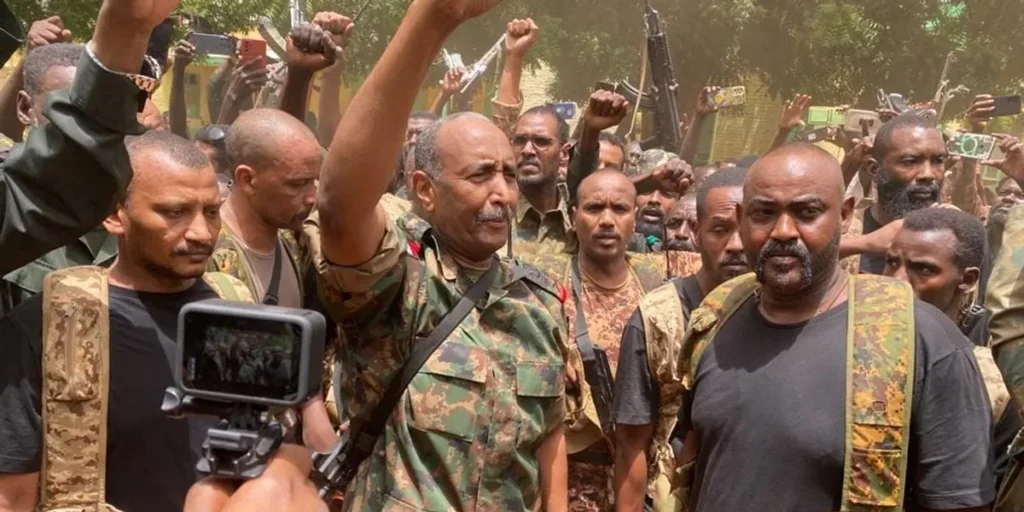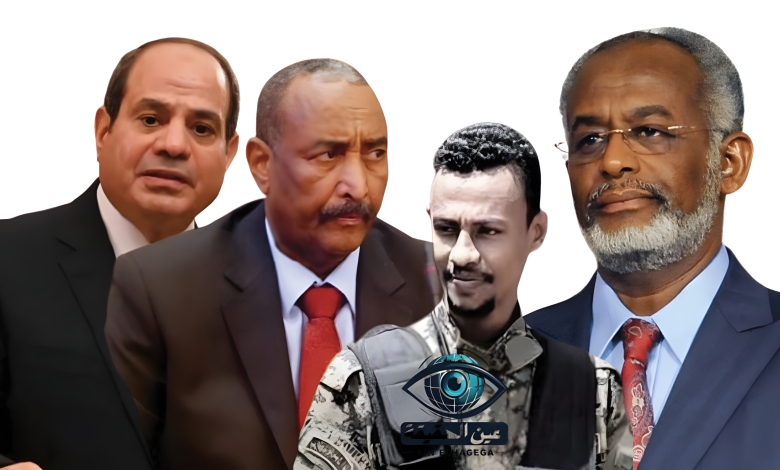
A growing debate has emerged over Egypt’s role in the Sudan conflict, as critics warn that Cairo risks being drawn into a political and moral trap set by Sudan’s SAF leadership under General Abdel Fattah al-Burhan.
Observers question how Egypt — a regional power long associated with political caution and balance — has come under pressure from SAF and allied Islamist networks to adopt policies that appear to undermine refugee protection and humanitarian norms.
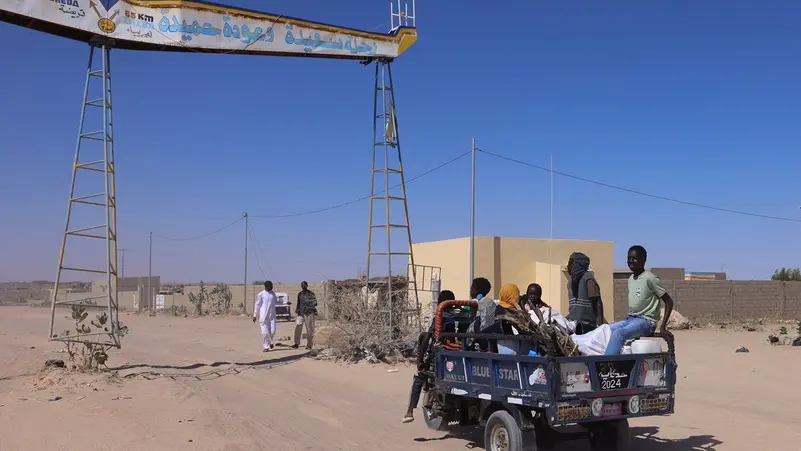
Sudanese civilians did not arrive in Egypt by choice, analysts say, but were forced to flee a war initiated and sustained by the SAF. The conflict has devastated cities, collapsed state institutions and left millions with no option but displacement. Egypt’s initial reception of Sudanese refugees was widely viewed as consistent with its historical role and regional responsibilities.
Concerns have intensified, however, over what rights groups describe as a shift from humanitarian accommodation to coercive pressure. According to activists and legal observers, recent measures go beyond routine administrative enforcement and amount to a strategy aimed at forcing refugees to return to Sudan under the guise of “voluntary return.”
They argue that the SAF is seeking to manufacture an image of stability by pushing civilians back into unsafe areas, not because conditions have improved, but to support claims of restored security and to inject cash and manpower into an economy shattered by war and militarisation.
“This is not about safe return,” one regional analyst said. “It is about sustaining a political narrative that no longer matches realities on the ground.”
Critics say the strategy places Egypt in a difficult position. By facilitating returns or tolerating intimidation against refugees, Cairo risks absorbing the moral and political cost of a war it did not start. Detention, deportation and pressure tactics, they argue, cannot produce real security, nor can they substitute for an end to the conflict itself.
The SAF leadership, observers say, is not seeking civilian return to rebuild Sudan, but to project an image of normalcy — using statistics, visuals and statements to signal stability to the international community. In reality, analysts warn, a country without functioning state institutions and under exclusive military control remains uninhabitable, regardless of forced population movements.
The issue is particularly sensitive given the deep historical and social ties between Egyptians and Sudanese. Relations between the two peoples have long been shaped by shared geography and history, rather than transactional politics. Rights advocates warn that campaigns of hostility or incitement against Sudanese refugees do not serve Egypt’s interests, but instead align it with a military institution accused of widespread displacement and civilian suffering.
While acknowledging Egypt’s economic and security pressures, critics insist that these challenges do not justify arrests, detentions or deportations of people holding legal documents, or those whose sole action was escaping violence, hunger and lawlessness.
Legal experts caution that compromising refugee protection to accommodate a foreign military authority carries long-term consequences. “This is not simply about reputation,” one Sudanese rights lawyer said. “It is about complicity.”
As debate intensifies, activists stress that Sudanese communities will remember who offered protection and who helped push them back into danger. They argue that Egypt’s legacy should not be defined by short-term security arrangements but by enduring principles.
Calls are growing for Cairo to reconsider its approach, with critics warning that continued alignment with the SAF’s narrative will neither stabilise Sudan nor enhance Egypt’s own security.
“The solution is straightforward,” one statement concluded. “End the war, and people will return. Anything else is an illusion paid for by civilians.”