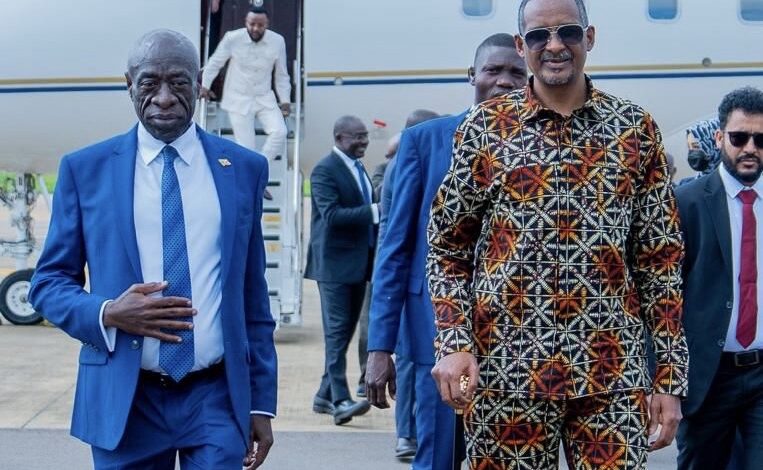
Mohamed Hamdan Dagalo, President of Sudan’s Presidential Council and leader of the Peace Government, has reignited a national conversation on identity after declaring, “I am African… I am Sudanese,” during a public address in Uganda.
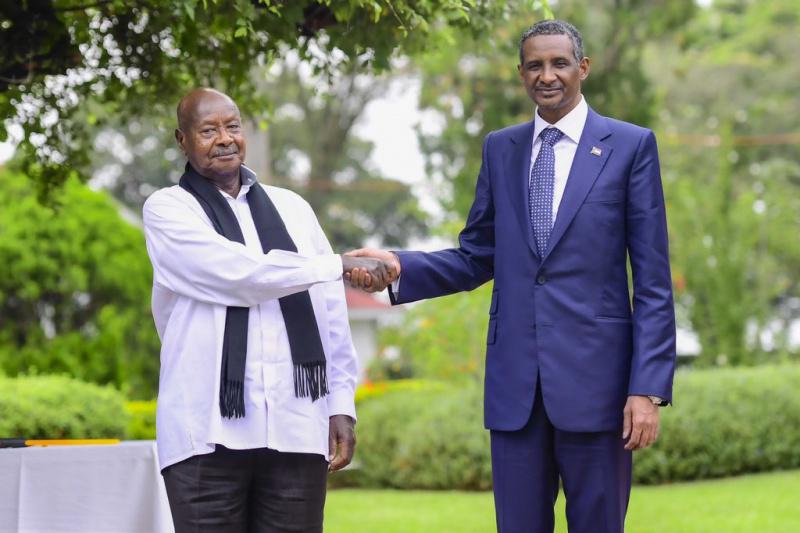
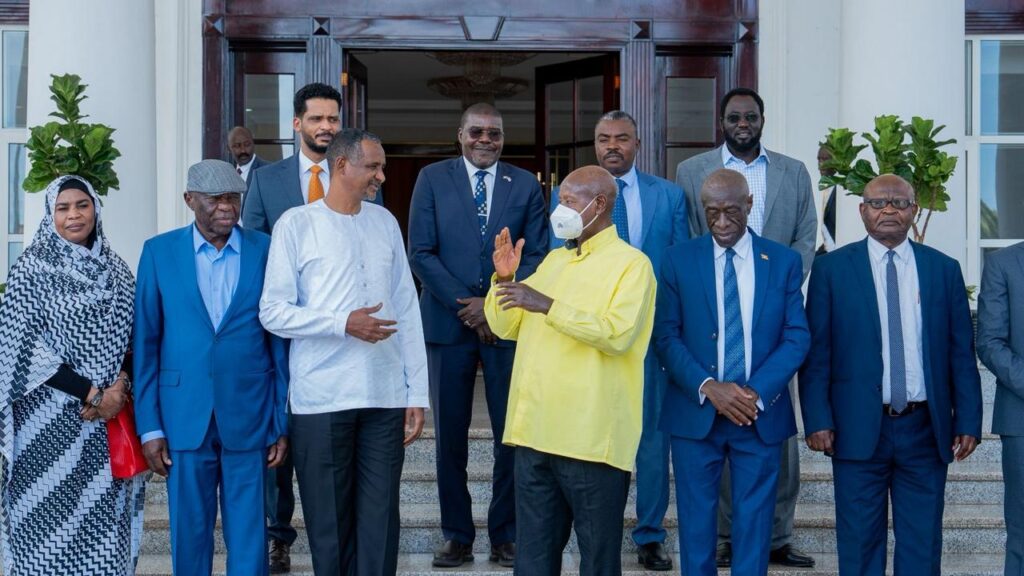
Dagalo made the remarks while speaking to members of the Sudanese community in Entebbe, on the sidelines of his official visit to Uganda, where he held talks with President Yoweri Museveni and senior officials as part of regional efforts to advance a political settlement to Sudan’s war.
Appearing in traditional African attire known as the Kangoli, a garment closely associated with African liberation movements and Pan-African political symbolism, Dagalo’s statement was widely interpreted as intentional and politically loaded. Observers say the moment reflected a broader attempt to reposition Sudan’s political narrative within its African context.
A statement at a critical moment
Dagalo’s words come as Sudan endures one of the gravest crises since independence, with war ongoing since April 2023 and state institutions largely collapsed. Analysts argue that any discourse on identity at this juncture goes beyond culture, carrying direct political implications for the future of the country.
By emphasizing African identity, Dagalo appears to challenge exclusionary narratives that have historically shaped Sudan’s statehood, particularly those that marginalized large segments of the population in Darfur, Kordofan, and eastern Sudan.
Reframing Sudan’s place in Africa
Dagalo’s Uganda visit forms part of expanding African diplomatic engagement with the Sudanese crisis. His emphasis on Africanness is seen by supporters as a signal of openness to African-led mediation frameworks and regional political solutions, at a time when many Sudanese view continental engagement as more credible than external interventions.
For decades, Sudan’s identity debate has oscillated between competing visions of Arabism and Africanness, alongside calls for “Sudanawiya” — an inclusive national identity rooted in diversity. The failure to resolve this question, critics argue, contributed to political exclusion, armed conflict, and the concentration of power in the center.
Mixed reactions, deeper meaning
Dagalo’s remarks triggered polarized reactions across social media and political circles. While critics accused him of politicizing identity during wartime, others viewed the statement as long-overdue recognition of Sudan’s social reality, especially after the war exposed deep fractures within the state.
Supporters argue that the backlash itself reflects the fragility of national consensus on identity and the urgent need for a new political contract that acknowledges Sudan’s pluralism.
An open national question
“I am African… I am Sudanese” has become more than a personal declaration. It encapsulates an unresolved national debate over belonging, power, and the shape of the post-war state.
As Sudan’s conflict drags on and political initiatives struggle to gain traction, the question of identity remains inseparable from the search for peace. Whether Sudan can emerge from the war as a unified and inclusive state may depend on whether such discourse translates into concrete political reform rather than remaining symbolic.