Newly disclosed prosecution details in a UAE state security case have shed light on how an alleged arms trafficking network linked to Port Sudan authorities operated across borders, using front companies, inflated contracts and covert logistics to move weapons and money.
The case, brought by UAE Attorney General Hamdan Saif Al Shamsi, involves 19 suspects and six companies accused of orchestrating a complex scheme combining illicit arms trading, forgery and money laundering.
Rather than a single transaction, investigators say the operation functioned as a layered system designed to disguise both the origin of funds and the destination of weapons.
Inflated contracts and hidden commissions
At the core of the network was what prosecutors describe as a pricing manipulation strategy.
In one deal arranged outside the UAE, military equipment — including Kalashnikov rifles, machine guns and grenades — was listed at $13 million, despite having an estimated real value closer to $10 million. The $3 million gap was allegedly pre-allocated as commissions for intermediaries who facilitated the transaction.
Those funds were then routed through licensed companies and bank accounts via the UAE under the cover of routine commercial activity, masking the illicit nature of the payments.
Investigators say the use of legitimate corporate structures allowed the network to embed illegal transfers through otherwise normal financial flows.
Recycling proceeds into new shipments
Prosecutors allege that more than $2 million from the first transaction was reinvested into a second, transfer procurement operation — this time focused on ammunition.
Part of that shipment was reportedly transported into the UAE via private aircraft using fraudulent documentation, before being prepared for onward transfer to Port Sudan.
Authorities say this “recycling” of proceeds allowed the network to sustain operations without relying on new external financing, effectively turning one deal into a funding source for the next.
A scalable smuggling pipeline
The intercepted shipment, investigators say, was only an initial phase in a broader plan.
Evidence suggests the network had prepared at least six additional deals aimed at moving up to five million rounds of ammunition through similar channels. The disruption of the first operation prevented those subsequent transactions from being executed.
This points, prosecutors argue, to a scalable pipeline rather than an isolated attempt.
Coordinated roles and political links
The case also outline a structured division of roles within the network — from procurement and financing to logistics and coordination.
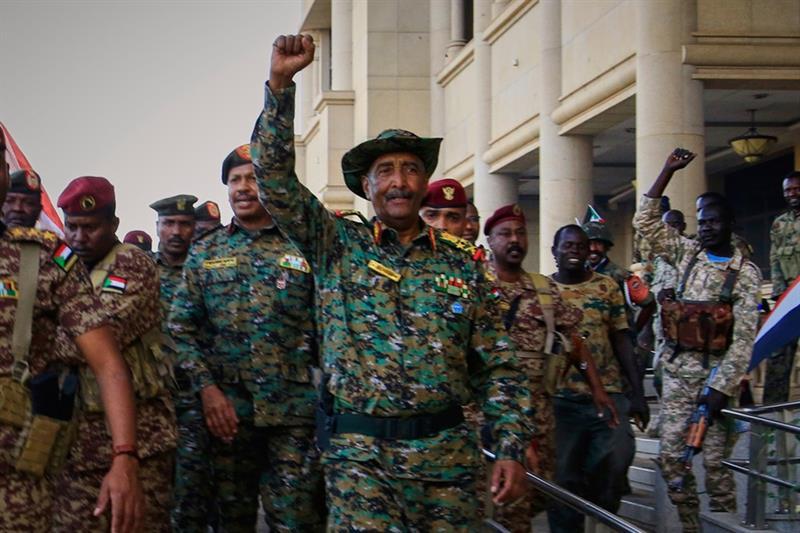
Prosecutors linked the transactions to requests associated with circles around SAF Chief Abdel Fattah al-Burhan and his deputy Yasser al-Atta, with coordination attributed to Osman Mohamed al-Zubair Mohamed.
Among those named in the case is former intelligence chief Salah Gosh, who is accused of playing a role in the broader coordination effort.
Evidence trail: documents, transfers and recordings
Authorities said the case is supported by what they describe as extensive evidentiary material, including:
- financial transfer tracking and banking records
- seized contracts and forged documents
- official correspondence between parties
- recorded communications between suspects
- confessions from several defendants
Together, prosecutors say, these elements reveal a tightly coordinated network with overlapping responsibilities and clear lines of communication between participants.
More than a single case
While the UAE had previously announced the interception of an illegal arms shipment in April 2025, the current prosecution filing expands the scope significantly — reframing the incident as part of a broader system of procurement, financing and covert transport.
Officials stressed that the case highlights attempts to exploit the country’s financial and logistical infrastructure for illicit cross-border operations, warning that such activities will be met with strict enforcement under state security laws.