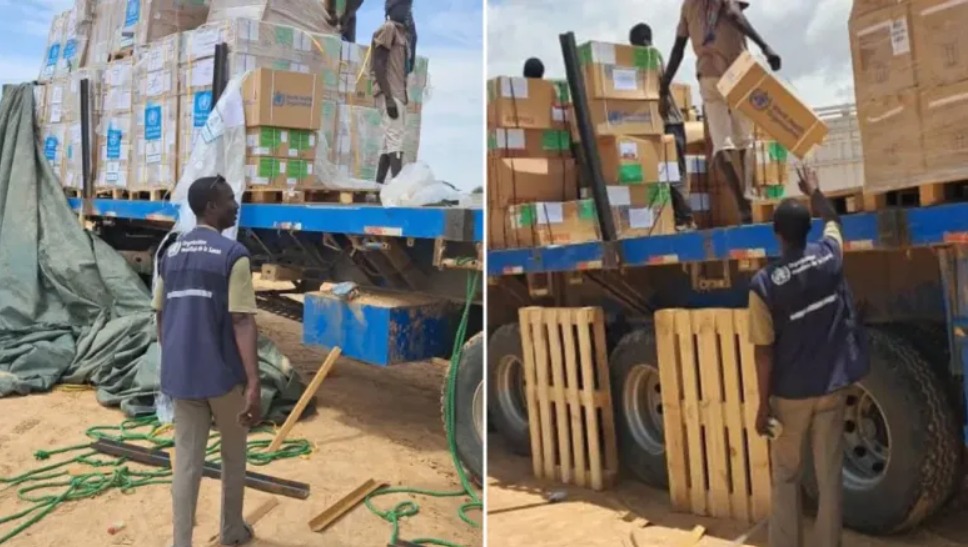
An investigative report has uncovered what it describes as one of the most serious scandals linked to the management of the war in Sudan, revealing an organised network involved in the theft of humanitarian aid and its resale in local markets, allegedly under official protection.
The investigation is based on a leaked, fully documented cheque, supporting financial records, and corroborated testimonies from within humanitarian distribution networks. Together, the evidence indicates that SAF spokesperson Nabil Abdullah Ali Mohamed allegedly received more than 100,000 US dollars in exchange for turning a blind eye to the theft and diversion of humanitarian aid into commercial markets.
According to the investigation, the leaked cheque contains complete identifying details, including the recipient’s name, amount, and date of issuance, and complies with standard banking procedures, undermining claims of technical manipulation or forgery. The document is supported by testimonies from aid workers who say large quantities of food and medical supplies were redirected after entering areas under SAF control, only to reappear later in local markets at inflated prices, while millions of civilians faced hunger and disease.
The findings suggest the looting of aid was neither random nor the work of isolated individuals, but a coordinated operation shielded politically and through official messaging. Sources told investigators that internal attempts to report the violations were met with threats, forced transfers, or exclusion, while official statements publicly denied the phenomenon and blamed unnamed “other parties”, despite evidence to the contrary on the ground.
Within this framework, the SAF spokesperson is portrayed not merely as a media figure, but as a central link in providing political and media cover that allowed the practice to continue. The leaked document suggests that financial payments were used to secure official silence and prevent the issue from becoming a matter of public debate.
The sum involved, exceeding 100,000 dollars, is described as indicative of a wider corruption system tied to the war economy and the transformation of humanitarian aid into a source of profit. The investigation argues that this conduct goes beyond financial corruption, amounting to a grave moral and humanitarian crime, as civilians, particularly children, displaced people, and the sick, bore the cost.
Field testimonies cited in the report confirm that some aid items sold in markets still carried the logos of well known international organisations, indicating that the criminal chain began after shipments entered Sudan, not before. This directly contradicts official narratives that attribute losses to external looting or general chaos, placing responsibility on forces controlling territory and distribution routes.
The humanitarian impact has been described as devastating. In displacement areas, the investigation documents deaths linked to malnutrition and lack of medication, at the same time those very supplies were reportedly being sold openly. Investigators argue this reflects a stark disconnect between official rhetoric about “protecting the people” and a reality driven by profit and impunity.
The report calls for an independent and public judicial investigation, and for accountability regardless of rank or position. It also urges international organisations to reassess monitoring and distribution mechanisms, warning that continuing current practices risks indirectly financing corruption networks.
According to the investigation’s conclusion, humanitarian aid in Sudan was not stolen quietly, but under official protection and in exchange for documented financial payments, at the expense of hungry civilians and suffering patients.