A new analytical report has outlined a major shift in Iran’s strategy in Africa, with Sudan emerging as a central hub for expanding military and logistical operations linked to regional conflicts and global trade routes.
The report says Tehran is leveraging Sudan’s Red Sea location and internal instability to establish a strategic foothold stretching from Port Sudan into the wider Sahel region.
From arms deals to a full network
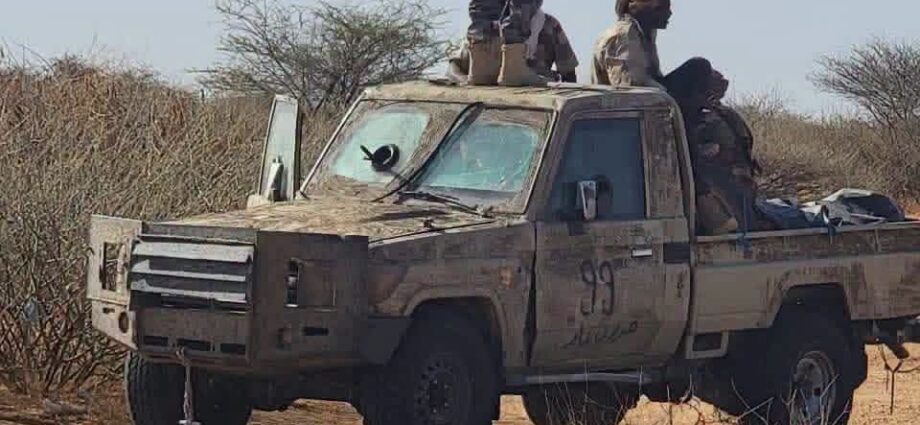
Analysts say Iran’s presence in Sudan cannot be separated from the ongoing war. Relations between Tehran and General al-Burhan’s SAF were restored in October 2023 at a critical moment, as Sudan’s military was under pressure in urban fighting while Iran sought access to the Red Sea.
What began as limited weapons transfers has since evolved into a broader system. The report describes a network in which Iranian drones are deployed across African conflict zones alongside supply chains designed to bypass Western sanctions—often based on exchanging weapons for gold and mineral resources.
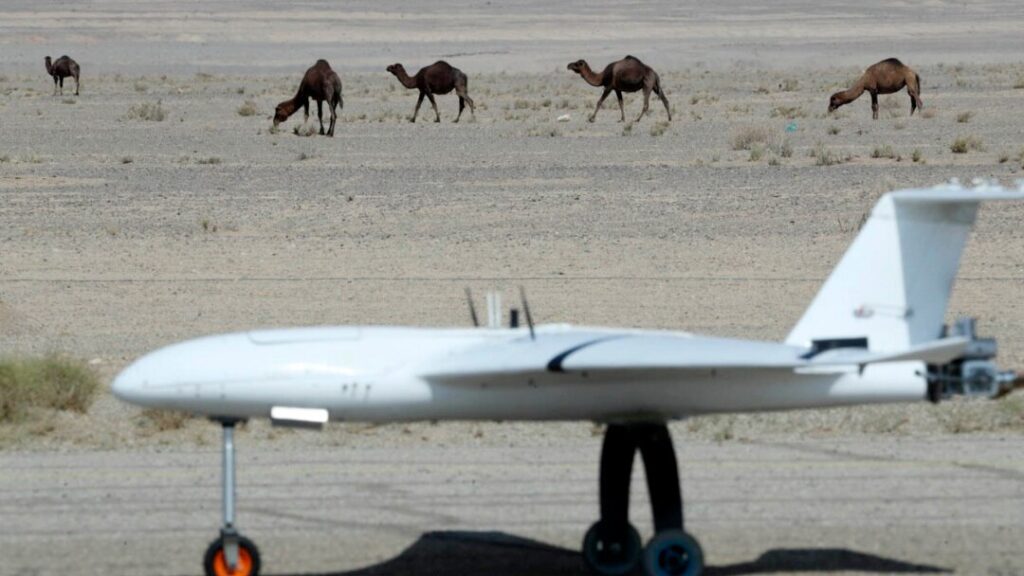
Footage from March 2026 cited in the report allegedly shows Iranian drones flying over Khartoum, along with Iranian military trainers instructing Sudanese recruits in remote aerial warfare.
Sudan as the central hub
The report identifies Sudan as the core محور—now fully translated as the central hub—of Iran’s African expansion due to both geography and operational advantages.
Sudan’s Red Sea coastline, stretching roughly 530 miles, places it near key maritime routes, including the Bab al-Mandab Strait. Port Sudan, currently the main base for General al-Burhan’s SAF, is described as the primary entry point for Iranian support.
Meanwhile, Wadi Seidna airbase north of Khartoum is believed to function as a launch hub for Iranian drone operations across Africa.
Iran–Sudan air bridge
Open-source intelligence points to what analysts call an “Iran–Africa air bridge,” with regular cargo flights linking Port Sudan to Bandar Abbas in southern Iran since late 2023.
A Boeing 747 linked to Iran’s Qeshm Fars Air reportedly carried out multiple flights between December 2023 and January 2024. Satellite imagery from early 2024 showed Mohajer-6 drones stationed at Wadi Seidna, alongside ground control systems.
These drones—capable of carrying precision-guided munitions over long distances—are believed to have shifted battlefield dynamics, contributing to gains by General al-Burhan’s SAF in Omdurman and Bahri, and later operations in Khartoum, which the military said it recaptured in March 2025.
Control of trade routes
The report frames Iran’s presence in Sudan as part of a broader strategy to influence global trade and energy corridors.
By strengthening its position along Sudan’s Red Sea coast, Tehran gains proximity to one of the world’s busiest shipping lanes, through which around 12% of global trade passes. It also enhances supply routes to Houthi forces in Yemen, tightening links between Red Sea operations and pressure near the Strait of Hormuz.
Analysts warn this creates a dual pressure system on maritime routes—north via Hormuz and south via Bab al-Mandab. Attacks on Red Sea shipping have already forced vessels to reroute around Africa, adding 10 to 14 days to transit times.
Ideological expansion
The report also highlights an ideological dimension, saying Iran’s Revolutionary Guard is working to embed its military doctrine within Sudan’s armed forces, particularly among Islamist-linked elements.
This, it suggests, could produce a future leadership more closely aligned with Tehran, similar to the model seen with Houthi forces in Yemen.
Expansion into the Sahel
Iran’s ambitions extend beyond Sudan. The report notes a visit by Iran’s defence minister to Burkina Faso in February 2026, offering drone cooperation in exchange for access to natural resources. Similar outreach is reported in Mali and across the Sahel.
Analysts warn that by 2027, a single drone production facility in Khartoum could potentially supply armed groups across the region.
Limited global response
Despite these developments, the report points to a gap in international response. Western governments remain focused on humanitarian concerns and de-escalation efforts, while Iranian activity continues to expand.
A U.S. diplomat quoted in the report said external actors like Iran are “fueling the fire,” warning that Sudan is increasingly becoming a proxy battleground rather than a purely domestic conflict.
The report concludes that Sudan now represents a model of Iran’s evolving strategy in Africa—combining military support, logistical entrenchment, and ideological influence—and warns that failure to disrupt supply lines could allow Sudan’s military to become a long-term extension of Iranian power on the continent.