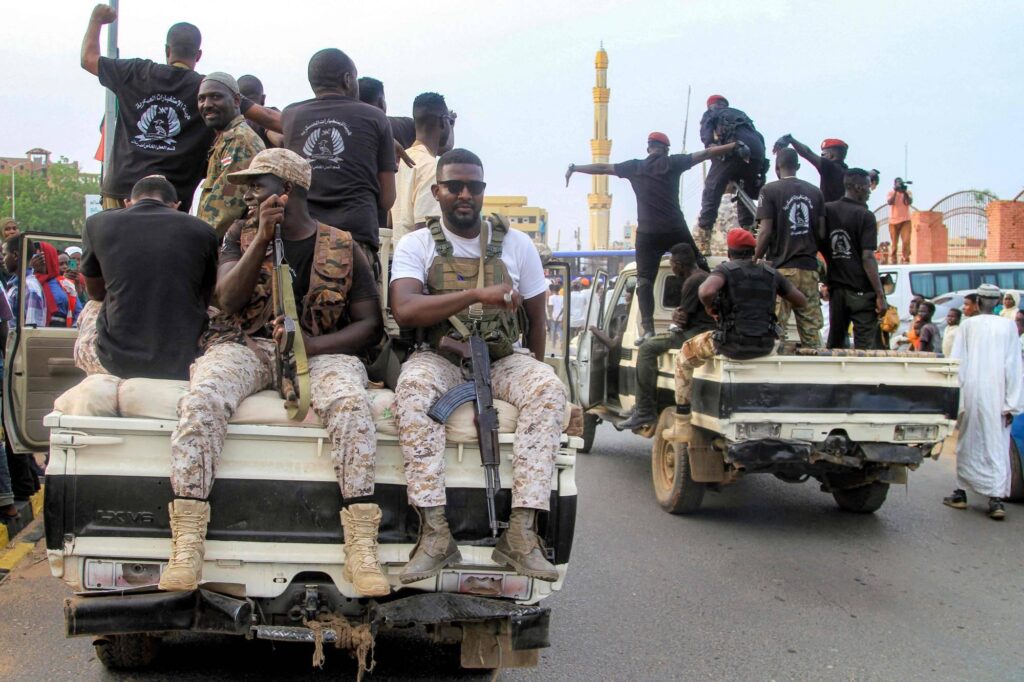
The Sudanese Armed Forces have declared the fighting in Khartoum over, while authorities have announced restrictions on carrying weapons through the capital. Yet the reality on the ground tells a different story.
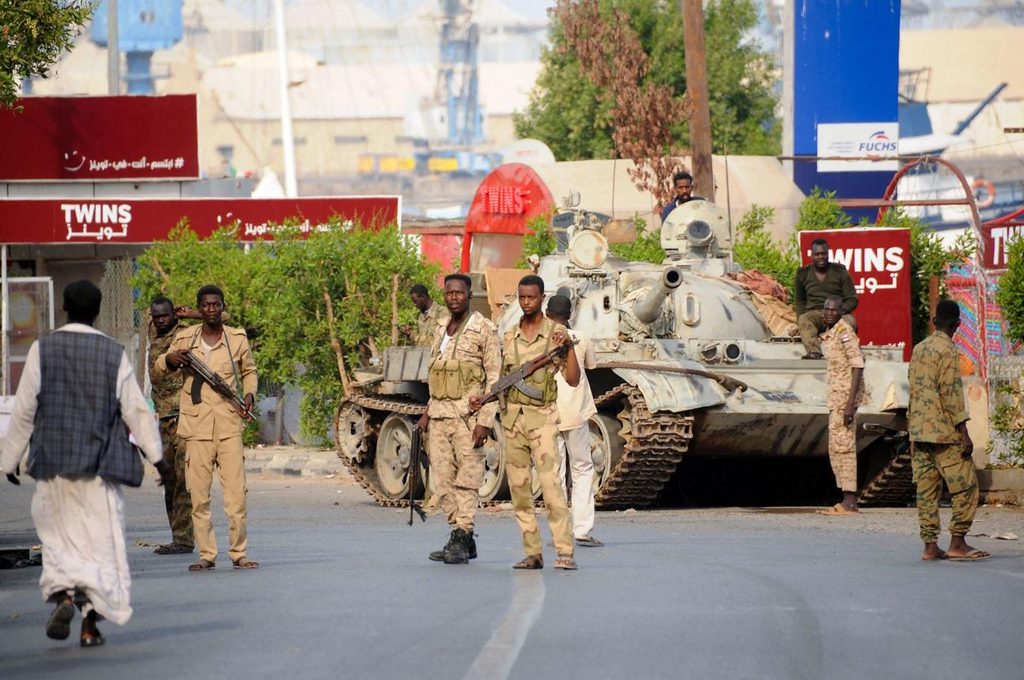
Armed men continue to move openly through residential districts, while military vehicles equipped with rockets and heavy weapons remain visible on the streets. Their presence has raised questions over who controls security in the capital and whether the army is capable of disarming the numerous armed groups that fought alongside it.
As Sudan enters the fourth year of war, SAF has become increasingly dependent on a loose coalition of armed movements, Islamist battalions, former paramilitary commanders and locally recruited forces.
The arrangement has revived memories of the army’s previous partnership with the Rapid Support Forces, which was initially empowered by the state before emerging as a rival military centre and eventually going to war with SAF.
Among the most powerful groups currently operating alongside the army are the Joint Force of former Darfur rebel movements, the Sudan Shield Forces and the Islamist Al-Baraa Ibn Malik Corps.
Sudan Shield is led by Abu Aqla Keikal, a former RSF commander who defected to the army, while Al-Baraa Ibn Malik has become one of the most prominent Islamist formations supporting SAF. The Joint Force, meanwhile, includes armed movements that signed the 2020 Juba Peace Agreement and later entered the conflict on the army’s side.
These formations maintain their own commanders, political loyalties and recruitment networks. Some also possess heavy weapons and significant battlefield experience, making them difficult to absorb fully into the regular military chain of command.
The Sudan Founding Alliance, TASIS, and the RSF have repeatedly described SAF as a coalition of the regular army, Islamist battalions and allied militias. They accuse the army of allowing former members of Omar al-Bashir’s regime and Muslim Brotherhood-linked groups to dominate its military campaign.
Those claims reflect the position of SAF’s opponents and cannot independently establish that the allied groups are preparing to turn against the army. However, they reinforce broader concerns over the growing number of separately commanded forces operating in SAF-held territory.
Residents in army-controlled areas increasingly fear that disputes over influence, weapons, territory and political power could eventually trigger clashes between the groups themselves or with SAF.
The continued visibility of armed formations in Khartoum also casts doubt on the government’s weapons ban. While civilians face restrictions, allied fighters appear able to carry rifles and move military vehicles through the capital with limited interference.
For SAF, the alliances have delivered immediate battlefield advantages. Armed movements and Islamist battalions have provided manpower, local knowledge and combat experience during campaigns in Khartoum, Al Jazira and other regions.
But the long-term risks are becoming harder to ignore.
Sudan’s war began after two military institutions that once shared power turned against each other. The emergence of new, heavily armed formations outside a unified command structure raises the possibility that the country could once again produce a parallel force too powerful for the state to control.
The central question is therefore not whether SAF’s allies currently support the army, but whether they will remain subordinate once the war ends and the struggle over Sudan’s political and military future begins.