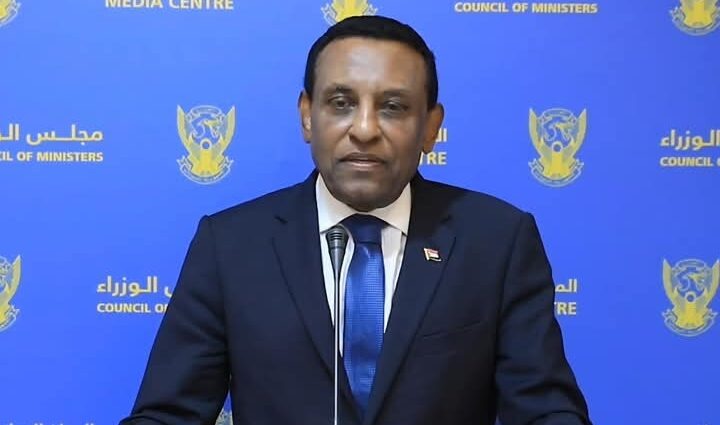
Leaked details of a meeting between the head of the so called “Government of Hope”, Kamil Idris, and Islamist figures in the US have emerged as more than a passing episode, pointing instead to a political direction taking shape amid Sudan’s deepening crisis.
Rather than focusing on urgent priorities such as ending the war, restoring peace, and addressing the collapsing living conditions, discussions reportedly centred on the civilian protest movement. Calls were made to suppress peaceful demonstrators, with protesters even being dismissed as “the rabble of this era”, language widely seen as an attempt to strip them of legitimacy ahead of any crackdown.
More telling than the content itself was the response. The Port Sudan based authorities chose to invoke the cybercrime law, threatening prosecution against anyone deemed to be “insulting the state”. This raises a fundamental question, whether the state is a public entity open to criticism as part of political life, or an authority that criminalises dissent and conflates its prestige with freedom of expression.
This rhetoric has not emerged in isolation. It coincides with online incitement attributed to Islamist currents, openly calling for violence against peaceful protesters. While repression is demanded through legal channels behind closed doors, calls for violence unfold openly on social media. Together, they form a familiar pattern in Sudan’s history, where the language of betrayal has often led to bloodshed.
The contradiction becomes sharper when viewed against Idris’s professional background. Internationally, he is presented as a legal expert who worked within the institutional environment of the World Intellectual Property Organization, a space associated with the rule of law and the protection of rights. Yet his current political conduct suggests a different choice, using legal tools not to safeguard freedoms but to deter peaceful protest. The issue lies not in his background, but in how the law is being deployed within a deeply polarised political context.
Ultimately, the crisis is not about individuals but about approach. When “state authority” is placed above rights, and the street is treated as a threat rather than a partner, the same outcomes Sudanese people know all too well are reproduced. The Port Sudan authorities, despite a new façade, appear driven by an old logic, one that Islamist forces remain capable of pushing to the forefront in an increasingly bleak political landscape.
Betting on repression, whether through law or rhetoric, remains a short term strategy in a country whose experience has repeatedly shown that legitimacy is not forged in closed rooms, but in the public sphere, where the street remains the final arbiter.