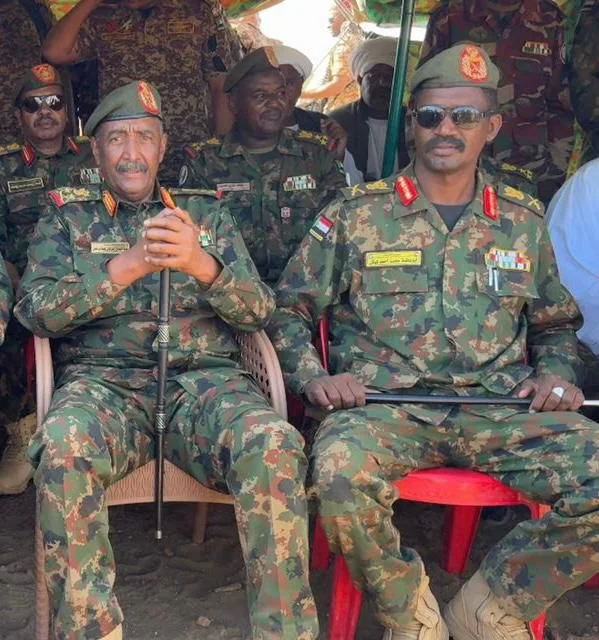
Sudanese army chief Abdel Fattah al-Burhan may have to offer salaries and financial incentives to other allied armed groups to contain objections over the terms he promised Sudan Shield commander Abu Aqla Keikel, Sudanese sources told Erem News on Tuesday.
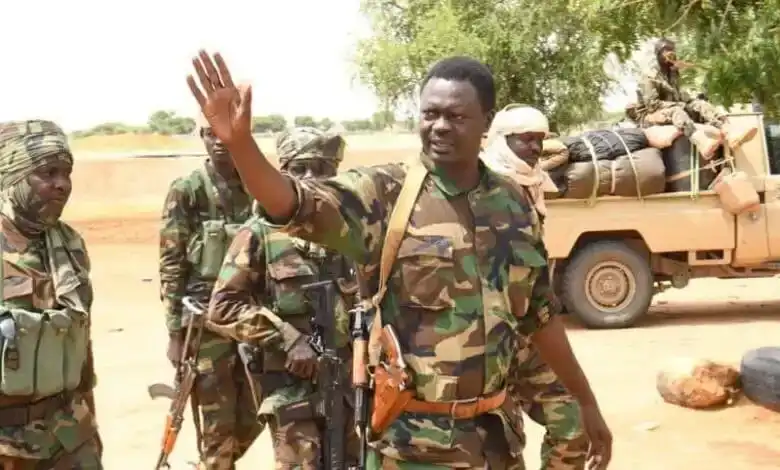
The sources said Burhan backed an overseas assignment for Keikel’s fighters in hopes of securing money, fuel and supplies for the war. In return, Keikel sought army salaries for his men and a place for Sudan Shield inside the military that would allow him to retain command. Other commanders fighting alongside the Sudanese Armed Forces (SAF) are seeking much the same security for their own forces, the sources said.
One part of the arrangement is already visible to those commanders. Keikel told his fighters they had received military service numbers, making them eligible for army pay. Erem’s sources said Burhan had also promised financial incentives. The report gave no value for those incentives and did not establish whether any had been paid.
Keikel brought an organised force to Burhan’s side when he defected from the Rapid Support Forces (RSF) in October 2024. He remained at its head. Army pay gives the men who followed him a source of income, while the prospect of deploying together as Sudan Shield battalions gives their commander a chance to preserve the force he built. Who would exercise authority over those battalions abroad remains unresolved.
For Burhan, the difficulty is what happens when the next allied commander asks for comparable terms. Erem’s sources said the armed groups backing the SAF receive different levels of financial and military support. They predicted Burhan could make further promises to head off objections before he has secured the resources he is counting on. The report named no commander who had yet demanded parity with Keikel.
A Saudi opening as the RSF considers withdrawal
The Saudi dimension raises a separate question about whose place Keikel’s men might take. In September, RSF commander Mohamed Hamdan Dagalo directed his forces to begin preparations to withdraw around 5,000 personnel serving with the Saudi-led coalition in the kingdom, according to Darfur24. In an Al-Rakoba column on Tuesday, Bakri al-Sayegh cited reports that Riyadh wanted Sudan Shield personnel to replace them. He described the proposed substitution as unconfirmed. How many RSF personnel subsequently left remains unclear.
Al-Sayegh also challenged the SAF government over its own position on foreign fighters. It has complained internationally about foreign nationals fighting alongside the RSF in Sudan. The columnist asked how it reconciled those complaints with its willingness to send Sudanese fighters abroad for pay. Neither his column nor Erem’s report identified a sum Saudi Arabia had agreed to pay.
Sudanese international law expert Al-Moez Hadra raised a more immediate objection in remarks to Erem. In his reading of Sudan’s constitutional charter, sending forces abroad requires approval from a legitimate civilian legislature. He argued that Burhan could not authorise such a deployment alone, even if the fighters belonged to an allied formation operating under the army’s umbrella.
Hadra also questioned the military logic of sending infantry abroad when Burhan needs men at home. Keikel has already told supporters that Sudan Shield forces are heading to Blue Nile to fight the RSF. For the other commanders watching his relationship with Burhan, however, the immediate issue is pay. Keikel can now tell his fighters they qualify for army salaries. Erem’s sources say Burhan may soon have to tell his other allies what their men can expect.