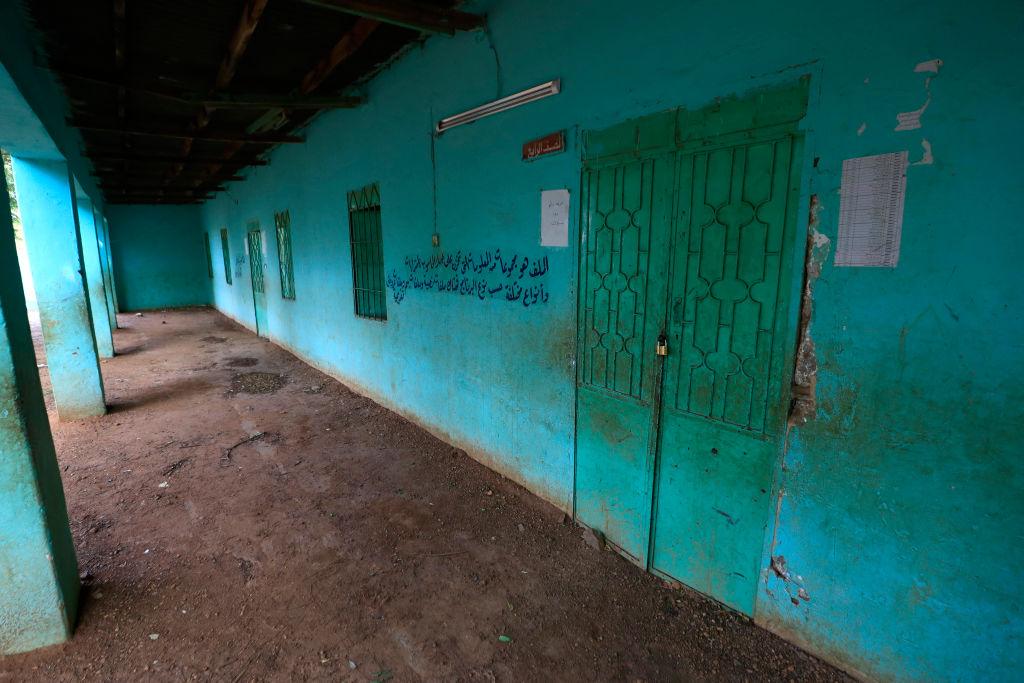
Sudan’s public education system is facing a deepening crisis as schools close, student attendance declines and private institutions expand, the Sudanese Teachers’ Committee warned on Friday.
The committee said the continuing war and deteriorating economic conditions have forced authorities to merge schools across Khartoum state, leaving thousands of students with increasingly limited access to public education.
Sami al-Baqir, a spokesperson for the committee, told Sudan Tribune that the number of functioning public secondary schools in Ombada locality had fallen from 48 to fewer than 20, citing field reports.
Several schools have been consolidated into shared buildings, while others have stopped operating altogether.
Similar closures and mergers have been reported in Karari, Khartoum and East Nile, where education officials are struggling to maintain classes amid shortages of teachers, resources and functioning facilities.
Al-Baqir said enrollment had fallen sharply, with some classrooms accommodating only a handful of students as absenteeism and dropout rates increase.
The committee warned that the deterioration of public education was accelerating inequality, with families increasingly forced to pay for private schooling or relocate their children to more stable areas.
Al-Baqir accused the SAF government of facilitating the expansion of private education while failing to address the collapse of public schools.
He pointed to a noticeable increase in private institutions in Khartoum North, saying new licences were being issued even as existing public schools struggled to provide basic educational services.
The allegations were not independently verified.
Meanwhile, reports from the Higher Committee for Teachers’ Strikes indicated that several public schools had experienced prolonged disruptions due to teacher absenteeism, repeated industrial action and administrative instability.
Teachers are also facing worsening living conditions and financial hardship, further undermining the sector’s ability to function.
Al-Baqir said professional associations and teachers’ unions were reconsidering the effectiveness of traditional strikes, arguing that the tactic had become less effective as authorities continued to disregard educators’ demands.
He also accused unnamed groups of attempting to blame teachers and their strikes for the deterioration of public education rather than confronting the underlying economic and administrative problems.
The committee called for greater public scrutiny of education policies and efforts to protect public institutions from further decline.
It warned that without urgent intervention, Sudan risks widening educational inequalities and denying millions of children access to regular schooling.