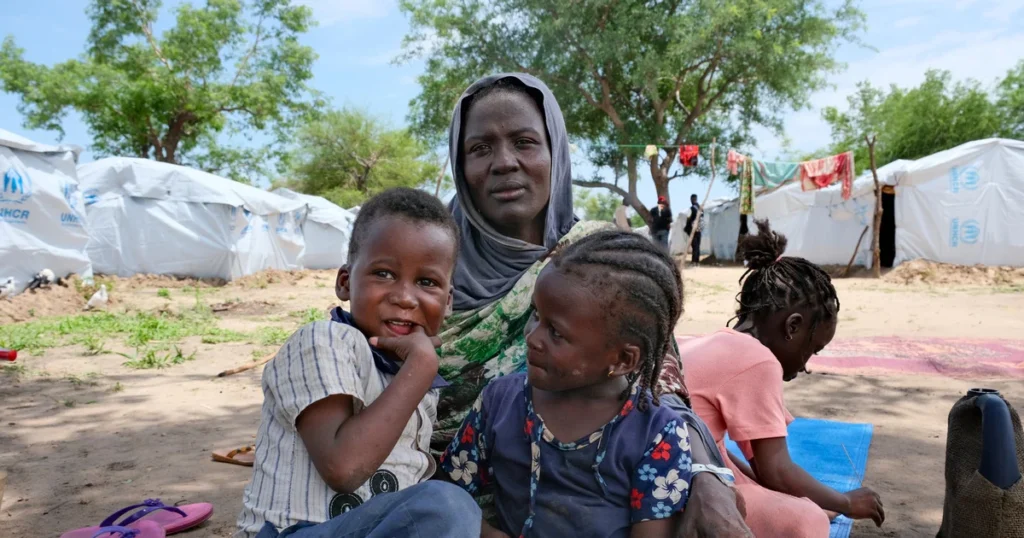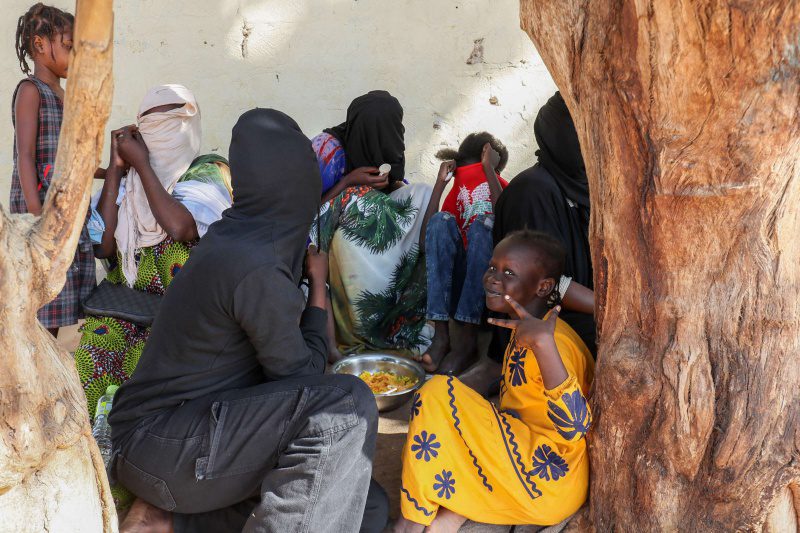
Libyan authorities in the southeastern city of Kufra have unveiled new government-backed initiatives aimed at integrating Sudanese nationals who have fled the war in Sudan, treating them as residents rather than displaced people.
Mohamed Abdulrahim Boumreiz, mayor of Kufra, said the strategy adopted by authorities and the eastern-based government is built on recognising Sudanese arrivals as “Libyan citizens, not refugees,” according to remarks published by media.
Boumreiz said a registration programme has already begun to document Sudanese doctors, artisans, farmers and other skilled workers so they can be employed as productive workers and public employees.
The initiatives come as tens of thousands of Sudanese escape the conflict in their country, with Kufra emerging as a major reception hub for those fleeing fighting between the SAF and the Rapid Support Forces. The influx has placed mounting pressure on the remote border city.
Kufra lies at a strategic crossroads, bordering Sudan to the southeast, Chad to the south and Egypt to the east, making it a vital transit point and regional meeting zone in Libya’s desert south.
The war in Sudan has triggered what international agencies describe as the world’s worst humanitarian crisis, with around half of the country’s 50 million people facing food insecurity. The conflict has also fuelled ethnic violence and famine-like conditions across large parts of the country.
Earlier, Muftah Al-Sharawi, head of the relations unit at Libya’s anti-illegal migration agency in Tobruk, said the number of Sudanese entering Libya via Egypt had risen sharply in recent months. He attributed this to Egypt’s economic situation and the deteriorating financial conditions of Sudanese families after prolonged war.
“Many Sudanese can no longer afford the cost of living in Egyptian cities, so they move to Libya instead,” he said.
Al-Sharawi estimated that around 2,000 Sudanese refugees arrived in Libya between March and late August, most of them families holding asylum cards.
Despite Libya’s role as a major departure point for irregular migration to Europe, Al-Sharawi said very few Sudanese were attempting the dangerous journey. “They are fleeing war, not seeking Europe,” he said, adding that Libya offers a familiar environment where language is not a barrier and work opportunities exist.
He said the migration agency is coordinating with authorities in the border city of Emsaed to transfer Sudanese arrivals to official shelters, provide food and medical care, and prevent human traffickers from exploiting them. Coordination is also underway with the Sudanese community to secure housing for families and protect them from smugglers.