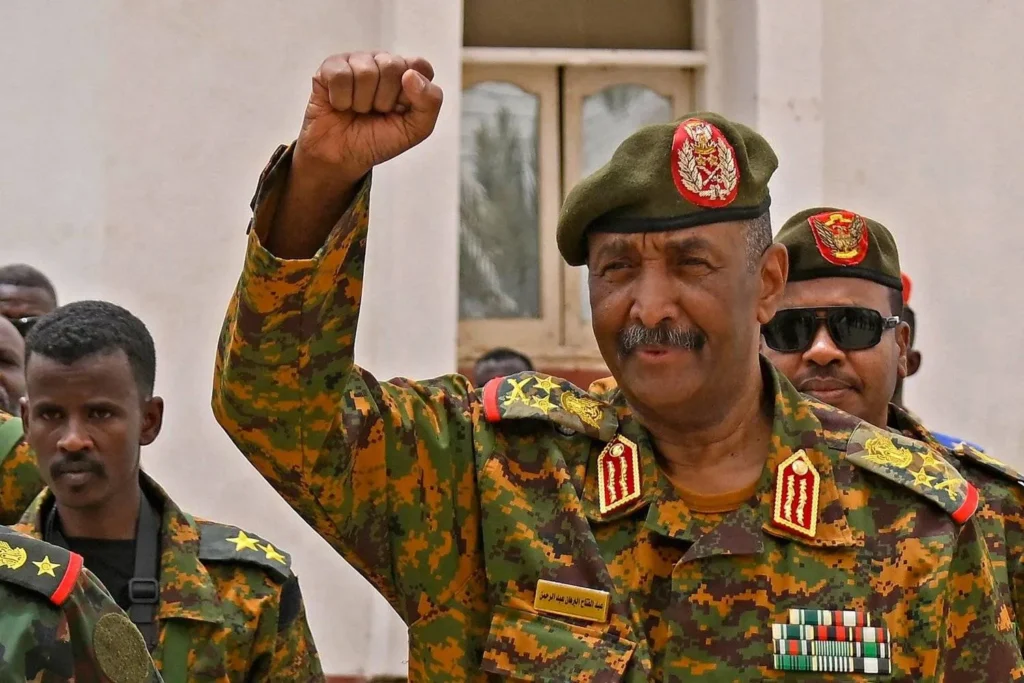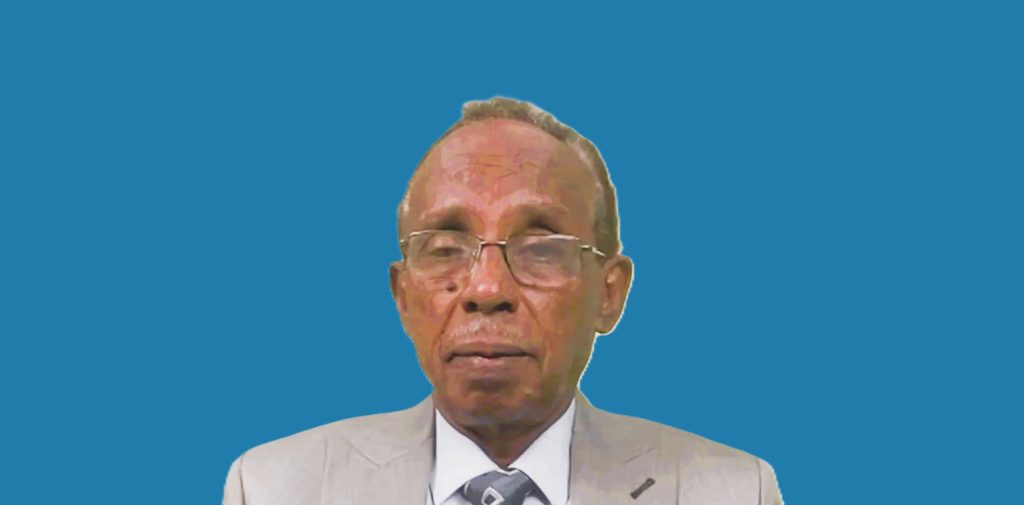
Sudanese journalist Othman Mirghani argues that the SAF’s mission is limited to fighting wars, not shaping political outcomes, warning that Sudan is drifting without clear leadership or institutional direction.
During an official visit to the US in 2007, organised by the State Department, Mirghani took part in an intensive programme that lasted several weeks and included daily meetings from early morning until midnight. While at the US Department of Defense, the Pentagon, he met an American general who was briefing participants on US defence policy.
During the discussion, Mirghani asked a direct question about the US bombing of the al Shifa pharmaceutical factory in Khartoum, despite Washington’s knowledge that the facility was not linked to chemical weapons production. The general responded bluntly, saying that the SAF’s task was simply to identify the target and destroy it. The political reasons behind the decision, he explained, were the responsibility of civilian authorities, pointing to a State Department representative accompanying the delegation.
Mirghani says the general’s answer clearly illustrates the nature of military institutions. Their role is confined to executing combat operations, not questioning or justifying the political logic behind them. According to him, the SAF’s job is war, not politics, a reality that explains many of its positions and behaviours.
He notes that in media appearances he is often asked why the SAF rejects negotiations and peaceful solutions. His answer, he says, has always been that the SAF is not mandated to propose political settlements. Its role is to seek military victory on the battlefield, not to sit at negotiating tables.
From Mirghani’s perspective, the deeper problem lies in identifying who actually holds the authority to decide on peace and negotiations. Is it the head of the Sovereign Council acting alone, the council collectively as the highest sovereign body, or the Defence and Security Council?
He argues that the answer remains unclear. The Sovereign Council does not meet regularly to deliberate on such critical issues, while the Defence and Security Council is often convened only after decisions have already been made, limiting its role to public messaging rather than genuine decision making.
Mirghani points out that many major issues are resolved through improvised public speeches, a practice that reflects the absence of real state institutions and elevates poorly studied individual decisions over structured processes. He likens Sudan’s situation to a ship adrift at sea without a compass, where institutional safeguards that should ensure careful analysis of scenarios and consequences are largely absent.
He questions why Sudan lacks functioning institutions capable of producing decisions based on clear standards and rigorous evaluation. According to Mirghani, strong institutions allow for in depth examination of all available options and help identify the most viable solutions.
The core of the problem, he argues, is the failure to assign negotiation and political settlement files to an independent body made up of experts from relevant fields. Such a body, he says, could steer the country toward peaceful, negotiated outcomes rather than endless confrontation.
Mirghani concludes by stressing that these responsibilities require deep study, strategic insight, and full time dedication. This institutional approach, he argues, strengthens the state, its institutions, and its leadership. By contrast, the absence of institutions and reliance on individual decision making weakens the state, regardless of claims that personal authority represents strength, ultimately deepening Sudan’s political crisis and undermining its ability to manage strategic choices.