Sudanese politicians and analysts have welcomed the “Declaration of Principles” signed by Sudanese forces in Nairobi, describing it as a document that accurately diagnoses the country’s crisis by excluding the Muslim Brotherhood from Sudan’s political future.
The declaration, signed on Tuesday in the Kenyan capital by a broad spectrum of Sudanese civil, political and professional forces, was met with widespread public approval across Sudanese society.
According to experts, the document sets out core foundations that reflect the aspirations of millions of Sudanese citizens seeking to build a broad civilian front opposed to war and firmly rejecting any role for the Brotherhood organisation in the future of a civilian Sudanese state.
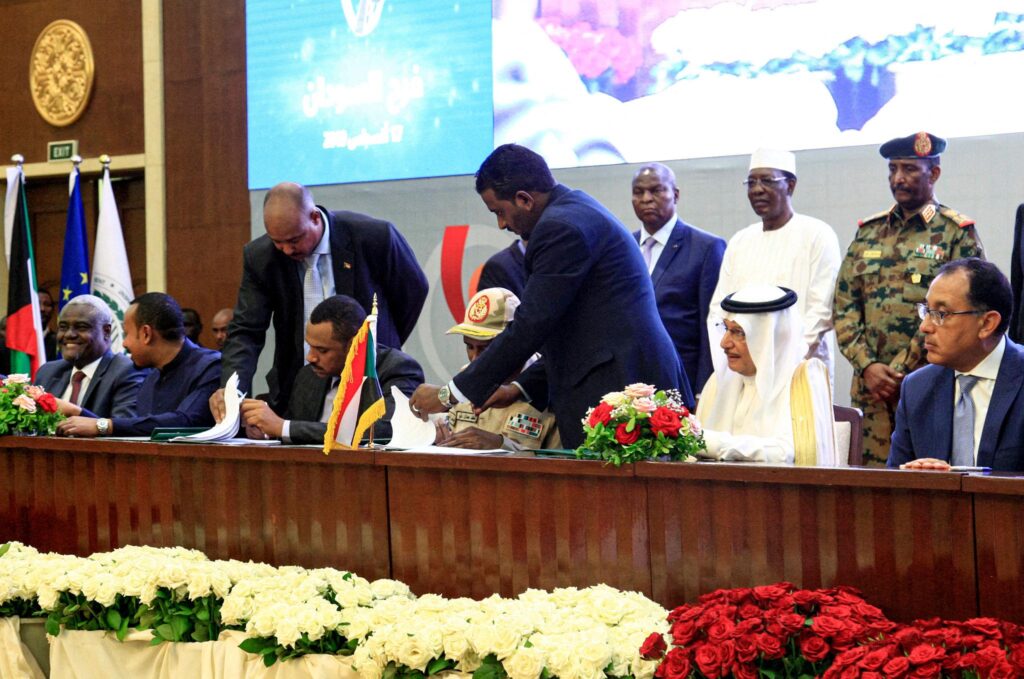
On Tuesday, Nairobi witnessed the signing of a joint declaration of principles by the “Somoud Alliance”, led by former Sudanese prime minister Abdalla Hamdok, together with the Sudan Liberation Army led by Abdel Wahid al Nur and the Arab Socialist Baath Party. The signatories agreed on the need to halt the war in Sudan and to classify the National Congress Party and the Islamic Movement, the political arm of the Brotherhood, along with their affiliated fronts, as terrorist organisations.
Building an international position
Misbāh Ahmed Mohamed, head of the media department of Sudan’s National Umma Party, said that signing a memorandum calling for the designation of the National Congress Party and the Islamic Movement as terrorist entities is a necessary step to contain those responsible for igniting the war and obstructing peace efforts.
He added that the memorandum sends a clear message to the international community on the urgency of responding to Sudanese demands to end the war and address its root causes. He warned that the continued obstruction of peace initiatives by Brotherhood affiliated groups, including the Quartet initiative, poses a direct threat to civilian lives, Sudan’s unity and territorial integrity, requiring a firmer international stance.
Mohamed said that the broad participation of political and civil forces in signing the declaration represents an important step towards unifying the civilian front and building a shared national position aimed at ending the war and alleviating civilian suffering.
He noted that the wide endorsement reflects consensus among anti war forces backing the Quartet roadmap as a framework for a comprehensive political settlement leading to sustainable peace.
The international Quartet, comprising Saudi Arabia, the UAE, Egypt and the US, has previously announced a roadmap to end the war, ensure humanitarian aid flows and facilitate a peaceful transition of power to democratic civilian forces.
Mohamed stressed that political, civil and trade union forces will continue coordinating their efforts to pressure for an end to the war and to launch a constructive political process leading to a comprehensive national project based on citizenship, justice, equality and democracy.
Excluding the Brotherhood
In a statement following its signing of the declaration, the Sudan Liberation Army led by Abdel Wahid Mohamed Nur said Sudan has suffered for decades under the dominance of the Islamic Movement and its fronts. It accused the network of systematically weakening state institutions, triggering repeated coups, fuelling internal wars and committing grave violations against civilians.
The statement described the movement as an organised network operating in contradiction to humanitarian values and international legal standards. It accused it of undermining democratic experiments through military coups, igniting internal armed conflicts, fuelling ethnic and regional divisions, supporting armed groups in neighbouring countries, and contributing to regional insecurity.
It also alleged involvement in political assassinations, the draining of national economic resources through corruption and illicit financing networks, and the implementation of empowerment policies that hollowed out state institutions and stripped the civil service of professional competence.
A possible unity
Sudanese political analyst Sibawayh Youssef said the consensus among a wide spectrum of civil and professional forces on classifying the Islamic Movement and its fronts as a terrorist network represents an important step towards restoring the revolutionary momentum generated by the December Revolution, which led to the removal of the Brotherhood regime in April 2019.
Youssef said the forces that signed the Nairobi declaration represent the spearhead of the Sudanese revolution, and that calls to classify Brotherhood networks as terrorist entities genuinely reflect Sudanese aspirations to escape what he described as a destructive cycle.
He argued that the Brotherhood ignited the war to block Sudan’s democratic civilian transition, posing a real threat to civilian safety and obstructing normal social and economic development.
Youssef stressed that the international and regional community must recognise that when Sudanese citizens rose up in April 2019 against former president Omar al Bashir, they clearly and publicly declared that the Brotherhood was unfit to govern and should have no role in Sudan’s future.
He concluded that building a broad civilian front in Sudan requires revolutionary forces to unite around a clear diagnosis: that the current war is a war driven by Brotherhood ambitions to return to power. Only through this understanding, he said, can Sudanese unity be restored in confronting a network that has devastated the country and seeks to fragment its social fabric.