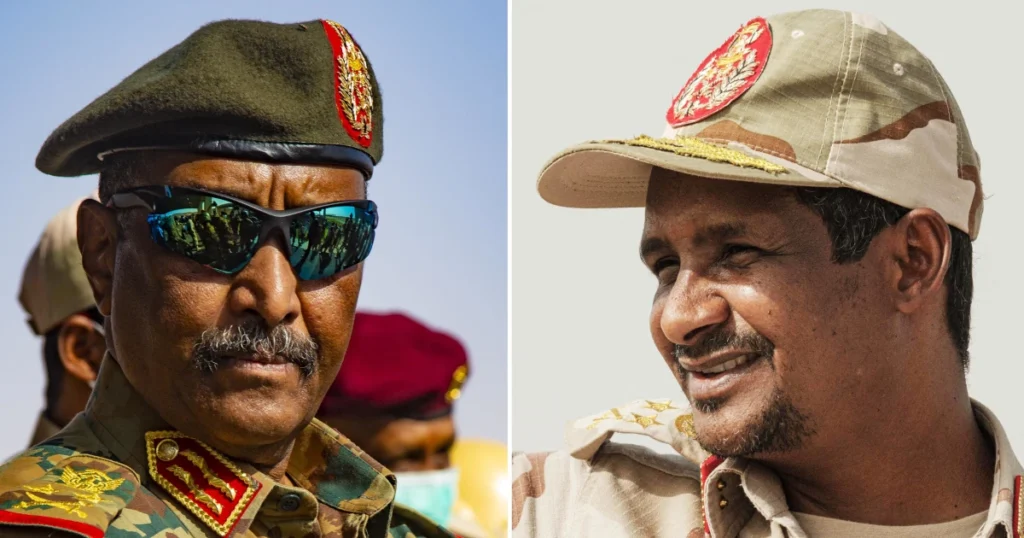
Pakistan is in the final stages of concluding a $1.5 billion arms deal with Sudan, according to a former senior air force official and three informed sources, a move that would significantly bolster General al-Burhan’s army (SAF) in their war against the Rapid Support Forces (RSF).
The conflict, which has raged for more than two and a half years, has triggered what the United Nations describes as the world’s worst humanitarian crisis. It has also drawn in multiple external actors with competing interests, while threatening to fragment Sudan, a strategically located country with Red Sea coastline and major gold production.
Two of the sources, who requested anonymity, said the deal includes 10 Karakoram-8 light attack aircraft, more than 200 reconnaissance and combat drones, and advanced air-defence systems.
Retired Air Marshal Amir Masood, who previously served in the Pakistan Air Force and is familiar with air force affairs, said the agreement is effectively finalized.
“The deal is as good as done,” Masood said.
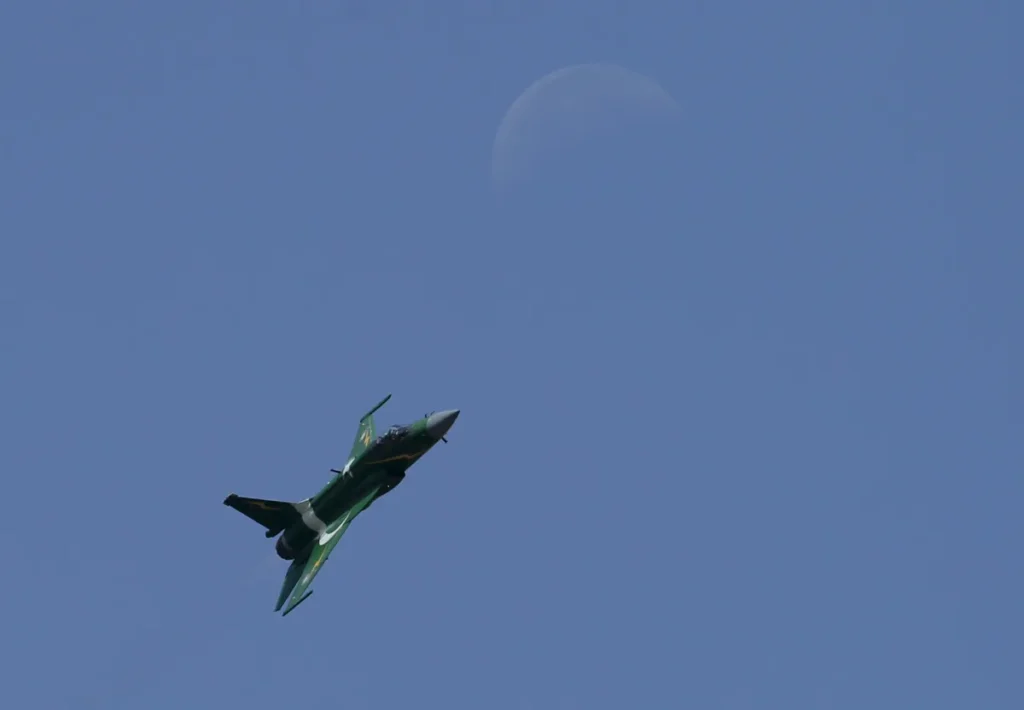
He added that it also includes Super Mushshak training aircraft and may extend to JF-17 fighter jets, which are jointly developed with China and manufactured in Pakistan, though he did not provide delivery timelines or quantities.
Pakistan’s military and defence ministry did not respond to Reuters’ requests for comment. A spokesperson for the SAF also did not respond.
Analysts say Pakistani military support—particularly drones and fighter aircraft—could help the SAF regain air superiority it enjoyed in the early phase of the war. The RSF has increasingly relied on drones to expand territorial control, undermining the SAF’s battlefield position.
The SAF has repeatedly accused the United Arab Emirates of supplying weapons to the RSF, an allegation Abu Dhabi denies.
Possible Saudi Role
The sources did not clarify how the deal would be financed, but Masood suggested Saudi Arabia could play a role.
“Saudi Arabia may prefer and support Gulf-aligned systems receiving Pakistani military equipment and training,” he said.
One source said Saudi Arabia mediated the deal, though he had no indication that Riyadh would finance it. Another source said Saudi Arabia would not provide funding.
Reuters previously reported that Islamabad is in talks with Riyadh over a broader defence agreement valued between $2 billion and $4 billion. Masood said arms supplies to Sudan could potentially be folded into such a deal, though he stressed that discussions with Saudi Arabia were not confirmed.
Saudi Arabia’s government communications office did not respond to a request for comment.
Saudi Arabia, Egypt, the United Arab Emirates, and the United States form a Washington-led “Quad” seeking to push both the SAF and the RSF toward peace talks.
Sudanese and Egyptian sources said SAF chief, Gen. Abdel Fattah al-Burhan, requested Saudi assistance during recent visits.
Relations between Riyadh and Abu Dhabi have meanwhile deteriorated sharply over developments in Yemen, exposing deeper rifts between the two Gulf powers on regional politics and oil production. The tensions became public in early December when UAE-backed Southern Transitional Council forces clashed with Saudi-backed units after advancing in southern Yemen. The council seeks southern secession.
Pakistan’s Defence Ambitions
Pakistan’s defence ambitions centre on expanding its growing military-industrial sector, which has attracted rising interest and investment—particularly after Pakistani aircraft were deployed during last year’s confrontation with India.
According to officials, Islamabad last month concluded an arms deal worth more than $4 billion with Libya’s eastern-based forces, one of the largest weapons export agreements in Pakistan’s history. The deal reportedly includes JF-17 fighter jets and training aircraft.
Pakistan has also held talks with Bangladesh on a possible defence agreement involving Super Mushshak trainers and JF-17 fighters, following improved relations with Dhaka.
The government views the expanding defence industry as a potential driver of long-term economic stability.
Pakistan is currently operating under a $7 billion International Monetary Fund programme, following a short-term agreement in 2023 to avert sovereign default. IMF support was secured after Saudi Arabia and other Gulf allies provided financial assistance, including deposit rollovers and extensions.