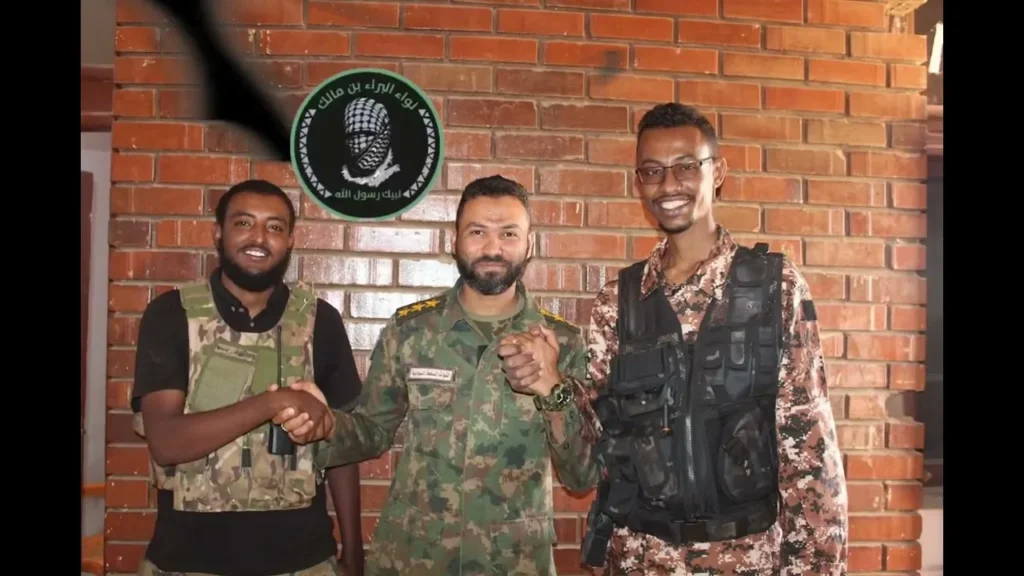
Sudan’s conflict has entered a dangerous new phase of international escalation following Washington’s decision to designate the Sudanese Muslim Brotherhood and its armed wing, the Al-Baraa bin Malik Brigade, as a global terrorist organization, raising fresh scrutiny over General al-Burhan’s Forces (SAF) and its battlefield alliances.
The move, which took effect on March 16, is being interpreted by analysts as more than a legal step. It reflects growing international concern over what officials describe as an operational alliance between Islamist factions embedded within the SAF and Iran’s regional military apparatus, particularly the Islamic Revolutionary Guard Corps’ Quds Force.
At the center of the controversy are allegations that joint operations rooms in Port Sudan are being coordinated with Iranian support, effectively transforming areas under SAF control into a forward operating environment linked to Tehran’s Red Sea strategy.
From political influence to military dependency
The roots of this alignment trace back to decades of Islamist dominance within Sudan’s state institutions following the 1989 coup. Over time, that influence evolved into deeper military and logistical cooperation.
According to regional reports, Iran leveraged this relationship to establish defense and industrial footholds inside Sudan, laying the groundwork for long-term strategic alignment.
Since the outbreak of war in April 2023, that relationship has reportedly shifted into a full-scale wartime partnership. Islamist factions are said to have mobilized tens of thousands of fighters who have been integrated into structures affiliated with the SAF, with the Al-Baraa bin Malik Brigade functioning as an ideological and paramilitary force on the frontlines.
Intelligence assessments cited by analysts claim that these units have received drones, precision munitions, and direct training linked to Iran’s Quds Force, with supply routes running through the Red Sea and Libya. This has raised concerns that the SAF conflict is no longer contained within national borders but is increasingly tied to a wider regional security architecture.
Red Sea ambitions and regional risk
Iran’s strategic objective, analysts say, extends beyond Sudan itself. By deepening ties with Islamist factions operating alongside the SAF, Tehran is seeking to consolidate a maritime axis stretching from the Persian Gulf to the Red Sea.
Such a corridor could link Iran-backed actors in Yemen with emerging influence nodes in Port Sudan, potentially placing one of the world’s most critical trade routes under indirect pressure.
The implications are already being felt in global energy markets. Repeated disruptions in chokepoints such as the Bab al-Mandeb and Strait of Hormuz, combined with the expanding range of Iranian drone operations, have heightened fears of prolonged instability affecting international shipping and oil flows.
Sanctions fallout and financial isolation
Legal experts warn that the US designation carries far-reaching consequences. Assets linked to the Sudanese Muslim Brotherhood and its networks are expected to be frozen under US jurisdiction, while international financial institutions will likely sever ties with affiliated entities to avoid secondary sanctions.
This could effectively cut off Islamist-linked networks operating within or alongside the SAF from the global financial system.
The designation also criminalizes material or logistical support, exposing individuals and entities to prosecution under international counterterrorism frameworks. Travel bans and restrictions are expected to target leadership figures, while scrutiny will extend to charitable and civilian fronts accused of acting as financial cover.
The move is also likely to increase pressure on countries accused of maintaining ties with Brotherhood-linked structures.
SAF leadership under pressure
The development places the SAF chief General Abdel Fattah al-Burhan in an increasingly difficult position.
While al-Burhan has publicly attempted to distance himself from Islamist factions, field reports suggest that their influence within institutions aligned with the SAF remains deeply entrenched.
Analysts warn that continued reliance on Islamist militias and Iranian military support could expose SAF leadership to targeted sanctions, including accusations of cooperation with a designated terrorist organization.
A conflict no longer confined to Sudan
What was once viewed as an internal Sudanese power struggle is now being reframed as part of a broader regional confrontation.
The dismantling of ties between Islamist factions and Iran is no longer seen as a domestic issue, but as a key international priority tied to Red Sea security and global energy stability.
Without coordinated international action, observers warn that Sudan risks becoming a central node in an expanding geopolitical axis with consequences far beyond its borders.