Legal sources say Sudan’s Ministry of Justice has submitted a draft law to regulate public gatherings and peaceful marches, a move officials describe as aimed at “organising institutional performance” and reinforcing the rule of law.
However, critics view the proposal as part of a broader effort to suppress the legacy of Sudan’s December Revolution (2018–2019), which marked a prolonged confrontation between civilian aspirations and a military-security establishment backed by the Islamic Movement and the now-dissolved National Congress Party. Those forces, analysts argue, have consistently sought either to preserve elements of the former regime or to dominate the country’s transitional trajectory.
According to the legal sources, the draft law seeks to prevent what authorities describe as chaos resulting from protests, curb attacks on public and private property, and limit confrontations with regular forces — measures the government says are necessary to maintain public stability.
The proposal comes against the backdrop of a fragile civilian–military partnership that collapsed when General Abdel Fattah al-Burhan led a coup removing the civilian component of the transitional government, a move widely seen as a direct attempt to terminate the revolutionary process.
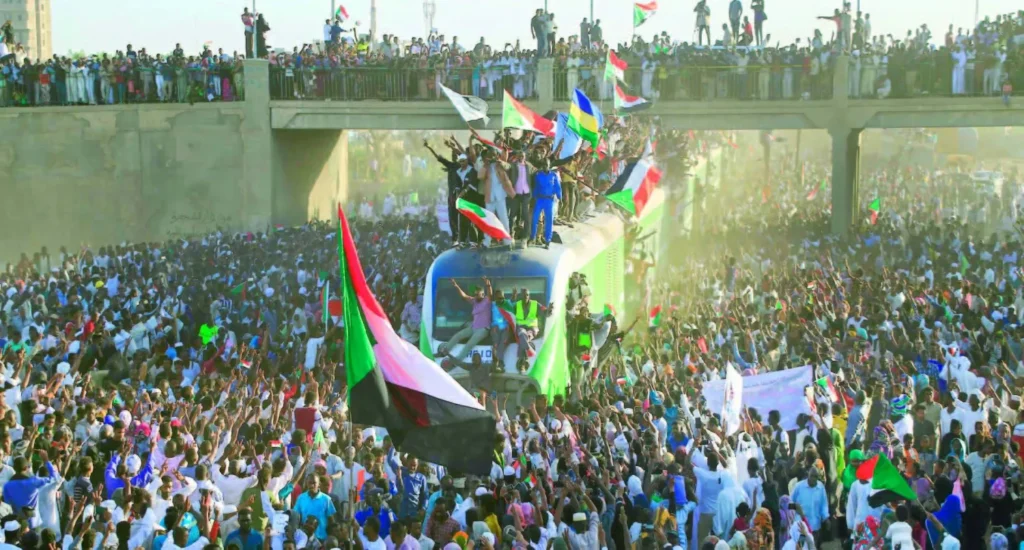
In recent days, several Sudanese cities — including Khartoum, El Fasher, Gedaref and Omdurman — witnessed peaceful marches marking the seventh anniversary of the December 19 Revolution. Demonstrators waved Sudanese flags and chanted revolutionary slogans, insisting that the spirit of the uprising remains alive despite the country’s deepening political and security crises.
In Omdurman, police intervened using tear gas to disperse gatherings, while protesters in El Fasher renewed their pledge to continue the path of the revolution and its demands for freedom, peace and justice.