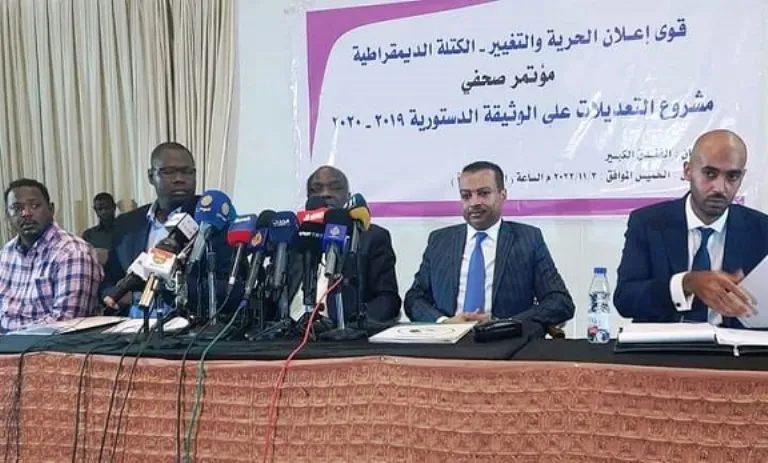
Internal divisions have widened within Sudan’s Democratic Bloc following meetings held by some of its factions with the so-called Quintet mechanism in Addis Ababa earlier this week, underscoring growing disagreement over political engagement related to the war.
The Democratic Bloc, which includes political parties and armed movements aligned with the ongoing conflict, has seen sharp exchanges between its leading figures after the Addis Ababa meetings became public.
Sources told local media that senior bloc leaders accused the participating factions of acting without authorization, stressing that the meetings were not approved by the bloc’s decision-making bodies and were not based on any internal consensus. The sources said the move was viewed as contradicting the bloc’s stated position on proposed political settlements to the war.
In the aftermath of the meetings, conflicting statements from different bloc components have emerged, further exposing fractures within the coalition and raising questions about its internal cohesion.
Jumaa Al-Wakeel, a senior Democratic Bloc figure affiliated with the movement led by Arko Minawi, said the group that attended the consultations was not mandated by the bloc’s institutions, describing the initiative as a breach of internal agreements.
His remarks were quickly rejected by Democratic Bloc spokesperson Mohamed Zakaria of the Justice and Equality Movement, who said that statements questioning the legitimacy of the Addis Ababa meetings do not represent a unified institutional position. The exchange highlighted clear divergences between the movements led by Minawi and Jibril Ibrahim over how the bloc should engage with international mediation efforts.