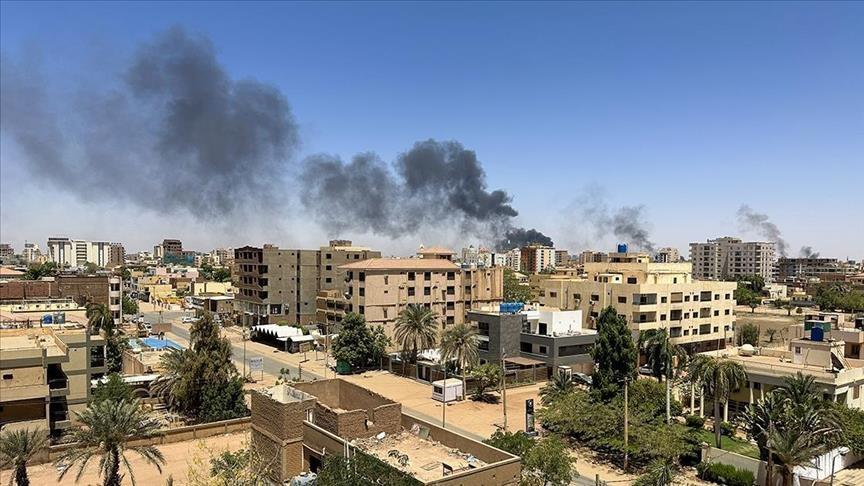
Sudan’s Rapid Support Forces (RSF) carried out a second consecutive day of drone operations against areas controlled by the Sudanese Armed Forces (SAF) on Thursday, extending a campaign aimed at military airports, supply routes and strategic installations across the country.
Residents in Khartoum, Omdurman and Khartoum North reported seeing drones overhead and hearing explosions, while anti-aircraft fire was launched from SAF-held positions in Omdurman.
A SAF military source told AFP that air defences had engaged the drones and claimed several were shot down. The RSF did not immediately provide a detailed account of Thursday’s operations.
The latest attacks followed one of the largest coordinated RSF drone operations in weeks on Wednesday, when dozens of drones targeted locations in Khartoum state, River Nile state and North Kordofan.
Field reports estimated that around 36 small attack drones were used. About 20 reportedly struck or attempted to strike targets around Atbara and Ad-Damir before dawn, while another 16 were directed towards Khartoum, Omdurman and El Obeid after 6 a.m.
The SAF has not issued a comprehensive statement detailing casualties or damage from the wider operation.
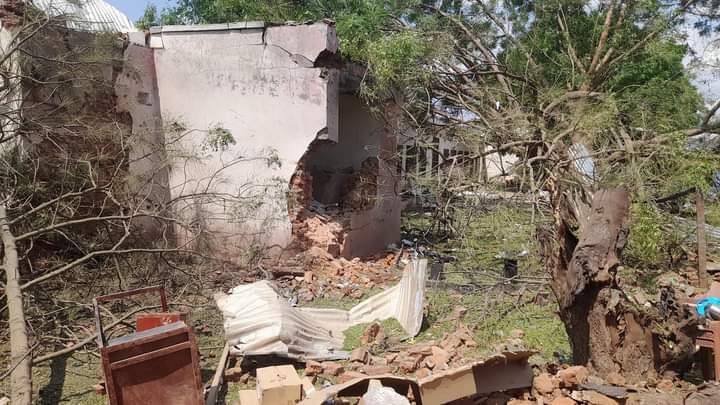
Local reports said one drone caused damage near Al-Danagla Mosque in the Al-Droshab area of Khartoum North. Medical sources in North Kordofan also reported that two people were killed and six others wounded during drone attacks on El Obeid.
RSF says military infrastructure targeted
The RSF said its drones were directed primarily at military infrastructure and logistics supporting SAF operations.
According to RSF statements, drones targeted SAF-controlled airports in Khartoum, Atbara and Merowe, while fuel storage facilities at the Wadi Sayidna military complex north of Omdurman were also struck.
The RSF also said it attacked a military supply convoy travelling along the Dongola road from Northern State towards Omdurman.
In El Obeid, the group said it struck facilities associated with SAF’s 5th Infantry Division, including a building used by military aviation personnel near the city’s judicial complex.
The claims could not be independently verified.
The renewed drone campaign appears designed to increase pressure on SAF rear areas and disrupt preparations for further military operations in Kordofan, where fighting between the two sides has intensified.
By striking airfields, fuel storage sites and supply routes far behind the front line, the RSF is attempting to force SAF to divert air-defence systems and other resources away from the Kordofan battlefield.
The scale of the attacks also demonstrates the RSF’s continued ability to conduct long-range operations despite repeated SAF claims that the group’s military capacity has been significantly degraded.
Fighting continues in Blue Nile
Heavy fighting has also continued in Blue Nile region, where forces aligned with the Sudan Founding Alliance, or TASIS, have opened new fronts against SAF positions.
RSF forces and the Sudan People’s Liberation Movement-North faction led by Abdelaziz al-Hilu recently launched an offensive around Qeissan, using drones and heavy artillery.
TASIS-aligned forces said they had taken control of the town, while SAF-linked local authorities disputed the claim and said fighting remained underway.
Qeissan commissioner Jamal al-Qadi said SAF forces and allied units were still confronting attacks on several fronts.
Local officials also said around 12,000 civilians had fled towards areas around Bakodi as fighting intensified.
The renewed Blue Nile campaign follows months of shifting control across the region and comes as TASIS seeks to stretch SAF forces across several fronts rather than allowing the army to concentrate its manpower in Kordofan.
Rains worsen displacement crisis
Heavy rains and flooding have meanwhile worsened conditions for civilians displaced by fighting in Blue Nile.
Thousands of displaced people at Al-Karama camp were reported to be living in difficult conditions after rainwater flooded tents and damaged already limited sanitation facilities.
Volunteers said continuing displacement had placed additional pressure on health services, while stagnant water and collapsed latrines were increasing the risk of disease.
Humanitarian assistance has also reportedly declined despite growing needs.
The International Organization for Migration has previously warned about the dangers facing displaced communities living in informal settlements without adequate shelter, clean drinking water, sanitation or security.
TASIS official announces departure
Separately, Hamad Mohamed Hamed Khalifa, who had been appointed to a senior position within the TASIS administration, announced that he was leaving the alliance.
Khalifa accused the RSF of abuses and described the TASIS administration as a political cover for the movement.
His claims were promoted heavily by SAF-aligned media.
Khalifa, an economist and businessman, had been appointed in 2025 to the TASIS Presidential Council and assigned responsibility for the Kordofan region.
His departure follows that of Faris al-Nour, another former senior figure in the alliance, who announced his resignation in June.
TASIS has not publicly indicated that the defections have affected its military command structure or operations.
SAF pushes Kordofan narrative
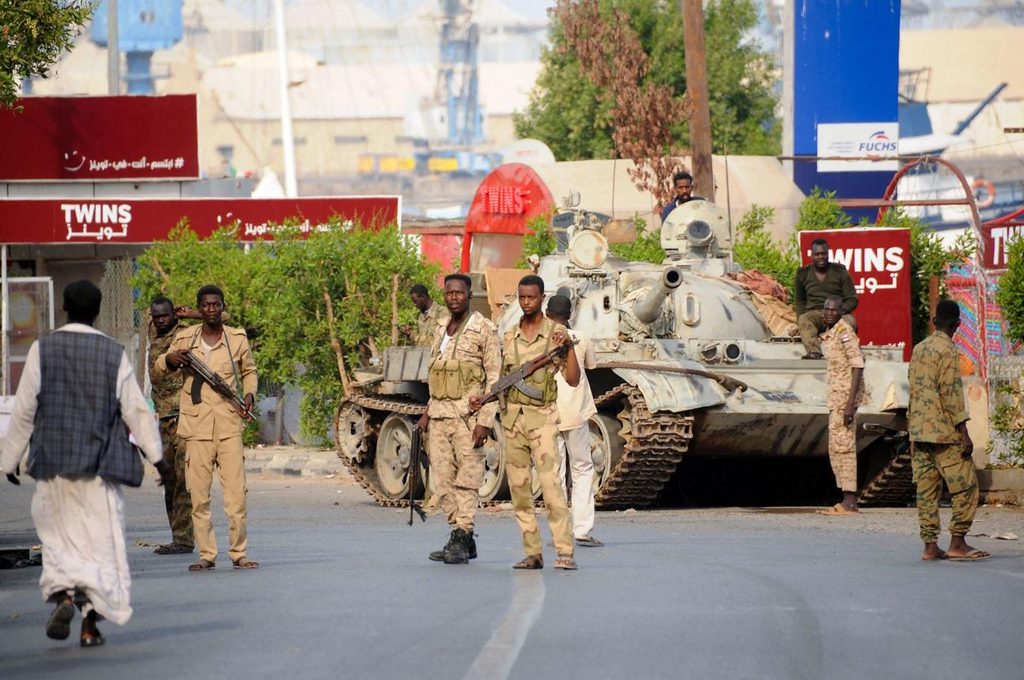
SAF officials meanwhile claimed that the road connecting Omdurman with Bara and El Obeid had been secured after recent fighting in North Kordofan.
North Kordofan’s SAF-appointed governor Abdelkhaliq Abdel Latif and military commander Major General Mohamed al-Bailawi travelled overland towards Bara as part of an effort to demonstrate control of the route.
Al-Bailawi claimed SAF forces had cleared and secured the entire road.
Senior SAF commander Yasser al-Atta also travelled with Sudan Shield commander Abu Aqla Keikel to the Umm Sayala area following recent SAF advances there.
The visits come as SAF seeks to portray its operations in North Kordofan as a sustained westward advance.
However, continued RSF drone attacks against El Obeid and military installations further north suggest that SAF supply routes and rear positions remain vulnerable.
Fighting reported towards Darfur
SAF-aligned sources also claimed army troops, Joint Force units and so-called Popular Resistance formations were advancing towards Darfur.
Those sources said airstrikes and SAF drones had targeted RSF movements and supply routes, including a convoy allegedly travelling towards West Darfur.
The claims were not independently verified.
The RSF continues to maintain substantial military and administrative control across much of Darfur, where Nyala has become the principal seat of the TASIS-aligned administration.