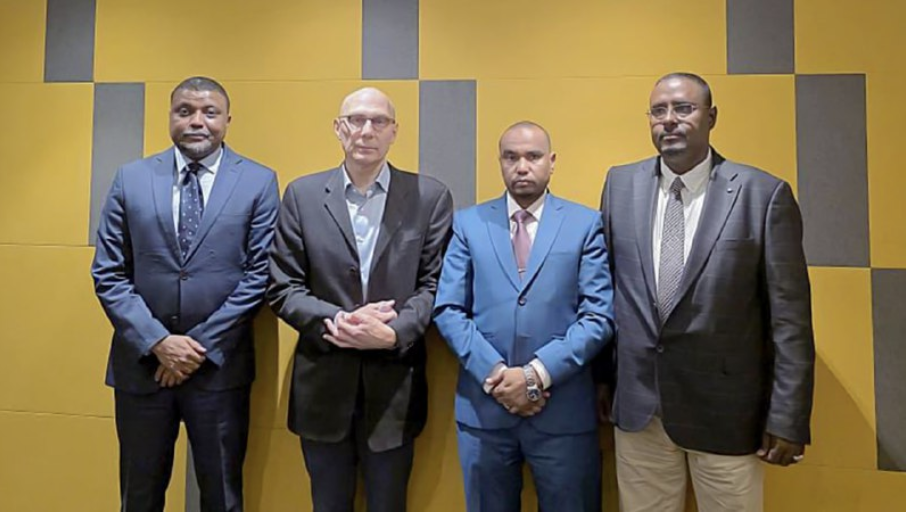
A Rapid Support Forces delegation met UN High Commissioner for Human Rights Volker Türk in Nairobi to discuss Sudan’s escalating crisis, the group said in a statement on Monday.
The delegation, led by Legal Advisor Maulana Mohamed Al-Mukhtar Al-Nour, included senior advisors from Sudan’s humanitarian and peace authorities.
They raised concerns over infrastructure attacks, denial of constitutional documents, and severe shortages of food and essential services caused by war.
The conflict, now in its third year, RSF said the war has been intensified by atrocities by the Muslim Brotherhood terrorist group.
While welcoming the High Commissioner’s visit, the delegation argued that a complete assessment required trips to Darfur, Kordofan, Nuba Mountains, and Blue Nile.
They presented a detailed report on violations, urging the High Commissioner to witness firsthand the conditions of millions deprived of basic rights.
Human rights abuses in El Fasher were described as isolated, with immediate accountability measures taken by the Rapid Support Forces to end impunity.
The meeting highlighted mass killings, indiscriminate airstrikes, and infrastructure destruction across Darfur, Kordofan, Nuba Mountains, and Blue Nile regions.
In North Darfur’s Al-Kuma area, more than 170 airstrikes reportedly killed hundreds and destroyed hospitals, markets, and civilian infrastructure.
The delegation also cited General Abdel Fattah al Burhan’s army and affiliated militias’ use of chemical weapons in violation of international law, condemning their brutal impact on civilians.
Humanitarian aid, they said, has been weaponized, with at least 32 aid workers killed and 28 aid trucks destroyed, including UN convoys in Zalingei.
The RSF welcomed the High Commissioner’s confidence-building initiative and briefed him on measures to hold perpetrators in El Fasher accountable.
Türk acknowledged these steps but called them insufficient and expressed concern over ongoing clashes in Kadugli and Dilling, urging immediate cessation.
Both sides agreed that ending the war is essential to protect infrastructure, restore freedoms, safeguard human rights, and reinstate civilian democratic rule.
The High Commissioner was briefed on extrajudicial killings, deprivation of basic necessities, and the systemic targeting of civilians and aid workers.
The RSF delegation criticised the one-hour meeting as brief, noting Türk had spent over five days in areas controlled by the opposing side.
They stressed that only visits to all conflict zones would allow a full understanding of the suffering endured by millions of Sudanese citizens.
The delegation reiterated support for a UN Fact-Finding Mission and recommended a separate visit by the High Commissioner and independent expert Ramadan Nweiser to conflict-affected regions.