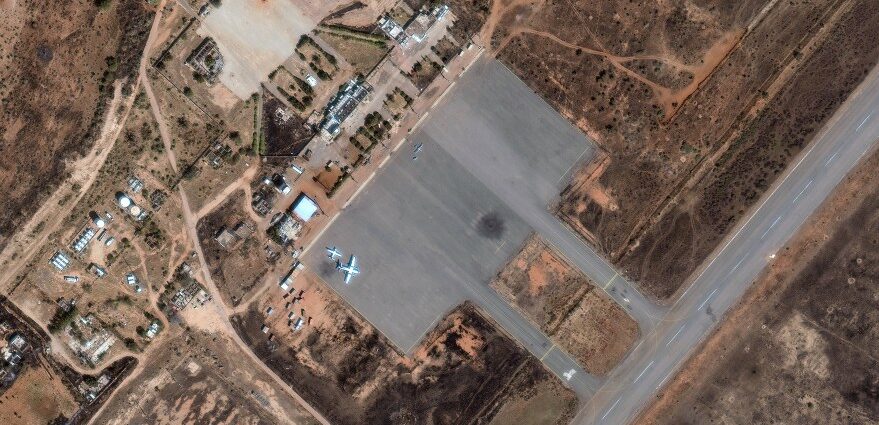
SAF has moved quickly to promote a narrative of “precision” and “success” following airstrikes on Nyala airport on Sunday, 1 February 2026, according to military sources cited by media. The operation has been framed as a decisive blow against weapons depots and alleged drone infrastructure, yet all available details originate exclusively from SAF aligned sources.
According to these accounts, the air force used advanced aircraft and bunker penetrating munitions, supported by what was described as superior intelligence and surveillance. Three air raids were reportedly carried out against what SAF labelled as strategic targets, language that has become a familiar feature of its wartime messaging.
Crucially, no independent verification has been provided to support these claims. Media reports relying on military briefings allege that fortified infrastructure was hit, including supposed command and control rooms and facilities said to house foreign personnel. However, such assertions remain unsubstantiated and mirror previous SAF statements that later proved exaggerated or misleading.
Nyala airport lies in close proximity to densely populated civilian areas and vital humanitarian routes. SAF’s insistence on portraying the strike as “surgical” ignores the long documented pattern of indiscriminate aerial bombardment that has caused extensive civilian harm across Darfur. In this context, the language of precision appears less as a factual description and more as an attempt to legitimise continued air attacks.
By declaring all targets “fully neutralised” without independent assessment, SAF reinforces a broader strategy of information control, where military communiqués are presented as fact while scrutiny is dismissed or made impossible. Such narratives serve not accountability, but the normalisation of air power as a political tool.
Far from demonstrating strength or progress towards stability, the Nyala strikes highlight SAF’s continued reliance on air bombardment and media messaging to project authority. In a conflict defined by secrecy and civilian suffering, SAF’s version of events raises more questions than it answers.