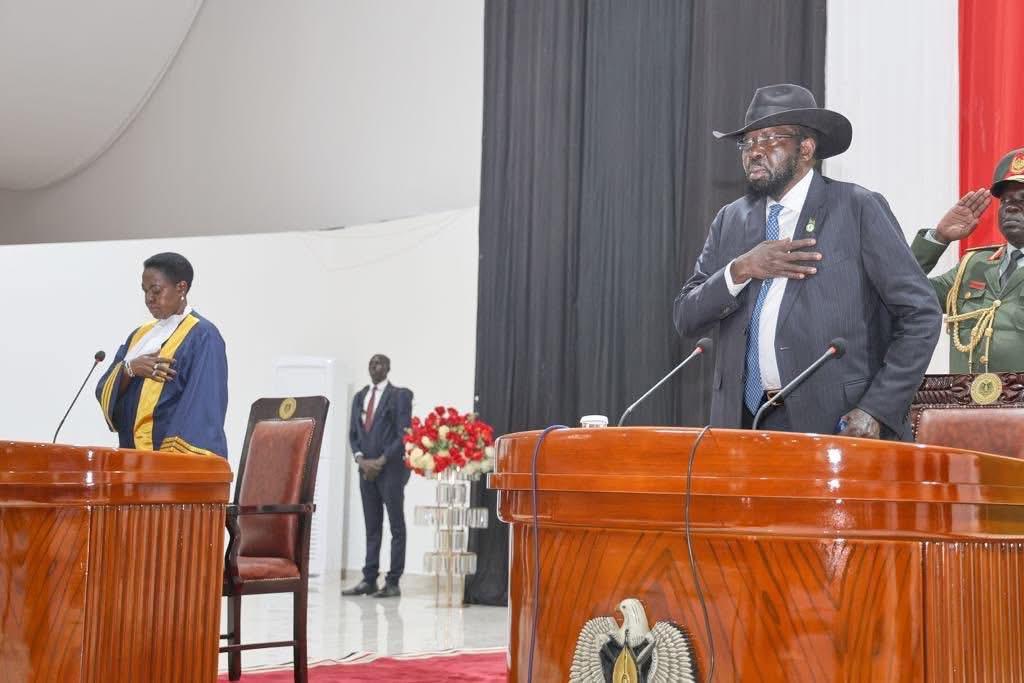
South Sudanese President Salva Kiir has signed amendments to the country’s election law, removing requirements that had tied the holding of elections to the completion of a permanent constitution and a national census.
The changes clear a major legal hurdle ahead of general elections scheduled for December 22, which would be South Sudan’s first national vote since gaining independence in 2011.
Kiir signed the legislation late on Monday after parliament approved the bill earlier in the day. His office described the amendments as “another major milestone” in preparations for the election.
Presidential Affairs Minister Africano Mande Gedima said the changes were designed to align the National Elections Act with the transitional constitution and remove provisions that made elections dependent on completing the constitution-making process and conducting a census.
The South Sudan Opposition Alliance, a coalition of opposition parties and a signatory to the 2018 peace agreement, rejected the amendments, arguing that they were adopted without sufficient consultation among parties to the accord.
Under the amended law, the incumbent executive leadership will retain full constitutional powers during the election period until a newly elected president takes office. The first vice president and other vice presidents are expected to leave office within three months of election day.
The legislation also cuts the size of the National Legislative Assembly from 650 members to 270. State assemblies will be reduced from 100 members to 58, while legislative councils in the country’s administrative areas will have 20 members.
The changes come as preparations for the December vote remain incomplete, with voter registration yet to begin.
Political tensions also remain high. Kiir’s longtime rival Riek Machar, leader of the opposition SPLM-IO, has been under house arrest since March 2025 and is on trial on charges including treason and murder, which he denies. Kiir also replaced the head of the National Elections Commission last week without publicly giving a reason.
Edmund Yakani, executive director of the Community Empowerment for Progress Organisation, urged political leaders to resolve their disputes peacefully and avoid renewed conflict.
South Sudan’s transitional government was established under a 2018 peace agreement that ended years of civil war. Elections have been postponed repeatedly amid delays in implementing key provisions of the deal, including drafting a permanent constitution and conducting a national census.