South Sudan’s fragile healthcare system reflects years of corruption and conflict, forcing even senior officials to seek treatment abroad for routine medical emergencies.
Governor Riek Gai Kok of Jonglei state recently travelled to Nairobi for high blood pressure treatment, highlighting the collapse of domestic medical services amid renewed violence.
Humanitarian workers say the journey symbolises a system hollowed out by corruption, where elites access foreign care while ordinary citizens face failing hospitals and shortages.
As political tensions push the country toward renewed civil war, more than 80 percent of healthcare is delivered by foreign organisations rather than government institutions.
At a military hospital in Juba, wounded soldier Ajuong Deng recalled expecting death after being shot, before an airlift organised by the International Committee of the Red Cross saved him.
Aid workers, unable to formally pay government staff, provide unofficial “incentives” to keep hospitals operating as salaries of 10 to 50 dollars remain unpaid for months.
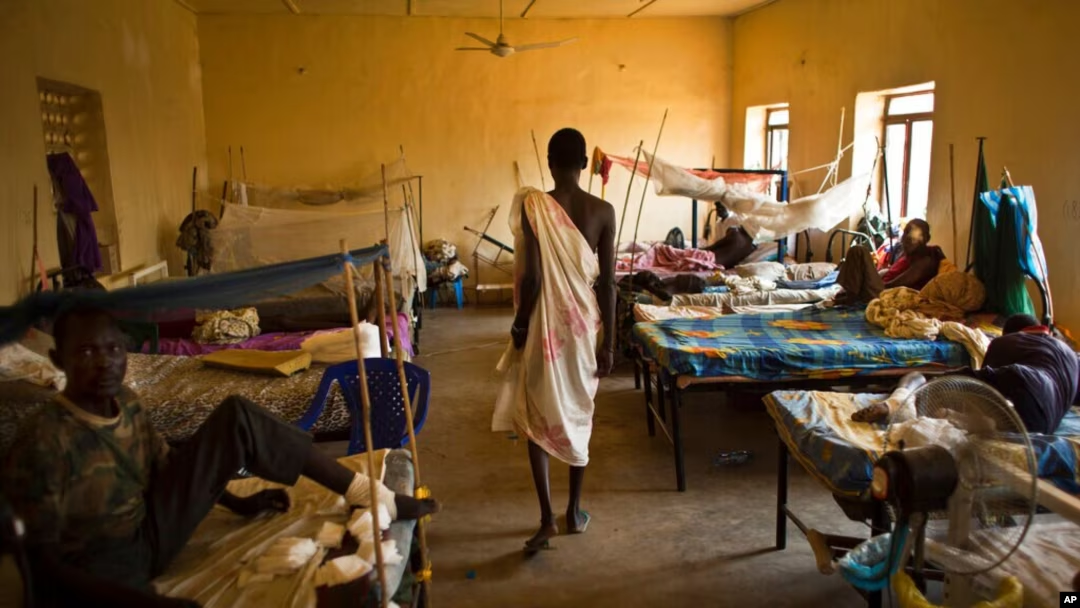
Inside overcrowded wards, wounded patients lie on floors wrapped in blood-stained bandages, while clinicians struggle to treat injuries amid scarce equipment and rising violence.
Doctors fear many survivors will return repeatedly to conflict, trapped in cycles of war between rival factions, ethnic militias, and cattle raiders across rural regions.
Poor roads and long travel times mean untreated wounds often become infected, making amputations common and leaving survivors facing stigma and social rejection.
The United Nations says more than 5,100 civilians have been killed recently, warning South Sudan risks sliding into another devastating civil war like the 2010s conflict.
Despite receiving 1.4 billion dollars in foreign aid in 2024, health outcomes continue declining, with life expectancy stalled at 58 years and maternal mortality among the world’s highest.
Oil revenues exceeding 25 billion dollars since independence have translated into minimal health spending, with only one percent of this year’s budget allocated to healthcare.
Attacks on medical facilities have intensified dangers for aid workers, forcing hospitals to install blast doors and store emergency supplies in preparation for possible sieges.
As donors reconsider funding and NGOs scale back operations, officials acknowledge financial difficulties, while rejecting corruption rankings that place the country among the world’s worst.