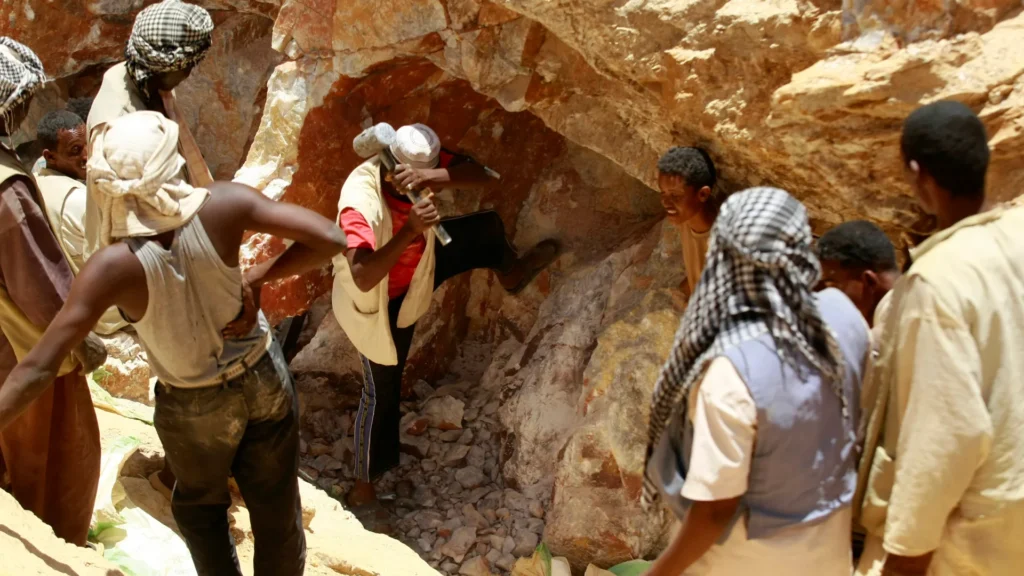
Local authorities in South Sudan revised the death toll from a weekend gold mine attack, lowering earlier figures and highlighting confusion surrounding one of the country’s latest violent episodes.
Officials now say 37 people were killed during Saturday’s raid on a gold mining site in Khor Kaltan, southwest of the capital Juba.
The updated figure sharply contrasts with earlier statements from Vice President James Wani Igga, who said at least 73 miners had died in the assault.
The attack unfolded roughly 70 kilometres from Juba, in a region long scarred by instability and recurring clashes linked to political rivalries.
Nyarsuk Patrick James, information minister for Central Equatoria State, announced the revised toll during a Tuesday press conference after visiting the site personally.
He said verified reports confirmed 37 deaths, including 25 civilians and 12 soldiers, following interviews with eyewitnesses and local officials at the mine.
James added that at least 20 people were wounded during the assault, which struck a mining area repeatedly targeted by armed groups in recent years.
Authorities blamed fighters linked to the SPLM-IO, an opposition movement loyal to former vice president Riek Machar, accusing them of carrying out the raid.
Machar’s spokesman rejected the allegation, instead accusing the South Sudanese army of responsibility and deepening uncertainty over what truly happened.
The conflicting claims underscore the fragile political landscape in the world’s youngest nation, where mistrust between rival factions continues to shape public narratives.
Asked about discrepancies with earlier casualty figures, James said his numbers were based on direct observations and conversations conducted during his field visit.
“This is verified information,” he insisted, questioning how earlier estimates exceeding seventy deaths had been calculated by senior officials and security sources.
Two separate security officials had previously told journalists that the death toll surpassed seventy, though one later acknowledged the numbers might have been overstated.
The attack comes amid renewed tensions between President Salva Kiir’s government and opposition forces aligned with Machar, who remains under house arrest after political disputes.
Violence has resurged across parts of South Sudan, raising fears that fragile peace arrangements could unravel despite years of international mediation efforts.
Gold mining sites, often isolated and poorly secured, have increasingly become flashpoints where armed groups seek resources, leverage, and territorial influence.
Residents near Khor Kaltan described a climate of fear following the raid, as uncertainty over responsibility fuels anxiety among communities already accustomed to conflict.
Since gaining independence from Sudan in 2011, South Sudan has struggled with civil war, ethnic divisions, and cycles of retaliation that repeatedly disrupt civilian life.
The latest attack serves as another reminder that beneath fragile political agreements, the echoes of war continue to reverberate across the young nation’s landscape.