Court rulings sentencing two women to death by stoning on adultery charges in Sudan have triggered widespread domestic and international condemnation, raising fears of a resurgence of religious extremism amid the country’s protracted war and political collapse.
The rulings come as hardline Islamist influence appears to be re-emerging within Sudan’s political and judicial institutions following the 25 April 2021 military takeover, which derailed the civilian transition and ultimately plunged the country into the devastating conflict that continues today.
Case details
On 16 December 2025, the Haj Yousif Criminal Court in East Nile, Khartoum State, sentenced a woman to death by stoning after convicting her of adultery under Article 146 of Sudan’s 1991 Criminal Code.
According to case information, the woman’s husband filed the complaint, accusing her of giving birth to a child who was not biologically his. Human rights reports indicate that the defendant was subjected to pressure to confess and was not informed of her legal rights. The verdict reportedly relied solely on her confession as the only piece of evidence.
In a separate case, a court in Al-Rosaires, Blue Nile Region, issued a similar stoning sentence against another woman, a mother of an eight-year-old child. She was convicted on the same charge following a complaint filed by her husband, who had abandoned her in 2019.
In both cases, the male defendants were sentenced to 100 lashes before being released.
Human rights criticism
The African Centre for Justice and Peace Studies said the rulings highlight “persistent deficiencies in Sudan’s justice system,” pointing to summary trials, coerced confessions, and the absence of due process safeguards.
The organisation noted that Sudan ratified the UN Convention Against Torture in 2021, yet the 1991 Criminal Code has not been amended to explicitly prohibit punishments such as stoning. This, it said, has created a serious gap between Sudan’s international obligations and its domestic legislation.
The continued application of punishments such as stoning and flogging, the centre added, raises serious questions about Sudan’s commitment to international human rights standards.
European reaction
The head of the European Union delegation to Sudan, Ambassador Wolfram Vetter, expressed shock at reports of “death by stoning” sentences handed down against two women in Khartoum and Blue Nile states.
In a post on X, he said that if confirmed, the rulings would signal a return of extremism within the judiciary and reflect a failure of Sudan’s legal system to protect the rights and dignity of women and girls. He stressed the importance of respecting fundamental rights and ensuring justice in line with international law.
Broader political context
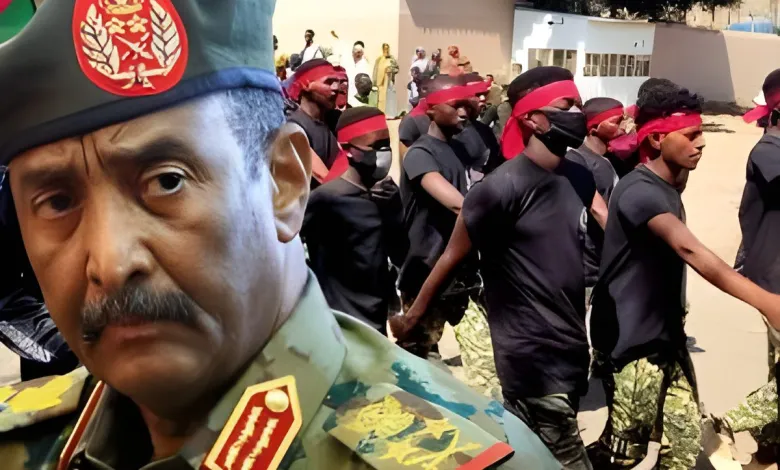
The developments unfold against a deeply fractured political backdrop following the 25 April 2021 coup led by General Abdel Fattah al-Burhan, which overthrew the civilian transitional government headed by Abdalla Hamdok.
The takeover brought figures from the former regime back into positions of influence, reshaped power dynamics within state institutions, and, according to observers, paved the way for the return of hardline Islamist elements to influential roles within the authority now operating from Port Sudan.
Sudanese human rights activist Saleh Osman said the recent stoning rulings “clearly reflect the return of Islamist forces to the forefront of power and an attempt to revive the former regime’s policies of using the law to impose an extremist ideological vision.”
He warned that the situation evokes parallels with countries such as Afghanistan under hardline rule and Somalia under Al-Shabaab, where harsh corporal punishments have been used as tools of political and social control, particularly against women.
Osman stressed that Sudan needs a civilian state governed by the rule of law that respects pluralism and human dignity, “not a recycling of exclusionary policies, brutal punishments, and the use of religion to subjugate society.”
Fears of wider consequences
Observers warn that the continued issuance or enforcement of such rulings could deepen Sudan’s international isolation and further complicate the political and human rights landscape in a country already shattered by war and internal divisions.
While no comprehensive official clarification has yet been issued regarding the two cases, debate continues over the direction of Sudan’s judiciary and the fragile balance between domestic laws and the country’s international commitments at a critical moment in its history.