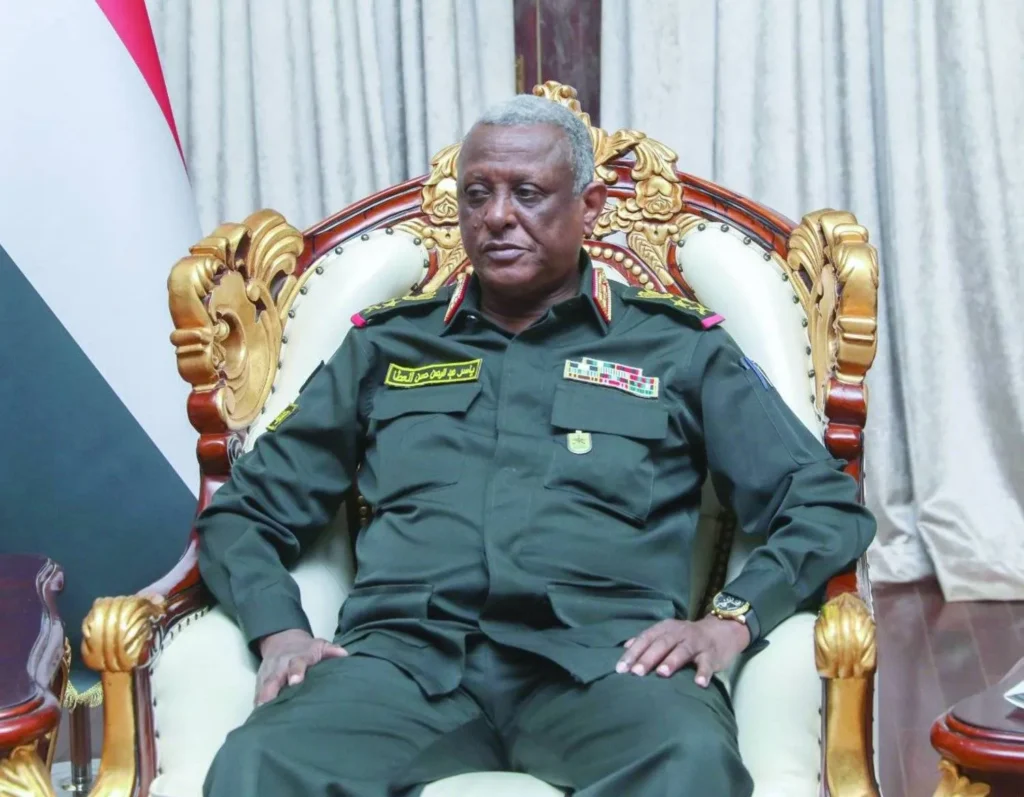
Statements by SAF deputy commander Lt. Gen. Yasser al-Atta acknowledging ties to the Muslim Brotherhood and the presence of Islamist battalions fighting alongside General Abdel Fattah al-Burhan’s forces (SAF) have triggered widespread debate in Sudan’s political and media circles.
The controversy followed the circulation of a video in which al-Atta appeared to openly discuss his affiliation with the Islamist movement and confirmed that several Islamist battalions are participating in combat alongside SAF.
In the remarks, al-Atta said he had ties to the Muslim Brotherhood, adding that between six and seven Islamist battalions are currently fighting alongside SAF.
Several Sudanese political analysts said the comments were not entirely surprising, noting that al-Atta’s political positions over the past years have suggested close alignment with Islamist currents associated with the former regime of Omar al-Bashir.
Some observers argue the remarks reflect the nature of alliances inside the SAF camp in the ongoing war that erupted in April 2023 between SAF and the Rapid Support Forces (RSF).
Analysts also describe al-Atta as one of the more controversial figures within SAF’s leadership. Critics frequently portray him as politically outspoken and undisciplined in media appearances, a reputation that has often led to intense political interpretations of his remarks.
Observers say the statements may also reflect growing battlefield pressure on Islamist-linked armed formations fighting alongside SAF, including units associated with the Al-Baraa bin Malik Brigades, a militia network widely reported to have Islamist roots.
Some analysts have called on the United States and the international “Quad” on Sudan — comprising the United States, Saudi Arabia, the United Arab Emirates and the United Kingdom — to treat al-Atta’s remarks with greater seriousness, arguing they represent a clear acknowledgment of the Islamist current’s role within the war.
Others pointed to the timing of the remarks, which were reportedly made during social gatherings linked to Ramadan iftar events, suggesting they may have carried political messages directed at both domestic and international audiences.
According to several observers, al-Atta’s comments echo positions long associated with prominent leaders within Sudan’s Islamist movement, including Islamic Movement secretary-general Ali Karti and figures linked to the Al-Baraa bin Malik Brigades.
The controversy comes as scrutiny intensifies over the role of Islamist groups in Sudan’s war, particularly after Washington designated the Sudanese branch of the Muslim Brotherhood as a terrorist organization, a move that has triggered new political and military reactions inside the country.